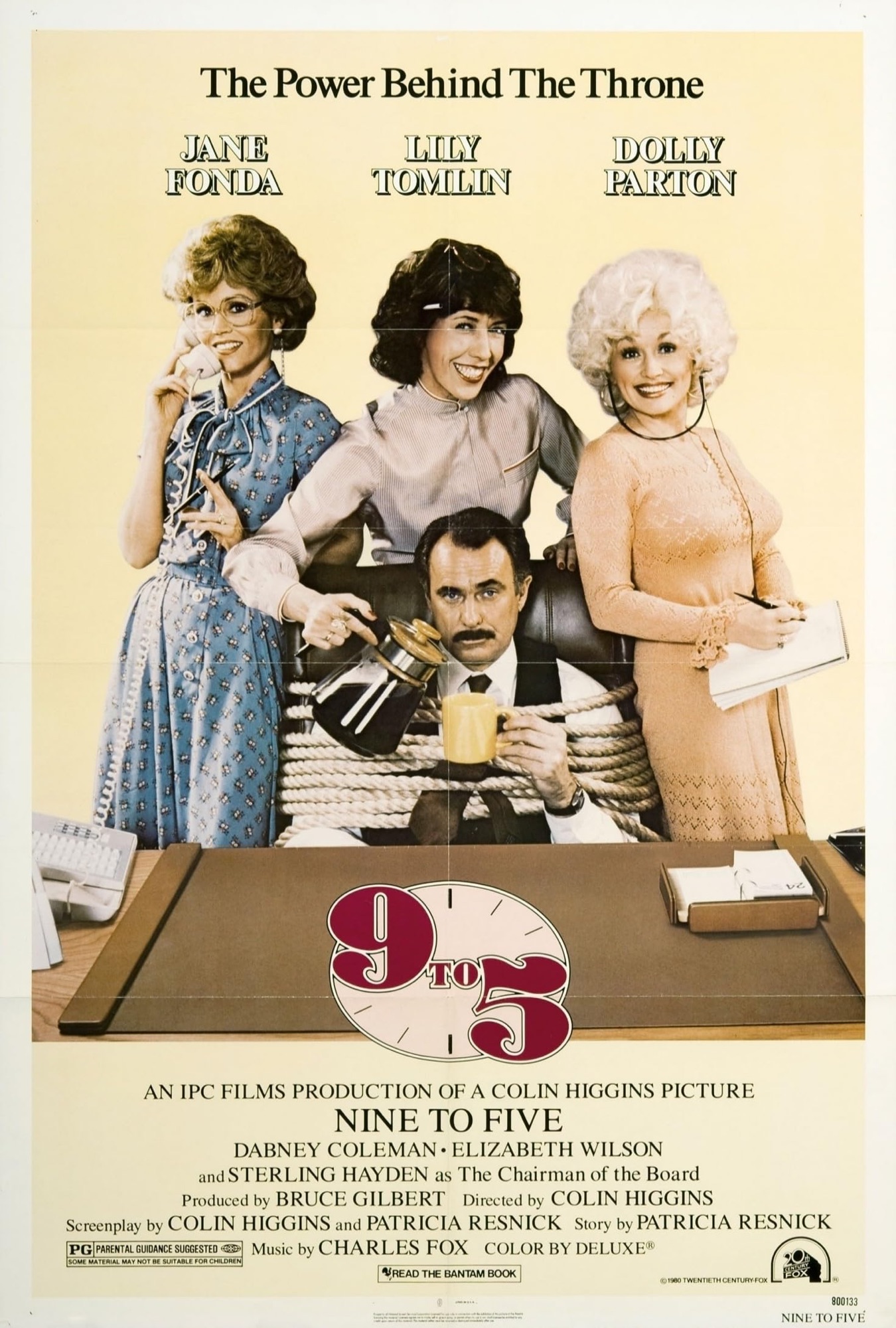


The first thing to note about Colin Higgins’s 9 to 5 is that it captures the spirited energy of three women courageously standing up to a workplace shaped by outdated 1980s ideas—ideas that often dismissed their concerns and treated them as mere stereotypes. The film is a lively portrayal of workplace resistance, and it deserves recognition as part of the genre that highlights employees’ struggles against oppressive bosses, even if some slapstick moments feel a bit exaggerated.

The movie’s comedic charm is anchored by Dolly Parton’s warm and sharp presence, capturing the nuances of the era’s coded office language with sensitivity. Her performance thoughtfully transforms every sexist memo, egotistical directive, and racist dog whistle embedded in corporate policies into moments of humor that resonate with genuine understanding. While the film’s humor is broad, Parton’s impeccable timing ensures it remains heartfelt and engaging rather than superficial.

Jane Fonda and Lily Tomlin deliver a heartfelt portrayal of frustration with the office revolt, and their scenes together provide the emotional core of the film. Higgins’s direction emphasizes their genuine exasperation, revealing the often ridiculous nature of workplace hierarchies that overlook talent and human dignity. While the film’s critique of corporate culture is direct, it is also thoughtfully expressed, even when wrapped in exaggerated violence and surreal brainstorming sessions.

The revenge plot, which involves kidnapping Dabney Coleman’s boss-from-hell and suspending him in a hang-gliding harness, stands out as both the film’s most memorable gag and its most chaotic gamble. The sequence reveals the vulnerability of the oppressive corporate tyrant, who has spent years weaponizing office etiquette. However, the extended captivity gag occasionally overextends itself, drifting into sitcom territory that diminishes the sharper political edge the film initially aimed for.

Higgins’s script gently exposes the flaws in the corporate language of its time. Whenever characters use words like “girls,” “loyalty,” or “proper channels,” the film softly highlights the underlying issues through humor, inviting viewers to reflect on the often problematic nature of workplace communication. Its playful critique of managerial jargon underscores a compassionate awareness of the human side of these institutional norms.

The film’s feminist message is both deliberate and unintentional, which gives it a unique charm. Fonda’s activist background informs the film’s structure, yet Parton’s assertion that it isn’t meant to be political adds a layer of cultural nuance. The movie evolves into a workplace comedy that subtly incorporates labor politics into the break room, all while seemingly just joking about the boss’s tie.

The office reforms the trio introduces—such as flexible hours, job sharing, and daycare—are shown with exaggerated humor. Yet, they also underscore how minimal the standards were for humane workplace policies. The satire resonates because these modest improvements seem reasonable rather than revolutionary, and the real absurdity is that they only gain attention when a hostage situation forces people to take them seriously.

The theme song, penned by Parton and performed with her acrylic nails, remains the film’s most touching legacy. It captures the movie’s critique with a heartfelt rhythm that resonates with anyone who has suffered under a manager who confuses hovering with true leadership. The song’s genuine pulse gives the film a cultural impact that reaches far beyond its plot details.

Ultimately, 9 to 5 is a workplace comedy that recognizes the pain and frustration many people feel at work, using humor as a gentle critique of an often chaotic system. It’s messy and exuberant, sometimes broader than it aims to be, but it remains thoughtfully sharp in exposing the absurdity of corporate culture. The film’s lasting impact comes not only from its humor but from its ability to turn office frustrations into a shared, understanding wink among workers everywhere.

Letter Grade: B+. Amazon Prime Video.


Leave a Reply