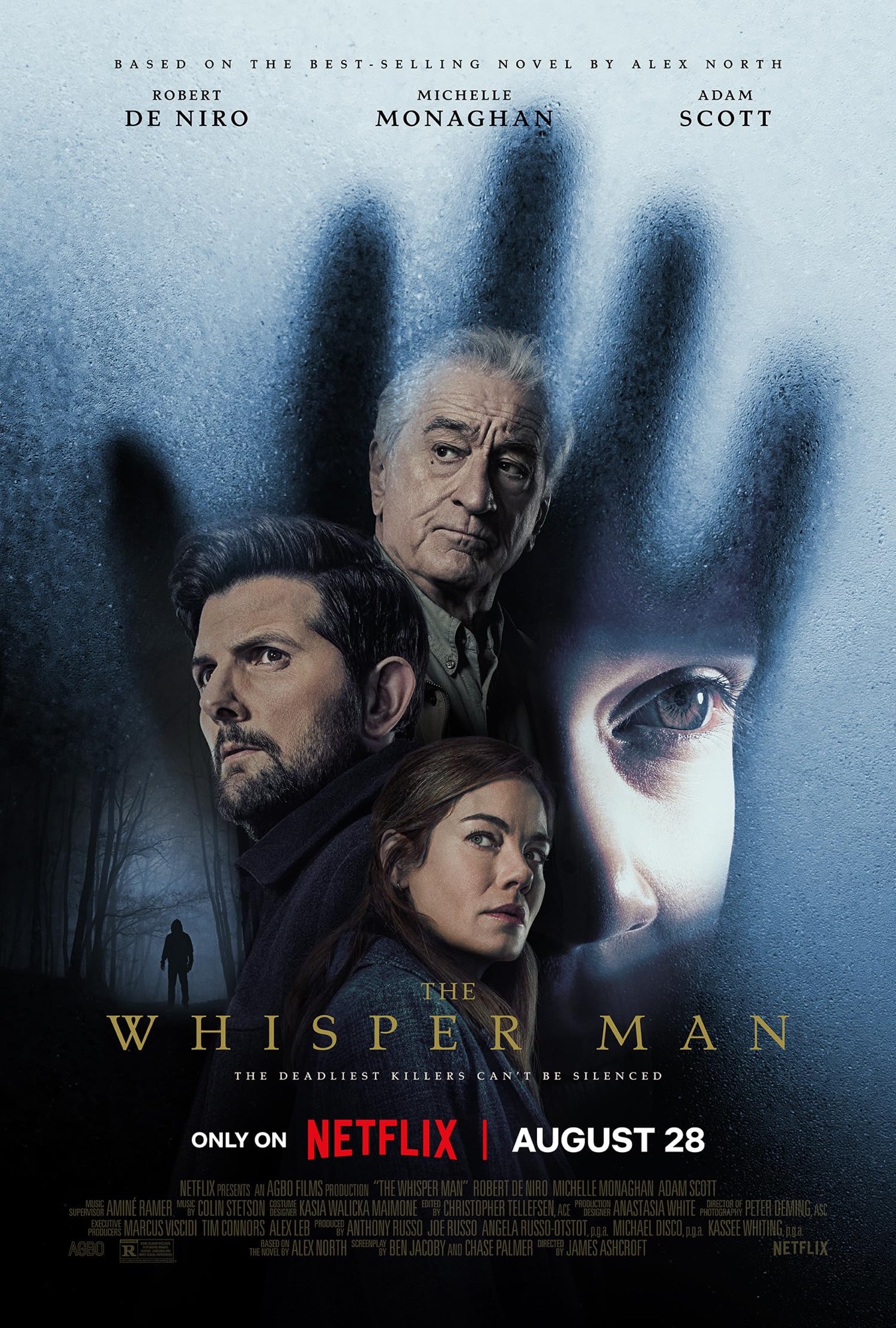


The Whisper Man begins with a glimpse into a case file that perhaps should never have been opened. James Ashcroft directs with a calm, deliberate hand, allowing a sense of unease to take hold quietly. While the film doesn’t break new ground in the serial‑killer thriller genre, its raw grit and careful attention to detail lend it a somber, thoughtful quality that elicits a nuanced, mixed-but-ultimately appreciative response.
Robert De Niro’s Peter Willis serves as the emotional core of the film. He navigates each scene with a weary, world-weary irritation that imbues the story with a noir undertone. Although his emotional range is limited, De Niro adds depth and texture to the character, showing the quiet exhaustion behind his attitude without chasing dramatic moments and letting his genuine weariness speak for itself.
Peter Deming’s cinematography employs a stark approach. The desaturated palette emphasizes the town’s unsettling atmosphere, with each hallway feeling like a lingering suspicion. This visual style underscores the film’s exploration of trauma as something etched into surfaces, evoking a sense of weight and consequence. While the look is harsh, it avoids parody and stays focused on the emotional depth of the investigation.

The script reflects familiar serial‑killer architecture, but it also shows a heartfelt attempt to explore the human side of the story. The prison conversations evoke a sense of history and shared pain, and the structure, though reminiscent of genre conventions, carries an underlying weight. Ashcroft maintains a sharp tone that keeps the story engaging without falling into mere imitation. The film’s greatest strength is how it acknowledges the past as a burden that characters carry, highlighting their struggles and resilience as they try to move forward.

Adam Scott’s Tom Kennedy is visibly overwhelmed by distress. His panic feels genuine, even if the film doesn’t always let him fully explore his emotional depth. His scenes with De Niro crackle with lingering resentment, highlighting their strained relationship. The case drives the plot, but the true story lies in the fractured father‑son bond, which evokes a deeper sense of loss and longing.

Michelle Monaghan’s Amanda Beck brings a compassionate steadiness to the film’s procedural core. Her unwavering determination helps anchor the story, especially when it begins to feel uncertain. She gently guides the investigation, ensuring it stays focused, and her presence adds emotional depth that keeps the film from becoming purely atmospheric. Though the script gives her less prominence in the final act, she remains one of the film’s most sincere and vital forces.

Michael Keaton’s Frank Carter presents a controlled, sardonic demeanor that hints at underlying complexity. He avoids overt menace, instead offering a quiet, chilling presence that emphasizes the tension in every scene. Hamish Linklater’s portrayal of a morbid memorabilia collector adds an unsettling layer, though his subplot sometimes seems more decorative than essential. Both performances deepen the film’s sense of decay and obsession, inviting viewers to look beyond the surface with empathy.

The film’s pacing becomes noticeably sharper in the final stretch. The revelations are gratifying, and while the emotional moments pass quickly, the climax still evokes enough dread to make the buildup meaningful. The closing moments between Tom and Peter leave a tender, wounded impression that feels genuine. Though the ending doesn’t break new ground in the genre, it resonates with a quiet weight.

Ashcroft’s direction gently steers the film clear of melodrama. He emphasizes procedural detail over spectacle, and this restraint lends the story a quiet, absorbing quality. The Whisper Man explores the lingering effects of violence rather than its mechanics, creating a somber, thoughtful tone that invites empathy and understanding.

Ultimately, The Whisper Man is a skillfully crafted, atmospheric thriller that, while familiar in its structure, is approached with genuine confidence and care. The noir tone, fractured family dynamic, and De Niro’s weary gravitas evoke empathy, making the film engaging even when the plot follows well-trodden paths. It’s a case worth exploring, even if some clues feel recycled.

Letter Grade: B+. Netflix.


Leave a Reply