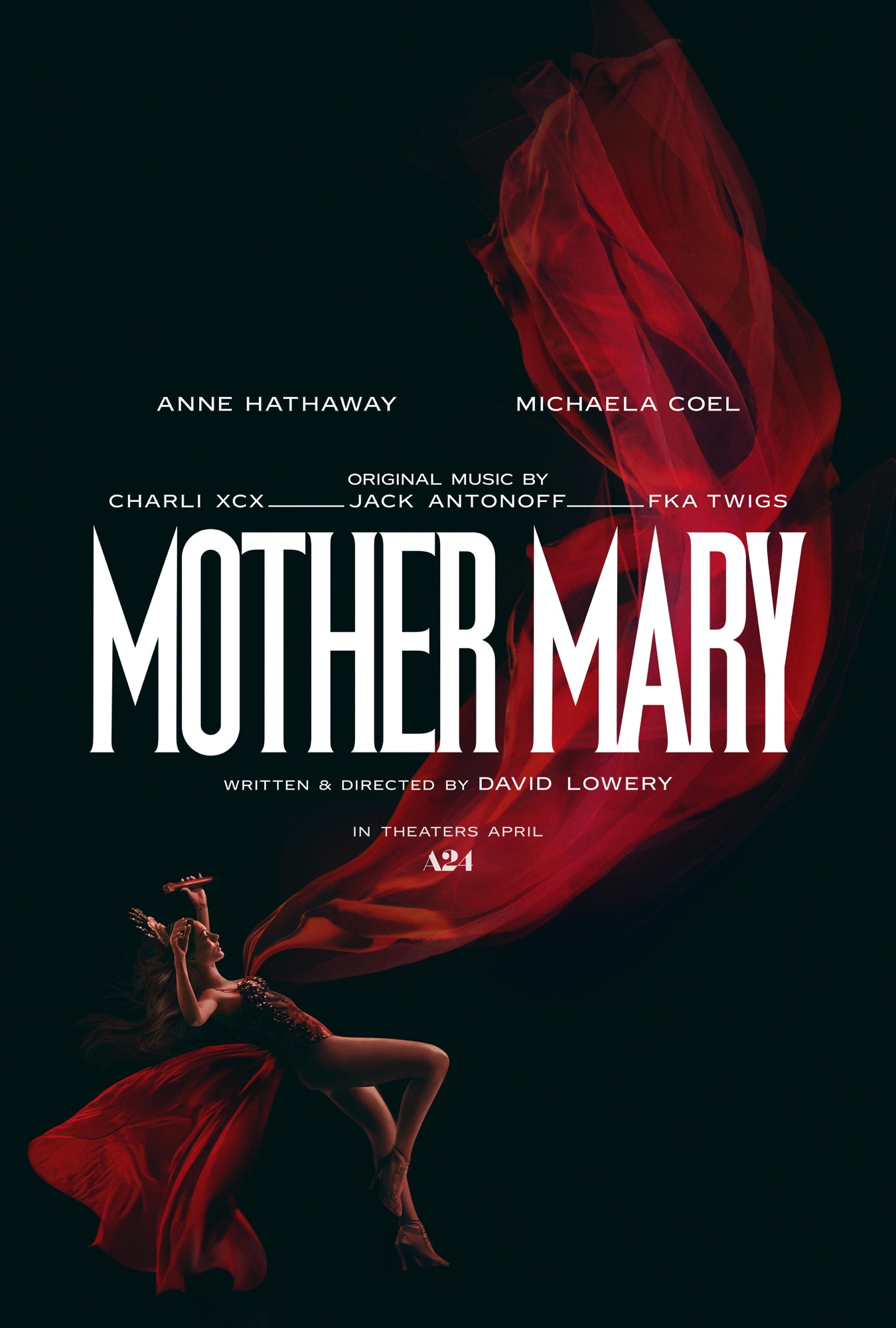


The first thing you notice in Mother Mary is how determined David Lowery is to convince you that mood counts as meaning. The film glows, broods, preens, and occasionally mutters to itself, and through all of it Anne Hathaway keeps the frame from collapsing under the weight of its own mystique. The movie wants transcendence; Hathaway supplies stamina. Michaela Coel supplies voltage. The script supplies a long corridor of cryptic exchanges that promise revelation and deliver decorative fog.

The reunion between Mother Mary and Sam Anselm is depicted with a gentle solemnity, in a barn transformed into a sacred space where every detail seems to hold deeper meaning. Lowery emphasizes the emotional weight of the moment, but the feelings between the characters remain delicate. The film seeks a profound confrontation between old friends, yet the dialogue sometimes feels like veiled hints that lack clarity. The tension is palpable, but it is treated with caution, as if fragile enough to shatter at any moment rather than something sturdy and resilient.

Hathaway’s performance serves as the heart of the film. She brings a heartfelt sincerity to Mother Mary’s wounded bravado, sometimes revealing the script’s shortcomings in capturing the depth of her ache. Her voice, posture, and exhausted glamour paint a poignant portrait of a woman overwhelmed by her own myth, struggling to maintain her sense of self. Coel, meanwhile, channels restraint with quiet strength. Her stillness resonates with a subtle emotional weight that surpasses even the film’s supernatural elements, and her narration offers a clear, calm perspective amidst the chaos.

The barn transforms into a quiet space where their circling, sparring, and attempts at reconciliation unfold. Lowery captures their distance and closeness with a gentle, almost stubborn persistence, as if the camera itself shares their unexpressed hopes and doubts. The film’s lush visual language often feels like a delicate distraction from the fragility of the emotional core. You can sense the movie’s hope to show something profound and meaningful, even when the characters themselves are hesitant to believe it.

When the supernatural elements appear, they do so with a mischievous glint that hints at a deeper complexity. The red ghost, the séances, the void — all of it is presented with a playful wink that avoids fully embracing either humor or horror. The ritualistic climax, involving scissors, trauma, and couture, strikes a strange, almost tender chord amidst its absurdity. It’s the one moment where the film’s symbolic ambitions briefly unite into something more nuanced than just mood.

The betrayal at the heart of the story holds a deeply emotional resonance in theory. In practice, Lowery stretches it too thin, losing some of its impact. The resentment between Mary and Sam feels genuine and textured, but the film tends to dilute it with ambiguity. Their shared past is treated almost tenderly, as a sacred thing that should not be disturbed, which creates a drama that reaches for emotional depth but struggles to fully deliver.

Despite its elusive narrative, the film remains visually captivating. Francesca Di Mottola’s production design and Bina Daigeler’s costumes lend the movie a textured, almost tangible quality that draws you in. The atelier transforms seamlessly—sometimes a workshop, sometimes a sanctuary, sometimes a battleground—handled with a playful and confident touch. It’s clear Lowery finds joy in the craft and creativity more than in straightforward storytelling.

The flashbacks and detours outside the barn add richness but do not advance the story. The film expands its scope without delving deeper, and each new layer feels more ornamental than essential, as if trying to suggest complexity rather than fully exploring it. The supernatural sequences are visually striking, yet they serve more to decorate the characters than to shed light on their inner struggles.

Ultimately, Mother Mary is a film carried by its heartfelt performances. Hathaway and Coel anchor the story with genuine dedication, preventing it from dissolving into mere surface beauty. Their commitment breathes life into the narrative, even as the script occasionally drifts into abstraction. The film’s final gesture — a tender reconciliation woven from fabric, memory, and weariness — resonates with a bittersweet, almost humorous resignation. It’s deeply moving, yet also a gentle reminder of how much more the movie yearned to express.

Letter Grade: B. HBO MAX.


Leave a Reply