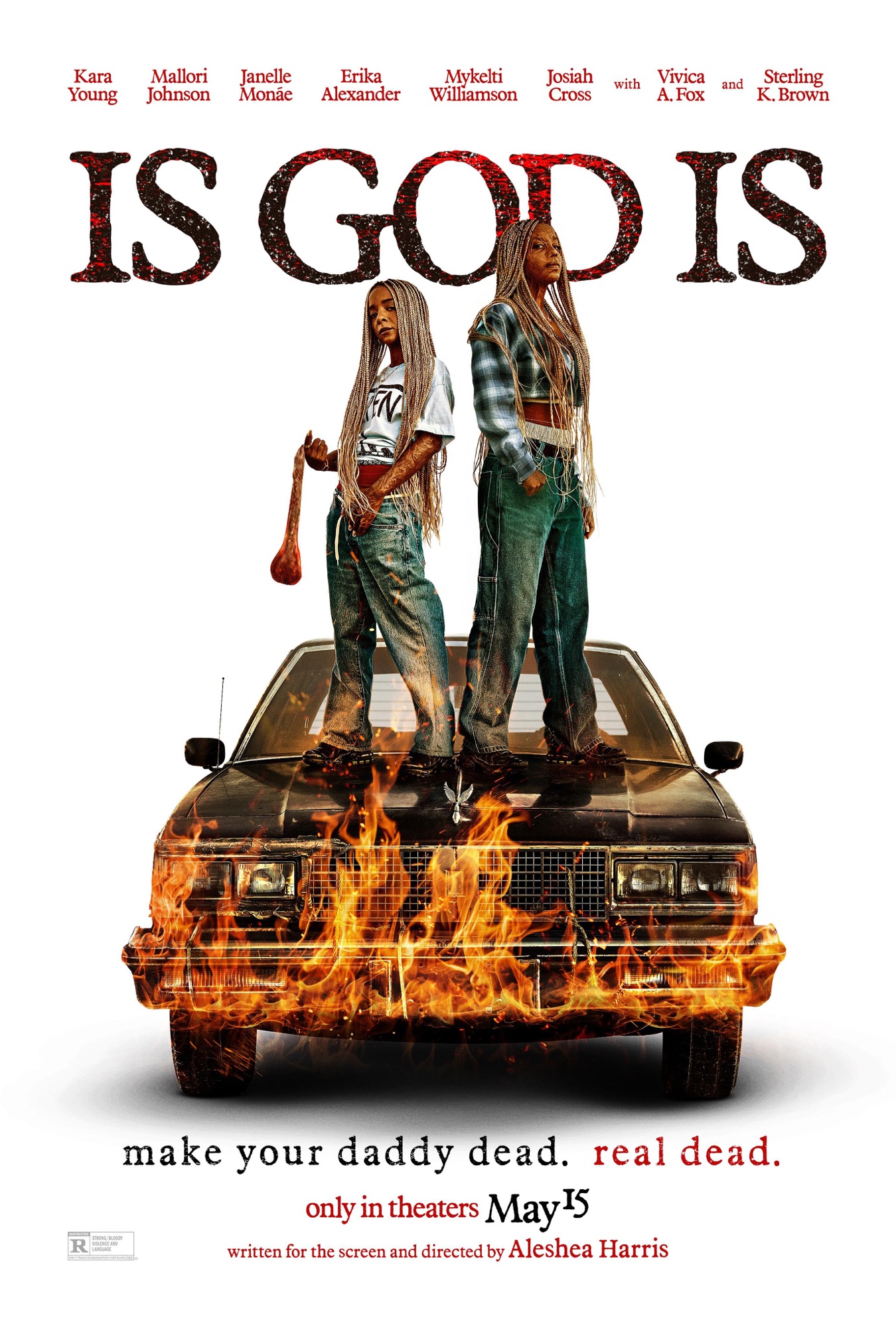


Aleshea Harris begins Is God Is with a playful tableau that subtly hints at deeper unsettling truths. The camera gently approaches the twins, hinting at the film’s exploration of violence as a persistent rumor that often feels disturbingly real. Harris’s direction is sure-handed, blending humor with insight, though at times it seems to revel a bit too much in its own cleverness. Nevertheless, the opening sets a tone that is both sharp and poignant, laying the groundwork for a revenge tale that preserves its fierce edge even amidst moments of grim grin.

The offscreen blow delivered by the smaller twin stands as the film’s first joke, delivered with a deadpan that almost borders on smugness. Harris’s theatrical gesture is more than just performative; it reflects a belief that brutality is a language to be spoken fluently. While the moment can evoke laughter, it also serves as a gentle warning that the film may rely on stylized restraint. Sometimes this restraint enhances its mythic quality; at other times, it feels more decorative than meaningful. Nonetheless, the sequence finds its rightful place within the story.

The road‑movie pivot begins with Ruby’s heartfelt letter, and Harris views this shift as a gentle tonal reset. Kara Young’s Racine and Mallori Johnson’s Anaia journey through the Northeast with a quiet resilience and grace. Their scars are genuine; Harris refuses to let them become mere symbols. The Oldsmobile Cutlass serves as a vessel for the film’s lyrical streak, and Harris’s camera subtly emphasizes that movement can be a powerful act of expression. This insistence resonates more often than it struggles.

Ruby’s introduction stands out as one of the most compelling moments in the film. The green curtains, the aides, the compression mask—Harris thoughtfully stages the room to convey a sense of regal authority. Vivica A. Fox delivers her command with a calmness that teeters on the edge of cruelty, yet there’s an underlying complexity to her demeanor. While the scene is theatrical, Harris uses this stylization to deepen the emotional stakes. Ruby’s plea for vengeance, though seemingly absurd, carries a weight of pain and devastation, and Harris refuses to diminish either the vulnerability or the intensity of her desire.

The stops along the twins’ revenge route allow Harris to explore her comic instincts with warmth. Divine’s church, a complex contradiction, is portrayed with a gentle affection that hints at understanding. Chuck Hall’s whiteboard routine, though bleak, is delivered with a subtle sense of humor, and Harris wisely avoids turning it into a mere gimmick. The Valley McMansion, a satire of domestic reinvention, is approached with a restrained dryness that prevents the humor from becoming harsh. These detours, with a wink, also serve to deepen the film’s critique of shared complicity and moral ambiguity.

Sterling K. Brown’s Man is a nuanced portrayal of restrained menace. Harris keeps his mouth in close‑up, transforming charm into a subtle weapon. His counter‑narrative about the fire is delivered with an unsettling calm that invites us to look deeper. Harris doesn’t ask us to believe blindly; she encourages us to understand how trust can be exploited by those with darker intentions. The contrast is sharp, allowing Brown to develop a villain who seduces not just through words, but through the rhythmic cadence that can deceive and manipulate.

Young and Johnson deliver performances that feel deeply rooted and heartfelt. Young’s rage burns intensely, yet Harris skillfully ensures it remains genuine rather than theatrical. Johnson’s subtle pain is portrayed with understated honesty. Their connection becomes the emotional core of the film, with Harris’s use of split screens, intertitles, and telepathic beats enriching that bond without seeming manipulative. These stylistic touches enhance the story’s authentic emotion rather than overwhelming it.

The philosophical essence of the film unfolds in the twins’ heartfelt conversations about blood, violence, and inheritance. Racine’s question about scraping scars serves as a gentle provocation, and Harris approaches it with thoughtful depth. The film’s moral tension arises from the twins’ sincere refusal to agree on what vengeance truly means. Harris presents their debates with both wit and emotional honesty, and this clarity helps keep the film grounded even when its style risks becoming distant.

The final confrontation is intense, yet Harris approaches the brutality with honesty and restraint. Racine’s death is not a surprising twist; it’s a natural outcome. Anaia’s morning-after grief is the film’s most quietly poignant moment, and Harris allows it the space to resonate. The vow she makes to her unborn child is simple, and the sincerity behind it is genuine. The ending rejects both triumph and despair, instead embodying a heartfelt steadiness that elevates the final moment of the film.

This is a raw, honest, and thoughtfully provocative debut. Harris’s direction is daring and heartfelt, sometimes impulsive but often deeply moving. The film draws you in naturally, without needing to demand attention. It’s a revenge story that acknowledges its complexities, a tragedy that recognizes its pain, and a debut that hints Harris has many more soulful hymns to share.

Grade: B+. Amazon Prime Video.


Leave a Reply