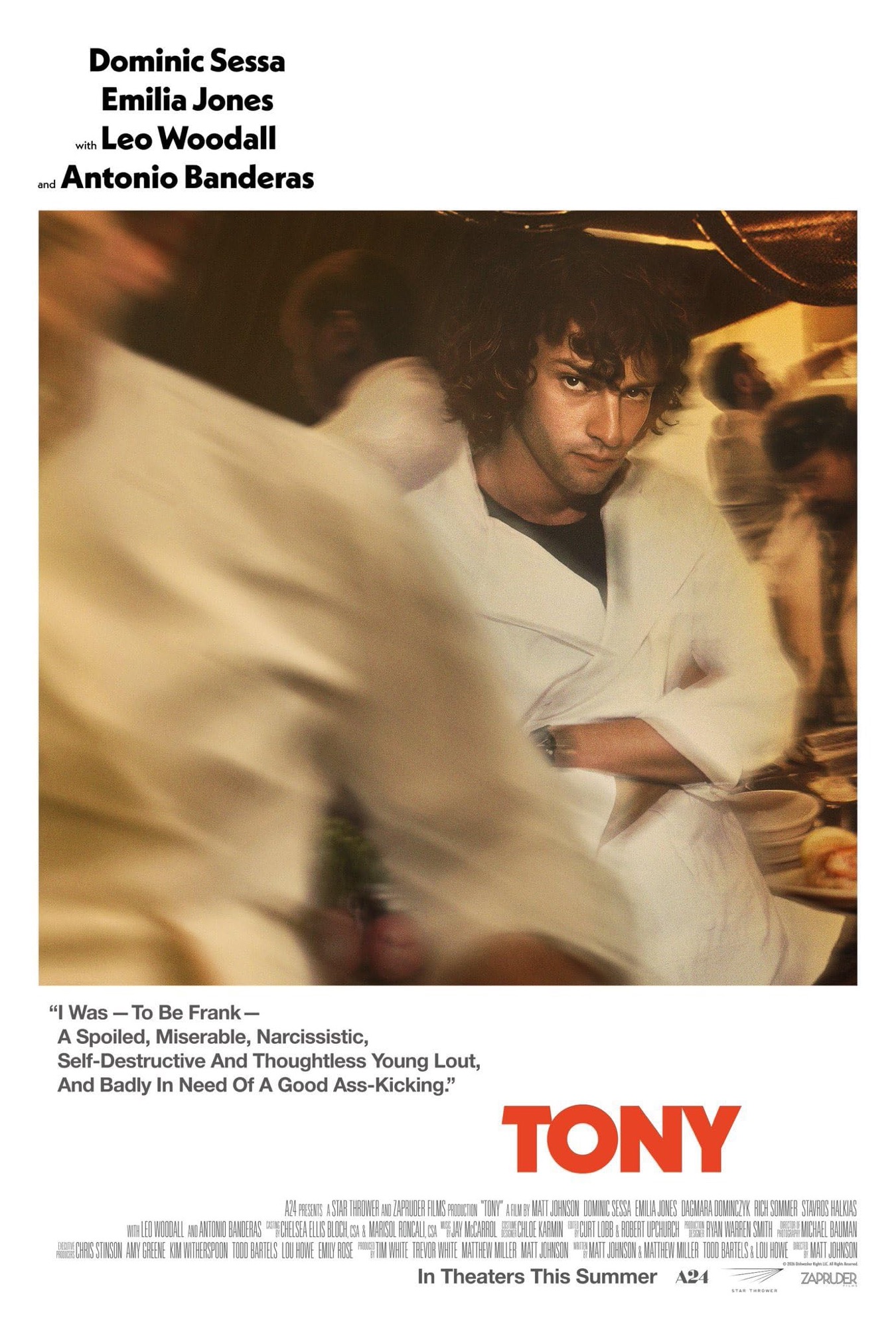


Matt Johnson’s Tony is a film that keeps tripping over its own swagger yet somehow lands on its feet with a grin that dares you to complain. It’s messy, energetic, occasionally profound, and frequently ridiculous, which means it fits neatly into Johnson’s ongoing project of documenting men who believe they’re geniuses long before anyone else agrees

Tony’s early misadventures in Provincetown reveal his struggle to find his place, with a young man wielding a vocabulary he uses defensively, a crush he clumsily pursues, and nunchucks he shouldn’t have bought but thought might help him. Johnson gently uses these details not to ridicule but to show Tony’s efforts to navigate his own insecurities. The film’s humor arises from that honest gap, and Johnson handles it with a reflective confidence that invites understanding rather than smugness.

The restaurant sequences stand out as some of the film’s most compelling moments. Johnson thoughtfully transforms the kitchen into a place where pressure, ego, exhaustion, and ambition intersect, highlighting the intense experiences of those working there. The chaos feels genuine and meaningful, reflecting how talent often develops under stress. Tony’s growth gently unfolds amidst the noise, and Johnson’s careful direction maintains a tense yet empathetic atmosphere. The kitchen becomes more than just a setting; it’s the heart of the film’s emotional journey.

Dominic Sessa brings depth to the movie, skillfully portraying Tony’s arrogance without justifying it, and revealing his vulnerability without seeking pity. Johnson’s camera honors him as both subject and specimen, and Sessa responds with a performance that merges comedic bravado with a genuine emotional fragility. His work enriches the film, providing emotional grounding whenever Johnson’s indulgences risk undermining its integrity.

Antonio Banderas’s Chef offers a compassionate perspective on the film’s moral landscape. Johnson portrays him as a man who, while ambitious, is also aware of his past and the dreams he once held. The film gently critiques mentorship, highlighting how much it is driven by projection. Chef recognizes Tony’s potential, yet he hesitates, seeing in him a younger version of himself that brings back complex memories. This nuanced dynamic adds emotional depth to the film’s otherwise lively energy.

Leo Woodall’s Sal introduces unpredictability into the story. Johnson shows him not as a warning, but as a gentle reminder that charm can sometimes be harmful. Sal’s presence encourages Tony to reflect on the consequences of excess, and the film’s comedic tone becomes more pointed whenever their paths cross. Johnson’s exploration of troubled masculinity is evident here, but he approaches it with more humor than weight, adding a layer of understanding.

The film’s visual approach carefully underscores its thematic depth. Michael Bauman’s vintage lenses lend the world a nostalgic glow, which Johnson gently disrupts with the rawness of kitchen life. The delicate balance between beauty and grime reflects a thoughtful critique of artistic mythmaking. Johnson conveys that memory often sanitizes experience, yet Tony’s journey remains raw and unfiltered, allowing us to connect more deeply with his authentic experience.

Johnson’s script sometimes slips into self-satisfaction, but the film also shows moments of genuine cleverness. It occasionally pauses to appreciate its own wit, which can feel slow but never detracts from the overall experience. When Johnson shifts his focus from the film’s external style to Tony’s internal struggles, the story becomes more intimate and the humor more heartfelt.

The final act offers the film’s most heartfelt moments. Johnson gently steps back from a teasing tone, allowing the characters to express their emotional depth. Tony’s journey into adulthood isn’t portrayed as a victory but as a gentle acceptance of reality. The subtlety in this ending provides a solid sense of maturity, built on the chaos that preceded it without relying on it.

Ultimately, Tony is a heartfelt, messy, and sometimes unexpectedly brilliant film that succeeds more often than it falters. Johnson’s instincts may lack consistency, but his talent for portraying creative chaos is deeply engaging. Sessa’s performance provides a vital emotional grounding, offering a steadying presence even when everything around him seems poised to erupt.

Letter Grade: B+.


Leave a Reply