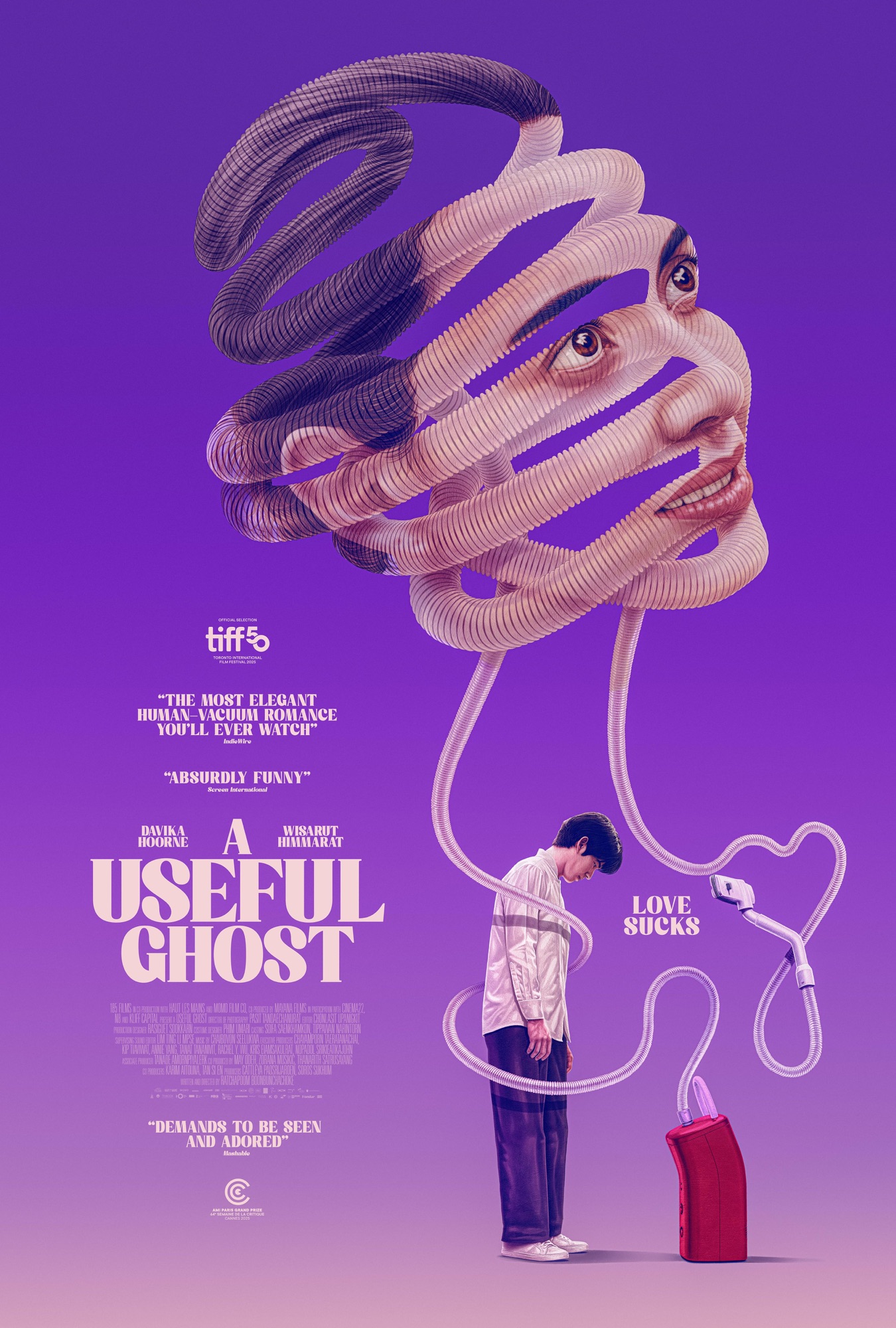


In A Useful Ghost, what first awakens is not fear but a gentle, aching sense of sorrow that Ratchapoom Boonbunchachoke delicately weaves through each scene. His film moves with a tender, deliberate grace, and Davika Hoorne’s heartfelt presence as Nat gives that tenderness a beating heart. The story starts with comedic chaos and gently transitions into political twilight, and this shift feels natural and deeply earned, trusting the audience to follow the emotional journey rather than relying solely on plot. What results is a moving work that flickers with bruised humor and quiet, profound devastation.

Boonbunchachoke’s approach to genre is refreshingly unruly in the most heartfelt way. He allows absurdity to flourish until it transforms into a genuine emotional truth, with the haunted machinery at the film’s core serving as a powerful conduit for grief, longing, and the scars of violence. The vacuum cleaner containing Nat’s spirit is not merely a plot device but a poignant reflection on how industrial spaces often absorb and carry human suffering. Hoorne’s performance deepens this understanding; she offers Nat a mournful radiance that softens every moment of comedy, adding a layer of tenderness. Her presence gently turns the film’s silliness into something more delicate, more deeply human.

The film’s political allegory emerges from this vulnerability. Boonbunchachoke gently reveals how personal grief and national trauma are deeply intertwined, creating a narrative that gradually expands to reflect Thailand’s tumultuous history. The ghosts are not mere symbols but living manifestations of memory—unruly, inconvenient, and impossible to silence. When Nat becomes involved in the government’s dream surveillance project, the tone takes on a darker hue, yet the sadness remains luminous rather than oppressive. It’s a sadness rooted in a profound necessity to be acknowledged and felt.

Davika Hoorne handles this tonal shift with tender mastery. Her performance is both playful and mournful, and she moves through the film with a quiet sense of inevitability, as if Nat’s fate were quietly written in the dust that covers everything. Her scenes with March carry a trembling sweetness, yet that sweetness is always tinged with the understanding that memory can be used as a weapon. The film’s emotional depth grows not through spectacle but through the slow, painful erosion of trust between lovers, families, and citizens.

Boonbunchachoke’s direction gains depth when he explores this erosion with empathy. He portrays domestic spaces as emotional battlegrounds of remembrance, and the factory transforms into a mausoleum of unresolved histories, inviting reflection rather than judgment. The film’s humor—deadpan, strange, occasionally bawdy—never diminishes its seriousness; instead, it enhances the critique, gently revealing how authoritarianism often conceals itself behind absurdity. The laughter becomes a form of resistance, a compassionate refusal to let fear completely override memory.

The film’s final act is its most daring. Nat’s transformation into a state-sanctioned ghost is both deeply tragic and profoundly unsettling, and Boonbunchachoke approaches this shift with poetic restraint. He avoids exaggerated horror, allowing it to build subtly through small gestures, in the way characters speak or fall silent. The political machinery continues its relentless march, prompting reflection on what remains of a person when their memories are exploited for power. Hoorne’s performance becomes increasingly delicate, as if Nat were quietly dissolving before our eyes, evoking a sense of mournful empathy.

Yet the film never loses its sense of wonder. Even in its darkest moments, A Useful Ghost clings to the hope of connection and the power of remembrance that defies being erased. The subplot of the Academic Ladyboy, subtly woven into the main story, serves as a gentle reminder that memory can also be an act of love. His final vow to remember Krong stands out as one of the film’s most heartfelt gestures—a quiet act of rebellion against forgetting.

Boonbunchachoke’s visual style deepens the emotional layers of the story. Dust gently drifts through rooms and factories, settling on bodies and machines, symbolizing both a lingering threat and a poignant reminder of the past that refuses to fade away. The film’s palette transitions from warm, comforting domestic tones to colder industrial hues, highlighting the delicate tension between personal grief and the harsh realities of public violence..

Ultimately, A Useful Ghost is a film rich with contradictions—both humorous and heartfelt, chaotic yet carefully crafted, tender and politically incisive. Its ambitious scope sometimes strains its structure, but Boonbunchachoke’s mastery of tone keeps it rooted in authenticity. Davika Hoorne’s performance lends the film its emotional core, her presence resonating long after the credits roll. This review leans toward the positive, and that mixture of imperfections and strengths only amplifies the film’s profound impact. It is messy, brave, and quietly heart-wrenching.

Grade: B+. On Amazon Prine Video.


Leave a Reply