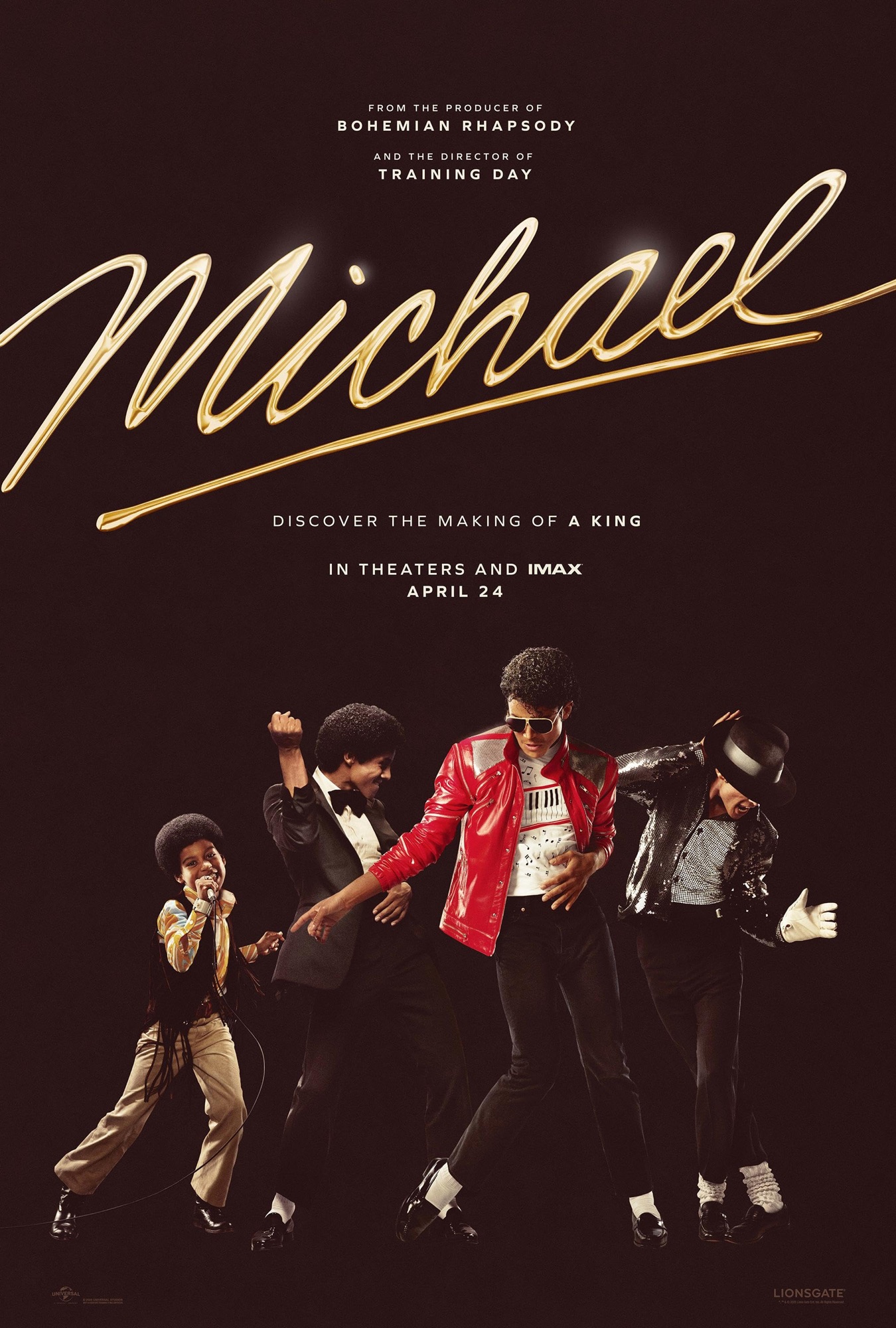


Antoine Fuqua’s Michael opens with a promise it cannot fully keep: a life rendered through movement, pressure, and the strange glow of ambition. The film reaches for transcendence through Jaafar Jackson’s uncanny embodiment of his uncle, and in those stretches the screen hums with purpose. Yet the movie keeps retreating into safer territory, smoothing edges that should remain sharp. What emerges is a work caught between revelation and preservation, a portrait that wants to honor its subject while refusing to confront the shadows that shaped him.

The early passages, tracing the Jackson 5’s rise under Joseph Jackson’s relentless command, carry a hard pulse. Colman Domingo gives Joe a force that never softens, and the film’s best scenes acknowledge the cost of that force. The rehearsals, the belt, the cramped Gary house—Fuqua shoots these moments with a bluntness that refuses nostalgia. The film’s critique gains weight here, grounding the later spectacle in something bruised and real.

When the story shifts to Motown and Berry Gordy’s guidance, the film briefly widens. Larenz Tate plays Gordy with a sly authority that hints at the machinery shaping Michael’s image. The decision to shave years off the boy’s age becomes a quiet thesis about invention and reinvention. Yet the film never pushes this thread far enough. It gestures toward the constructed nature of celebrity, then retreats into reverence.

Jaafar Jackson’s performance anchors the middle act. His physical precision carries the burden of memory, and his voice holds a tremor that suggests both hunger and fear. The film surrounds him with strong presences—Miles Teller’s John Branca, KeiLyn Durrel Jones’s Bill Bray—but it rarely lets these relationships deepen. Instead, it moves briskly through milestones: Off the Wall, Thriller, the Motown 25 moonwalk, the MTV standoff with Walter Yetnikoff. Each moment lands, yet the connective tissue feels thin, as though the film is racing to keep up with a life too large for its frame.

The Pepsi commercial fire becomes the film’s emotional hinge. Fuqua stages the accident with a cold, clinical dread, and for a moment the movie confronts pain without flinching. But the aftermath is softened. The burn center donation becomes a gesture of triumph rather than a doorway into the darker years that followed. The film chooses uplift over complexity, and the choice narrows the story’s emotional range.

The third act, reshaped after legal constraints forced a rewrite, strains under its own optimism. The Wembley performance glitters, yet the film ends its arc before the world turns on Michael, before addiction, isolation, and accusation reshape his legacy. This decision creates a hollow echo. Triumph without consequence feels unearned, and the film’s refusal to engage with the full weight of its subject leaves the final scenes floating.

Still, the musical recreations carry undeniable force. Fuqua stages “Beat It” with gang members from both sides of the Crips–Bloods divide, and the sequence gains a strange, earnest charge. The Thriller shoot, with Asia Fuqua and Jono Petrie stepping into iconic roles, becomes a celebration of craft rather than nostalgia. These moments remind you of the labor behind the myth, and the film briefly breathes.

The scenes of Michael visiting children’s hospitals attempt to counter the audience’s expectations, but their repetition dulls their impact. The film insists on innocence without exploring the loneliness that drove these visits. In protecting Michael, the movie flattens him. The result is a figure suspended between divinity and vacancy, a man whose contradictions are smoothed into a single, unwavering glow.

In the end, Michael becomes a study in constraint—legal, emotional, and artistic. It offers beauty in motion, a committed central performance, and a handful of sequences that pulse with life. Yet it refuses to risk the deeper truths that might have made it essential. The film honors the legend while keeping the man at arm’s length, and that distance leaves a faint ache.

Grade: B+


Leave a Reply