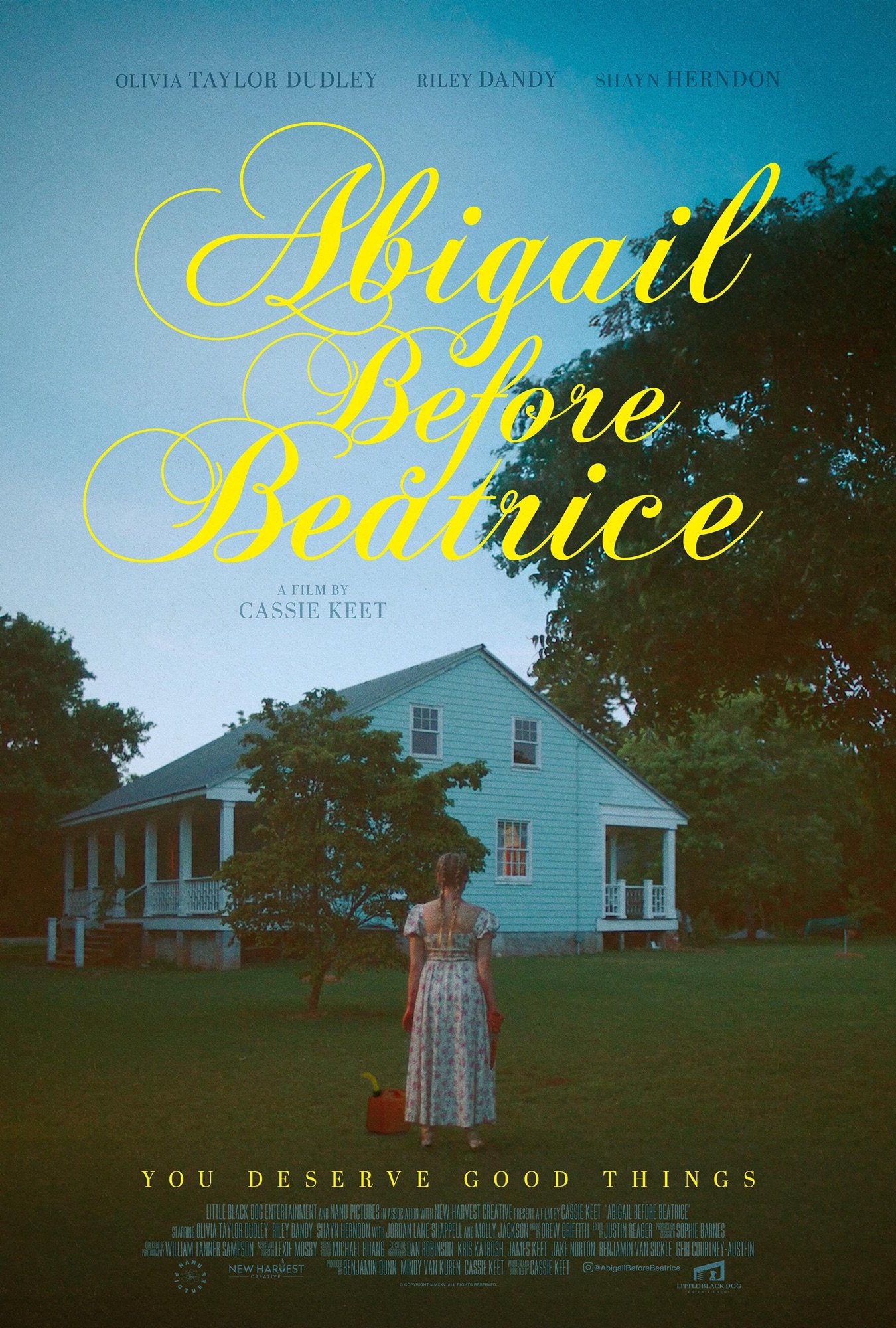


Cassie Keet’s *Abigail Before Beatrice* hums beneath the skin like a memory that never quite settled. It opens not with a bang, but with a breath held too long—a dusty room, a girl staring at a letter she’s unsure she has the right to open. Abigail (Riley Dandy) doesn’t speak in declarations. She watches. She hesitates. The story rests in that pause, stretched between before and becoming.
The setting barely announces itself, though it presses in on every scene: vine-covered brick, hallways flooded with lamp-glow, a town that seems to float just slightly above forgetting. We never learn its name, and that feels right. This is not a place on any map, but a corner of the heart where longing is archived. Through it moves Abigail, wrapped in sweaters too soft for protection, carrying grief she hasn’t yet called by name.
Keet directs with restraint, the kind that trusts shadow more than shape. Each frame feels watermarked with thought. The dialogue never shouts over the quiet. Instead, it weaves around it. The stillness in this film speaks louder than footsteps. Moments pass where nothing is said, and yet everything shifts. The wind changes. A candle goes out. Someone remembers.
Abigail’s journey is not toward revelation but toward recognition. When Beatrice (Olivia Taylor Dudley) finally appears, she does not enter dramatically. She unfolds. We see her through reflection and murmur. Their histories meet like two pages stuck together—fragile, ink-stained, impossible to separate cleanly. The power of their connection is not in resolution but in return. They find each other not through destiny but through pattern, rhythm, and repetition.
The film pulses with poetic logic. Days fold in on themselves. Flashbacks arrive out of season. Keet’s temporal choices don’t confuse; they enchant. Abigail’s past arrives not with exposition, but with a glance at an old street sign, the color of a scarf, the taste of something almost remembered. This is memory with dirt under its nails.

Music is rare but deliberate. A single piano note, repeating like a ritual—a bit static. A woman is humming behind a closed door. The film prefers silence, letting emotion rise in the spaces where sound usually resides. When voices rise—most often Abigail’s—they tremble but never break. Every word is chosen. Every sentence leaves a bruise.
There’s a letter at the film’s heart, but no one reads it aloud. It shifts hands, changes envelopes, and ends up buried beneath an old photograph. We feel its weight without ever knowing its contents. That restraint gives the film its soul—it refuses to explain what the body already knows.
The supporting cast drifts through the story with the gentle gravity of half-dreams: an aunt who speaks in riddles, a neighbor who offers advice only when no one is looking, and a cat that disappears before thunderstorms. These characters do not exist for the plot but for the weather. They tilt the atmosphere and guide the emotional currents.
By the final frame, Abigail hasn’t conquered anything. She hasn’t forgiven or forgotten. But she stands in a field where something once burned and doesn’t look away. The wind picks up. A name is mouthed, not spoken. Then the screen goes dark.
Final Grade: **B+**. Keet has written a lullaby into celluloid. It does not resolve. It resonates.


Leave a Reply