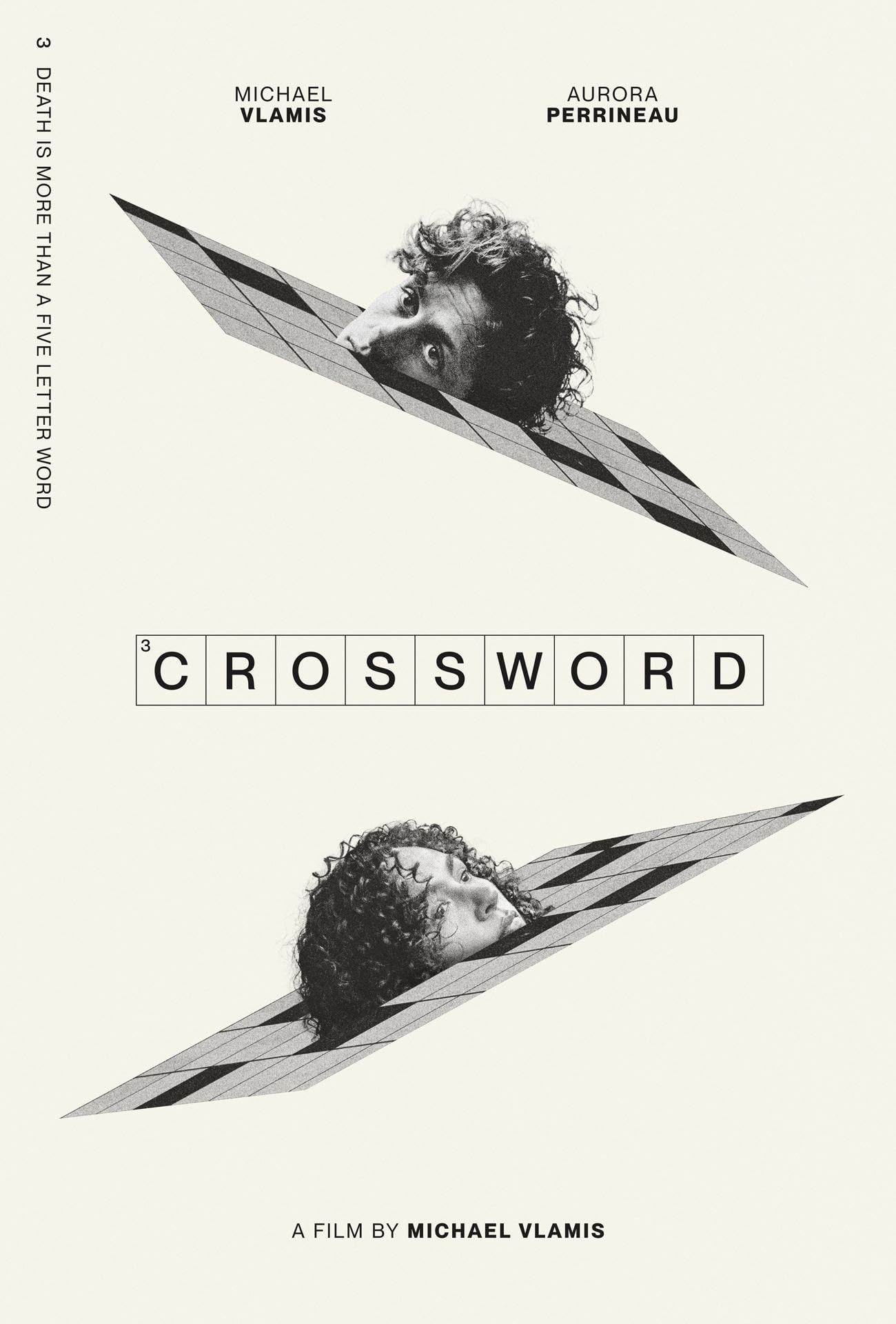


Michael Vlamis’ *Crossword* (2024) is a psychological thriller that delves into the depths of grief and the vulnerable nature of the human mind. The film follows James, portrayed by Vlamis himself, a grieving father who becomes fixated on solving a daily crossword puzzle. As he immerses himself in this obsession, the words in the puzzles eerily begin to mirror his unraveling psyche. Meanwhile, his wife, Tessa (played by Sarah Ramos), copes with the death of their daughter by pouring herself into her acclaimed children’s book series, *Lily Learns*.
The film’s greatest asset lies in its haunting atmosphere, expertly crafted by the director, Vlamis. He immerses the audience in a tense and claustrophobic world where the boundaries between reality and delusion become increasingly blurred.
The cinematography plays a pivotal role in this experience, featuring a muted color palette that evokes a sense of unease, coupled with unsettling close-ups that capture the protagonist’s spiraling descent into madness. This visual storytelling enhances the psychological tension, making viewers feel as though they are trapped within the same suffocating environment as the characters.
The cast’s performances, particularly those of Ramos and Aurora Perrineau, bring an emotional depth to the narrative that resonates powerfully. Their portrayals ground the story’s supernatural elements in raw human pain, allowing audiences to connect with the characters’ struggles on a deeply personal level. As the characters grapple with their inner demons, the film effectively explores themes of fear, isolation, and the fragility of the mind, making it a compelling and thought-provoking cinematic experience.
While *Crossword* introduces an intriguing premise that captivates the viewer’s interest from the very beginning, its execution reveals significant challenges, particularly in terms of pacing. The film frequently dwells on specific sequences for an extended period, allowing tension to build; however, this strategy often backfires. Instead of maintaining suspense, the protracted focus on particular moments leads to diminishing returns, ultimately leaving the audience feeling drained and disconnected rather than engaged.

This excessive lingering can detract from the overall narrative momentum, causing some scenes to feel unnecessarily elongated and repetitive. For instance, pivotal scenes that could have heightened emotional impact instead drag on, diluting the intensity and resulting in a loss of audience investment. By not effectively balancing the build-up with the payoff, *Crossword* risks alienating viewers, making it a film that, while promising in concept, struggles to deliver a compelling and cohesive experience.
While the film aims to explore psychological horror, many of its elements feel underdeveloped and lack the necessary depth to create a genuinely unsettling atmosphere. Key themes and character motivations remain unclear, leaving viewers with more questions than satisfactory answers. This failure to fully develop its psychological aspects detracts from what could have been a compelling exploration of fear and anxiety, ultimately leaving audiences wanting a more coherent and engaging storyline.
*Crossword* is an ambitious film that successfully creates an eerie, thought-provoking experience, but it struggles with narrative cohesion. It’s a compelling watch for fans of psychological thrillers, although some viewers may wish for a more polished conclusion.
**Grade: B**


Leave a Reply