Tag: poetic restraint
-

A Child’s Memory Poem
This poem began as a memory fragment—an image of a child improvising sanctuary for slugs and snails during a rainy weekend with her father. I wanted to explore how care, grief, and survival manifest through small gestures: a cracked fishbowl, a wilted lettuce leaf, a library book. The poem resists sentimentality and instead leans into…
-
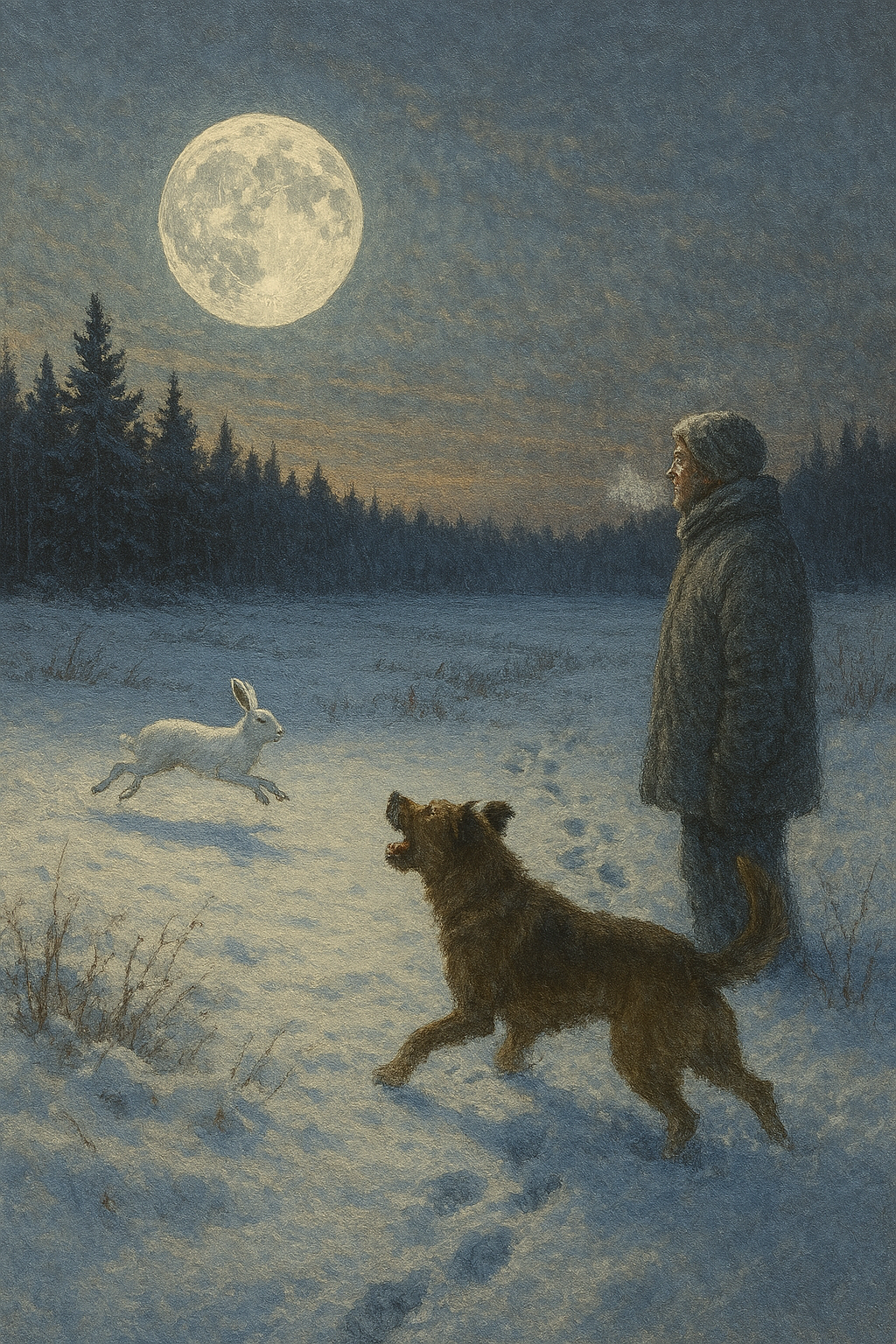
Late January Arrives
“January Arrives” emerged from a moment of stillness fractured by motion—a hare vanishing into snow, my dog’s bark echoing through the cold. I wrote this poem to honor the tension between presence and disappearance, between the human gaze and the animal trace. I wanted to create a lyric that holds without reaching, that observes without…
-

J’s Sky
“J’s Sky” emerged from the final moments I shared with someone I loved deeply. I wrote it in the hush that followed her passing, where grief had no metaphor—only gesture. The poem resists sentimentality and instead ritualizes consequence through pared-down language and elemental imagery. The sky becomes a container for ash, not answers. I wanted…
-

Shadows and Ghosts and Angels
This poem emerged from a real CT scan I underwent—an experience that felt both absurd and sacred. I wanted to capture the paradox of being scanned for tumors while feeling the warmth of contrast dye and hearing the machine’s screech. The poem resists sentimentality and dramatization. It’s a meditation on diagnostic ritual, the bureaucratic anticlimax…
-

Ten Prayer Requests Folded Like Love Notes
This poem began as a private act of grief and ritual—a way to place prayers where no one would find them but God. I wrote it in a shaky, illegible hand, not for clarity but for sincerity. The poem explores themes of sacred concealment, ethical restraint, and the refusal of spectacle. It’s a gesture of…
-

Sightlines
Sightlines” emerged from a moment of ritual clarity—when my aging eyes, no longer tasked with precision, began to see through blur into beauty. The poem honors the body’s quiet adaptations and the mind’s compensatory grace. It’s a minimalist elegy for vision, a philosophical gesture toward perception as ritual. I wanted to write something that doesn’t…
-
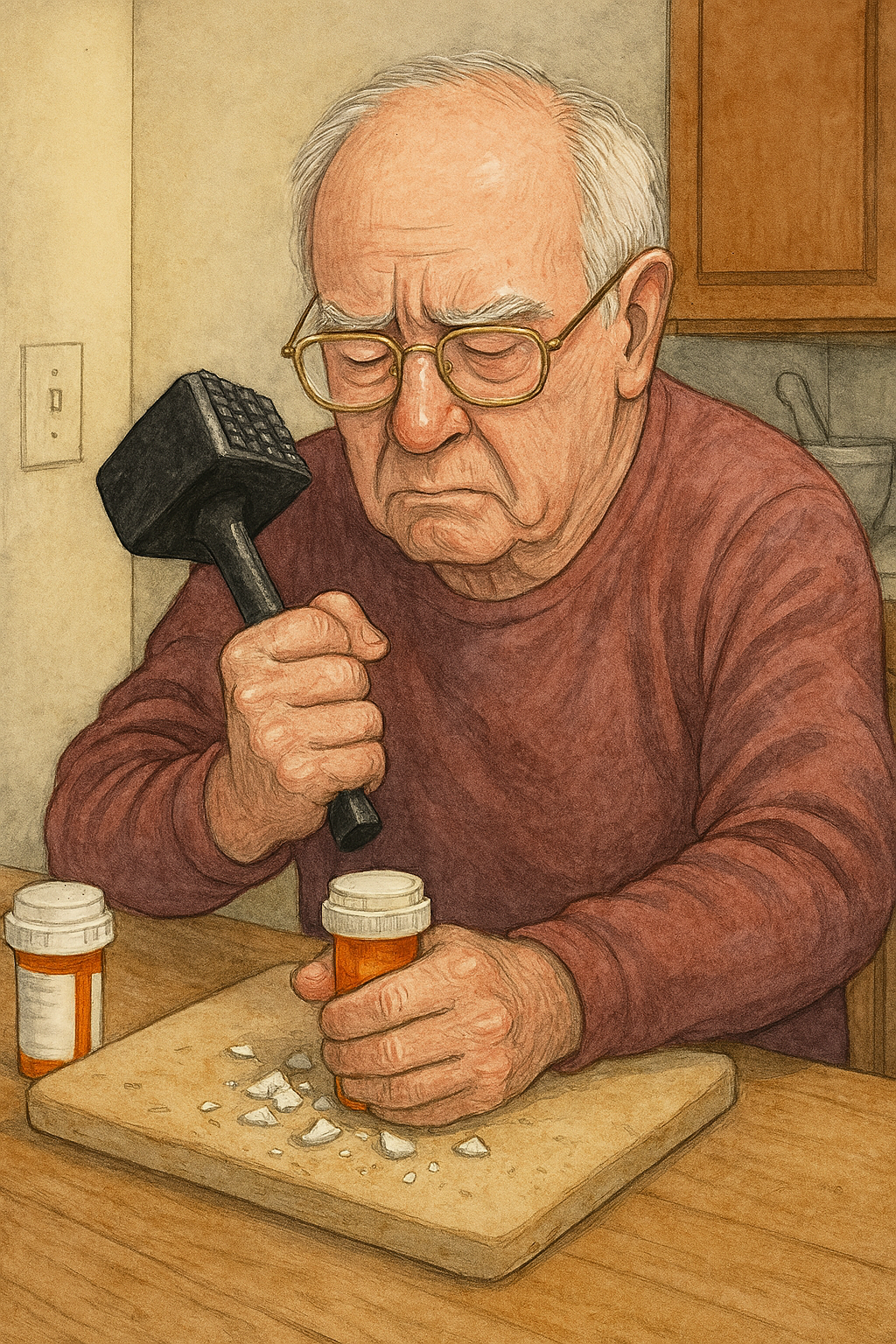
Opening Up
Opening Up emerged from a moment of absurd domestic frustration—an aging hand versus a childproof cap. What began as a minor inconvenience unraveled into a meditation on dependency, ritual, and the quiet humiliations of aging. The poem is both elegy and satire, honoring the intimacy of shared routines while resisting sentimentality. I wanted to capture…
-
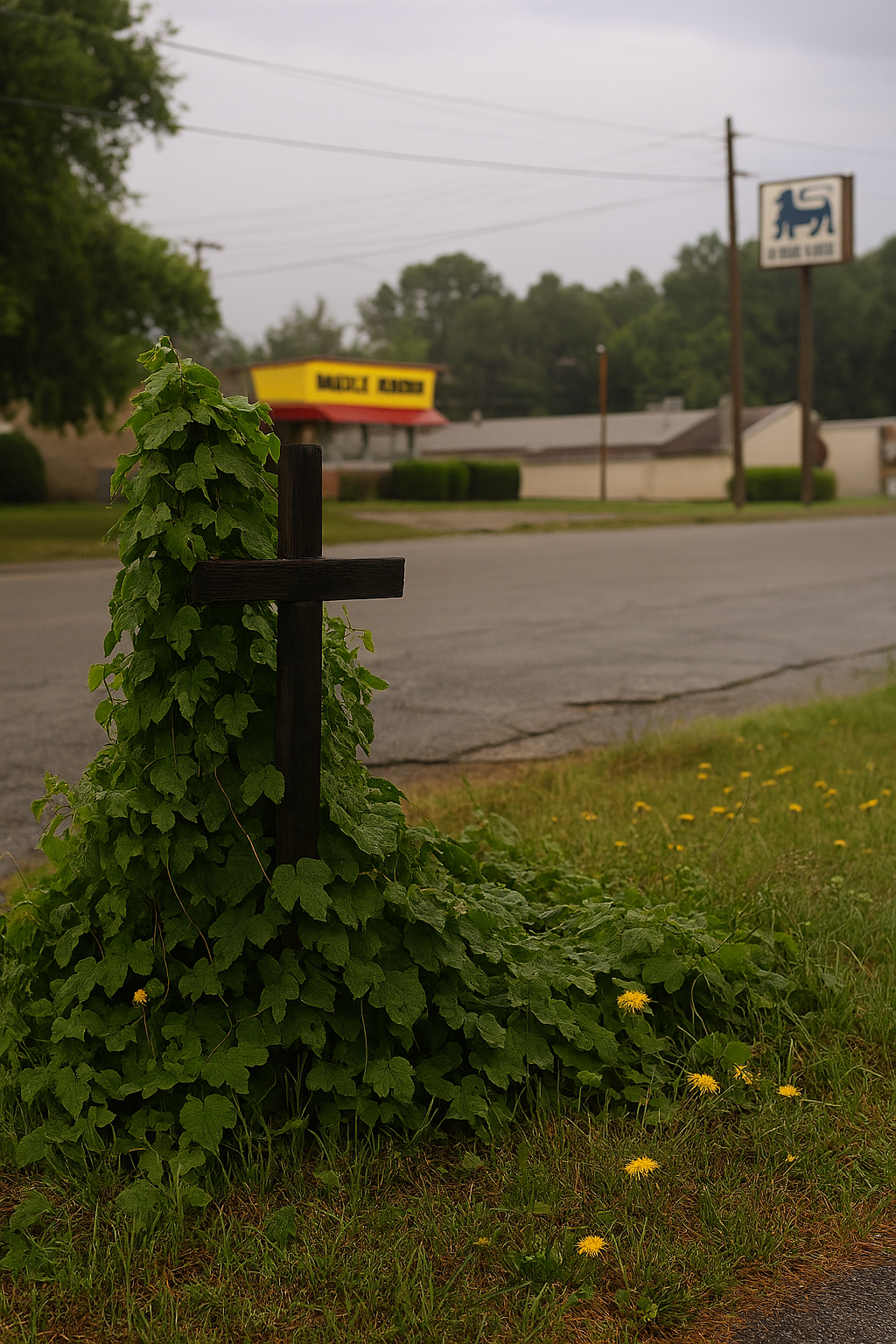
Roadside Cross
Roadside Cross began as a walk with my dog past a forgotten memorial near a Waffle House and Food Lion. What struck me wasn’t just the decay of the cross, but the quiet choreography of grief—how strangers, puddles, rap lyrics, and rain all participated in a ritual of exposure and forgetting. I wanted to write…
-

Blue Mercy
“Blue Mercy” began as a quiet observation—a fly, a door, a gesture. But beneath its domestic stillness, I found a philosophical hinge: mercy as both restraint and release. The poem is an allegory of consequence, where the blue swatter becomes a symbol of ethical tension—between intervention and surrender, between light and disappearance. My wife’s presence,…
-
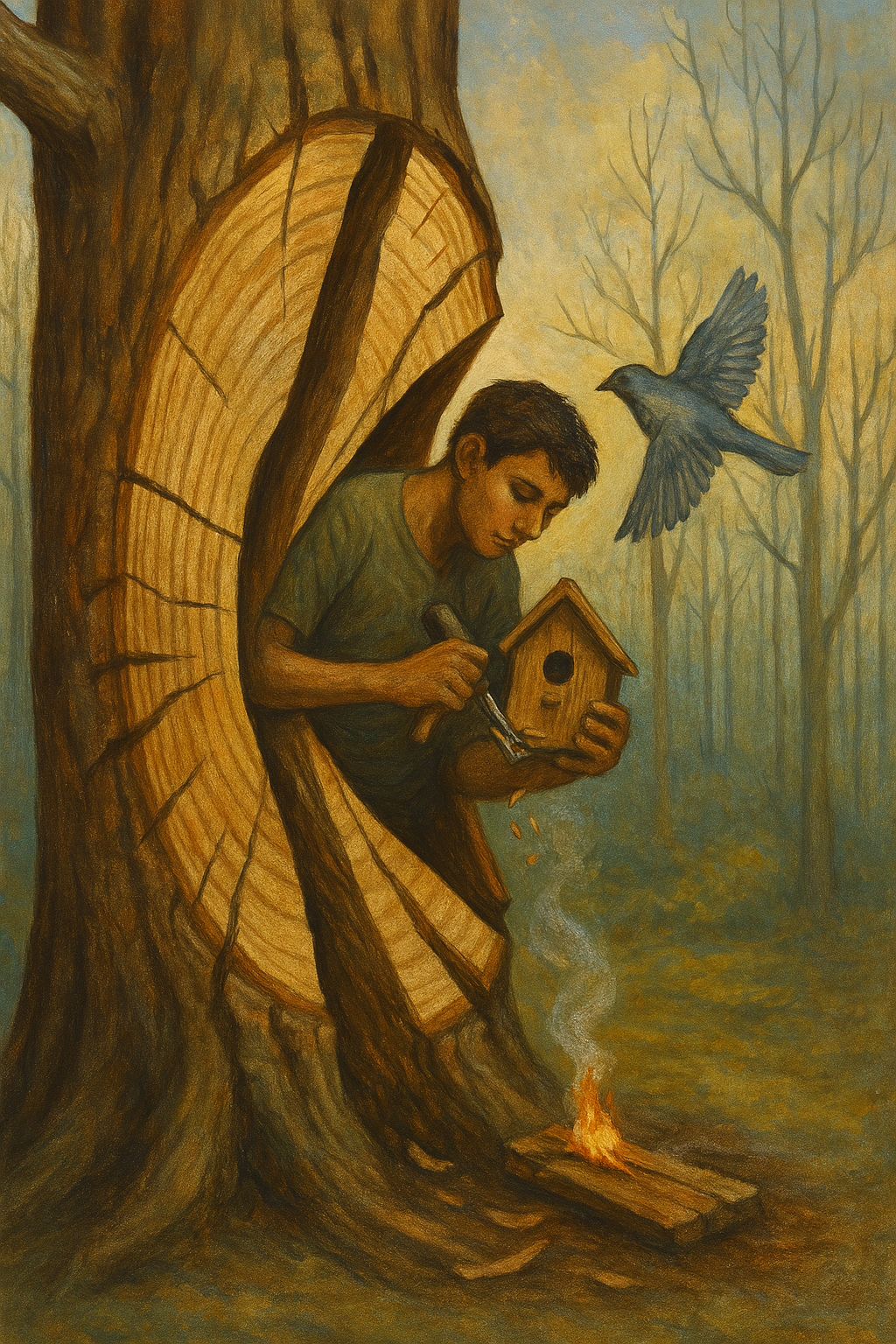
Reclamation Song
Reclamation Song emerged from my refusal to inherit grief as myth. I wanted to write a poem that dismantled lineage without dramatizing it—where the speaker doesn’t mourn but revises. The tree is not metaphor; it’s archive, reliquary, and burden. Each stanza performs a gesture: excavation, disinheritance, refusal, and rebuilding. I invoked Tsi’yugunsini to align with…
-

I Will Not Go to the Light Having Known Nothing of the Darkness
I wanted to write a poem that metabolized silence, that honored the gestures we inherit but never name. The title came first—a vow not to bypass darkness in pursuit of light. From there, each stanza became a vessel: bruised fruit, a crocheted blanket, a drawer that won’t close. I wrote it to preserve what frays.
-
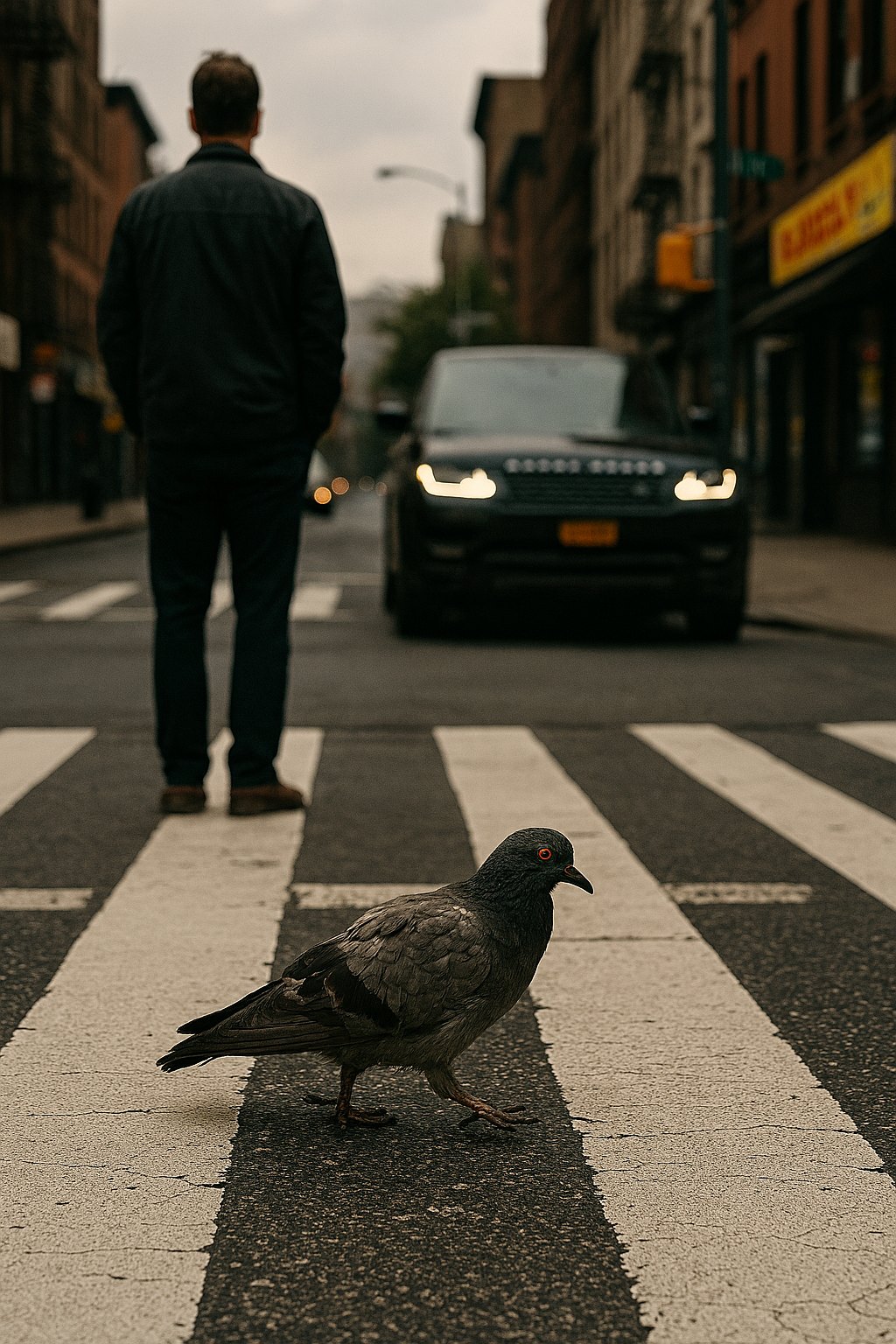
In My Natural Habitat
I wrote In My Natural Habitat after a moment of stillness at a crosswalk—watching a limping pigeon thread itself through traffic while someone behind me shouted to move. That tension between urgency and pause, between public gesture and private recognition, became the emotional seed of the poem. This piece explores how urban life shapes our…
-
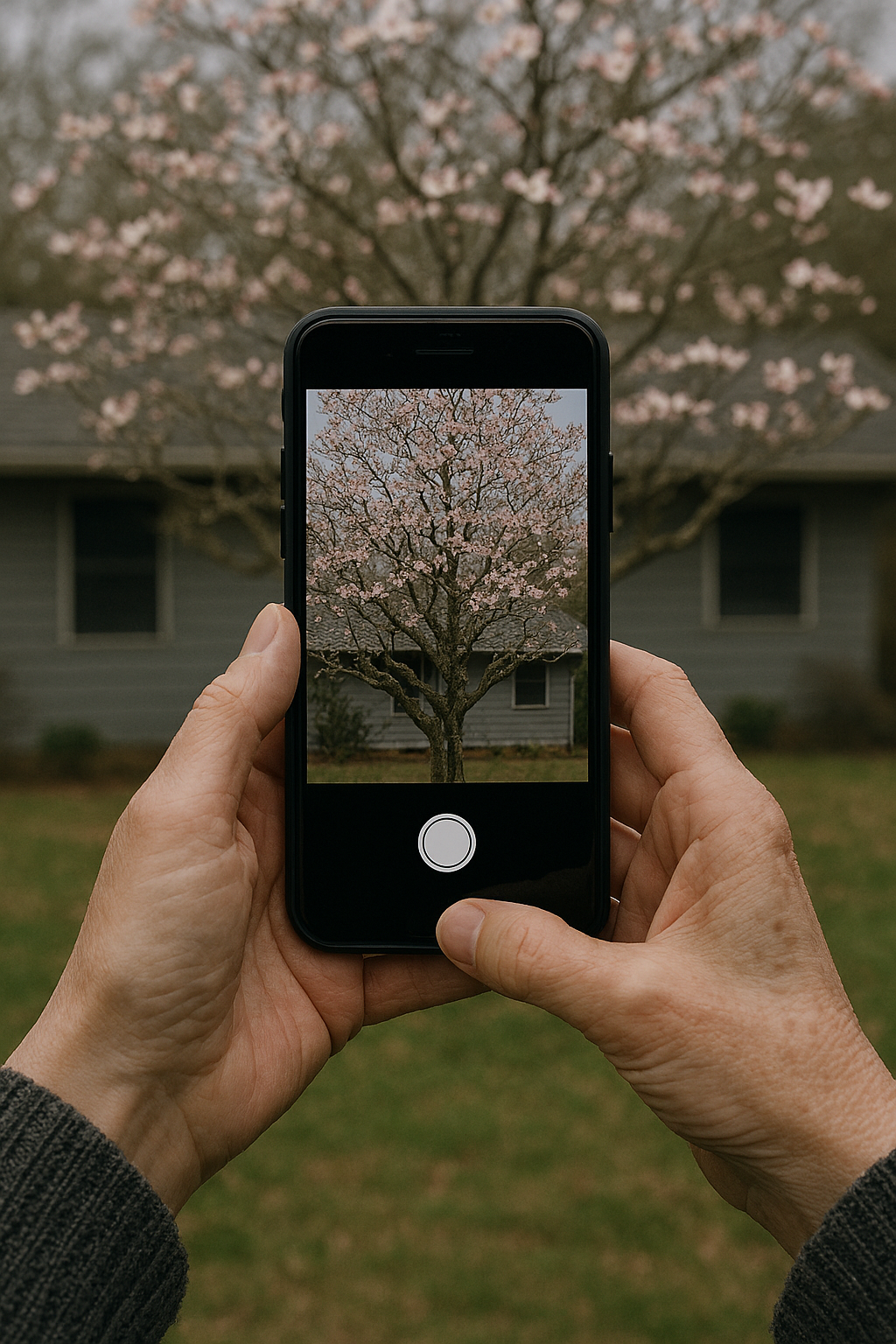
Photo Stop
This poem began as a meditation on gesture—specifically, the act of photographing something not to share, but to preserve a private emotional truth. I was thinking about how grief often manifests in small, unceremonious rituals: lifting a phone, deleting and retaking an image, placing it back in a purse chosen for protection rather than style.…
-

When the city leaves you—
When the City Leaves You is a poem about the aftermath of abandonment—personal, civic, and emotional. It unfolds in fragments, each stanza a vignette of silence, gesture, or failed connection. The speaker moves through a landscape of urban decay and quiet witnessing, encountering figures who reflect their own disorientation. The poem resists resolution, instead dignifying…
-

Prayers Between Us
I do my laundryin the rhythm of my mother’s prayers—each crease a rosary,folding divineto divine.I count the timesher perils met mine—with hands that trembledat my fever,hands burntin a kitchenunseen,List the register of her and mine shared frailties:the way we flinched at sudden joy, unsure it would stay,All the letters written to my heart—the notes she…
-

Sanctuary
SanctuaryThey sit on a stone bench in the sanctuarypressed against the highway’s edge—listening to bird songs intertwine overheadin this cage of golden mesh,five blocks long and ten stories high.One is blind, the other legless.The blind one, wearing his old army jacket—the replacement for the one torn to shreds in the flash—tilts his head to the…