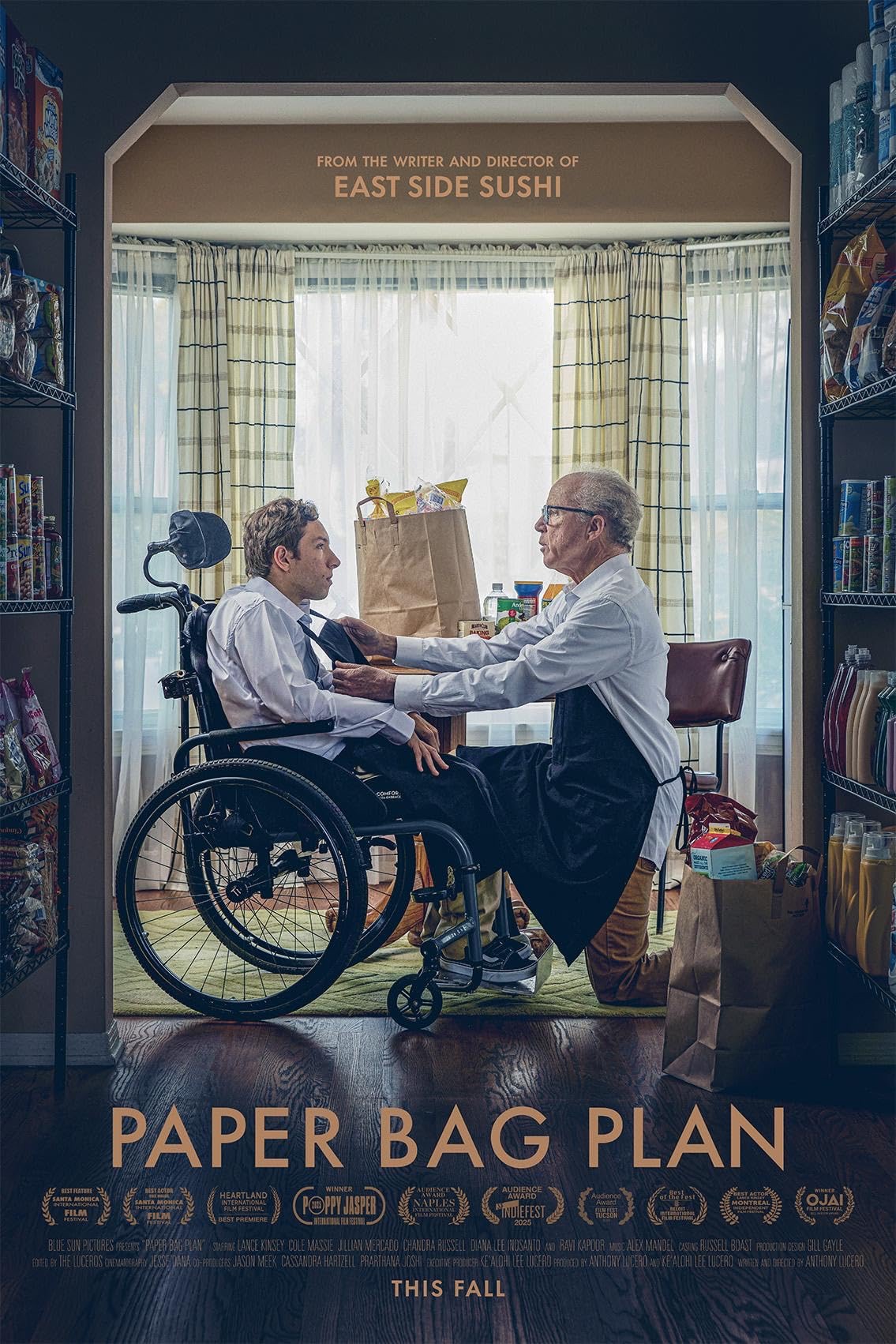


Some household arguments begin with one person trying to be practical, while the other gently points out how that practicality has begun to feel like control. Directed by Anthony Lucero, *The Paper Bag Plan* explores this tension through a father who wants to prepare his son for a future he may not be there to witness. The film finds genuine warmth in their story without leaning too heavily on sentiment.

In an argument with my wife about the film, I would probably argue that it knows exactly which emotional buttons it’s pressing. She might counter that there’s nothing wrong with stirring emotion when those feelings are genuine. The film earns much of its emotional weight through its restraint, especially in its sensitive portrayal of disability and independence. When Oscar (Lance Kinsey) receives a cancer diagnosis, he begins to realize that his years of protecting Billy may also have limited Billy’s opportunities. Rather than turning that painful realization into a grand lesson, Lucero stays close to the everyday realities of employment, self-sufficiency, and a parent’s worries. The result feels grounded, compassionate, and deeply human.

Cole Massie’s performance as Billy especially moved my wife and me. As a veteran actor living with cerebral palsy, Massie brings a depth of authenticity that the screenplay alone can’t create. His performance is nuanced, natural, and emotionally genuine, never asking the audience for praise simply for being there. Billy feels fully realized, with his own frustrations, ambitions, and agency. The film is at its strongest when it trusts Massie to carry a moment, rather than adding extra emotional emphasis around him.

I might mention to my wife that films about disability can sometimes slip into what has come to be called “inspiration porn.” Sadly, that concern isn’t entirely unfounded. The Paper Bag Plan occasionally approaches familiar territory, where adversity risks becoming a source of feel-good reassurance for the audience. Still, Lucero tends to pull back before those moments take over. The film keeps returning to Billy’s hopes for meaningful work and greater independence, treating his goals with care and keeping the focus where it belongs.

Lance Kinsey delivers one of his most affecting dramatic performances as Oscar, a loving father whose deep devotion can sometimes make things harder for him and those he cares about. The screenplay treats his overprotectiveness with compassion, recognizing how easily concern can become an obstacle. Oscar’s journey feels all the more moving because the story allows him to be imperfect, rather than expecting him to be simply noble.

The supporting cast, including Diana Lee Inosanto, Bernadette Guckin, Ravi Kapoor, and René Mena, brings warmth and humanity to the community surrounding Billy on his journey. Their performances gently underscore the film’s central idea: independence is rarely something anyone achieves alone. Though some scenes may feel familiar, the ensemble’s heartfelt presence keeps the story engaging.

What ultimately distinguishes The Paper Bag Plan is its thoughtful portrayal of competitive employment as a meaningful goal, not merely a symbolic victory. The film acknowledges the real challenges people with disabilities may face in the workforce while also honoring the possibilities ahead. It neither suggests that determination alone can overcome every obstacle nor defines disability solely by hardship. This compassionate balance lends the film its credibility.

Yes, I might still roll my eyes at a few of the film’s more tender moments, and I can see how some scenes lean a little too heavily on emotion. But my wife would remind me that it moved me anyway. I’d gently point out that I only realized I’d been swept up in it after the credits rolled.

A thoughtfully told and beautifully realized story that honors the humanity and potential of people living with disabilities, *The Paper Bag Plan* succeeds by seeing its characters as people first. Cole Massie gives a sincere, affecting performance. At the same time, Anthony Lucero’s largely restrained direction lends warmth to this heartfelt exploration of independence, family responsibility, and the tenderness—and courage—required to let go.

Grade: B+. Amazon Prime Video.


Leave a Reply