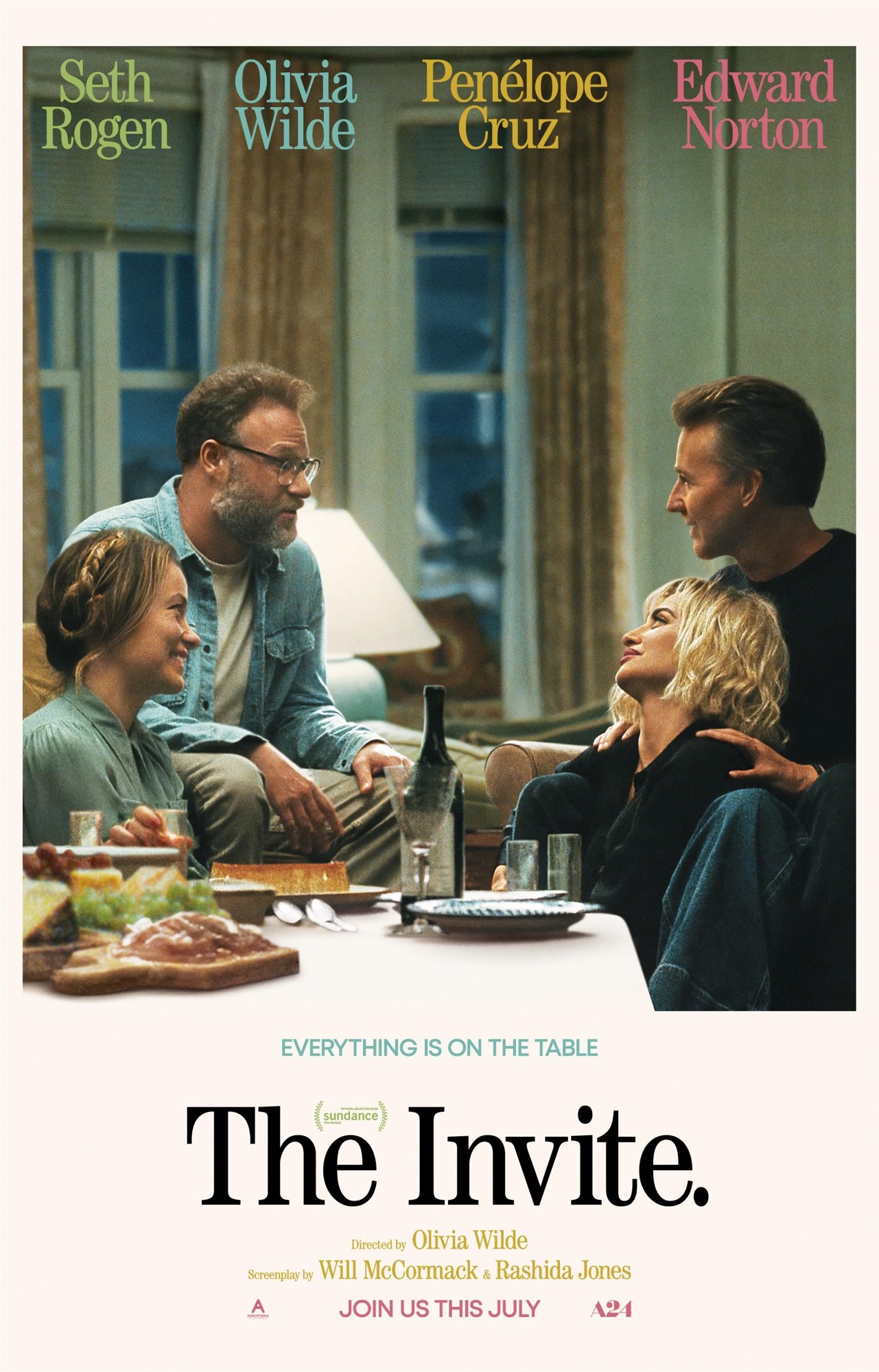


Olivia Wilde’s *The Invite* is a domestic comedy that views marriage not as a sacred institution, but as a relationship shaped by the small disagreements and unspoken feelings that can build over time. Directed by Wilde and written by Will McCormack and Rashida Jones, the film adapts Cesc Gay’s Spanish film *Sentimental*, which grew out of a stage play. It brings four people together in a San Francisco apartment, where they gently challenge one another’s assumptions, share their resentments and hopes, and reveal the ways they cope. The setup is theatrical by design, and Wilde embraces that intimacy rather than trying to disguise it.

The Edward Albee influence is present from the film’s opening exchanges. Who’s Afraid of Virginia Woolf? feels like its closest ancestor—not because these characters descend to the same depths of emotional devastation, but because the couples struggle through an uneasy dance of revelation and self-protection. Their jokes can wound, and their retreats into social niceties seem like attempts to protect themselves before they circle back to another difficult truth. The apartment grows tense and confining. Everyone tries to ease the strain with manners and polite conversation, while the audience watches those efforts falter in real time.
The comedy works because the frustrations of married life feel so familiar. Joe and Angela aren’t facing dramatic betrayals; they’re caught in a long stretch of small, recurring conflicts. Each comment carries the weight of past disagreements, and each irritation has roots in hurts that may have faded from view over the years. Wilde portrays them with compassion, never making either spouse a villain. The film recognizes how couples can gradually lose sight of themselves within the relationship they built. The affection and longing that once brought them together have become buried beneath routine and accumulated grievances.

That idea connects directly to Wilde’s expressed interest in relationships and identity. Drawing in part on observations from her own high-profile relationships and breakups, the film gently returns to a central concern: the importance of taking responsibility for your own happiness while holding on to your sense of self within a partnership. Joe and Angela’s marriage feels worn down, in part because they’ve come to rely too heavily on the relationship itself to meet their emotional needs. They hope their marriage can heal wounds that, however much they care for each other, neither can mend alone.
Hawk and Piña’s arrival gently unsettles that illusion. Joe and Angela may not fully understand what is happening upstairs, but they hear it night after night. Their neighbors’ noisy sex life becomes more than an annoyance; it serves as a constant reminder of something they feel is missing. Joe responds with irritation, while Angela feels envy. Beneath their frustration is less the noise itself than the painful sense that another couple seems able to embrace desires they can barely acknowledge in themselves.

Wilde deserves credit for bringing contemporary conversations about relationships into a mainstream comedy with warmth and without making them feel like a lecture. Through Piña, a therapist and sexologist, the film gently introduces ideas associated with Esther Perel’s work: the tension between intimacy and desire, the concept of compersion, the mystery that can help sustain attraction, and the possibility that a relationship can end and begin again without the people involved separating. One of the film’s most compassionate observations is that long-term love often asks people to keep growing and becoming new versions of themselves, while staying with the same partner. Sometimes, a new relationship begins within the one already there.

These themes could easily feel clinical, but the screenplay handles them with warmth, bringing conversations often reserved for therapy offices into the shared public space. It turns psychological language into gentle comic tension, letting each uncomfortable confession meet a moment of humor—and each joke make room for a deeper truth. The result is a film that invites audiences to sit with difficult questions without making them feel as though they’re attending a seminar.

The film’s theatrical roots remain evident throughout. Nearly the entire story unfolds over a single evening in one apartment, where shifting alliances, verbal sparring, and delicate negotiations of intimacy drive the drama. The confined setting may feel restrictive, but it also draws us closer to the characters and their struggles. With nowhere to escape, each revelation must be faced in the moment, and even the most awkward silences linger between them.
The performances flourish under those conditions. These four actors are a pleasure to watch together, each bringing a distinct comic sensibility. Edward Norton gently leans into farce, while Olivia Wilde brings warmth to her comedy of manners. Penélope Cruz adds a romantic sensuality that softly shifts the room’s dynamics, and Seth Rogen offers the cast’s most unexpected performance.

Rogen understands the sadness beneath Joe’s sarcasm. In his line readings, we hear a man who never quite believed he deserved his wife and who spent years watching that insecurity deepen into resentment. Joe complains about everything, perhaps because facing his disappointment in himself feels too painful. Rogen brings warmth and humor to that pain without diminishing it, creating an impressively nuanced performance.
Cruz also becomes central to the film’s larger argument. Piña is more than a catalyst; she embodies qualities Angela longs to express more comfortably: confidence, emotional openness, sensuality, and self-awareness. Their dynamic brings some of the film’s most amusing exchanges, while gently revealing Angela’s private frustrations and vulnerability. Wilde’s performance can feel a little restrained, especially in moments that call for broader comic exaggeration, but she still conveys Angela’s restless dissatisfaction effectively.

The film has its share of shortcomings. Some signs of Joe and Angela’s marital stagnation come across a little too emphatically, and a few emotional turns feel familiar. At times, the screenplay spells out ideas the audience might otherwise have been trusted to discover. Still, these are relatively minor concerns in a film that handles its tone with such confidence.

What ultimately makes *The Invite* so affecting is its gentle willingness to move from comedy into drama without losing the warmth of either. By the final act, the humor carries real emotional weight. The film understands a few tender truths romantic comedies often overlook: conflict alone rarely breaks a relationship as quickly as cruelty. Couples may find themselves resenting the very qualities that once drew them together. And when kindness fades from a home, everyone feels its absence.

The movie’s most resonant observation may also be its simplest: sexuality is not merely something people do; it is a place they go. Joe and Angela have drifted apart from that place, and from each other. Their evening becomes a tender attempt to find a way back—through reinvention, honesty, or the gentle release of old stories about who they think they’re supposed to be.

For a film centered on the discomfort of dinner-table conversation, The Invite is surprisingly engaging. It has a few off-key moments, but its rhythm is generally inviting, its direction thoughtful, and its subtle details gently illuminate the characters’ anxieties and longings. What begins as a quietly comic domestic story gradually makes room for real emotional hurt, then suggests that relationships endure not by staying unchanged, but by learning to adapt.

Ultimately, The Invite suggests that the kindest path isn’t always to preserve a relationship exactly as it is. Sometimes, it means finding a way to begin anew with the same person.

B+. HBOMAX.


Leave a Reply