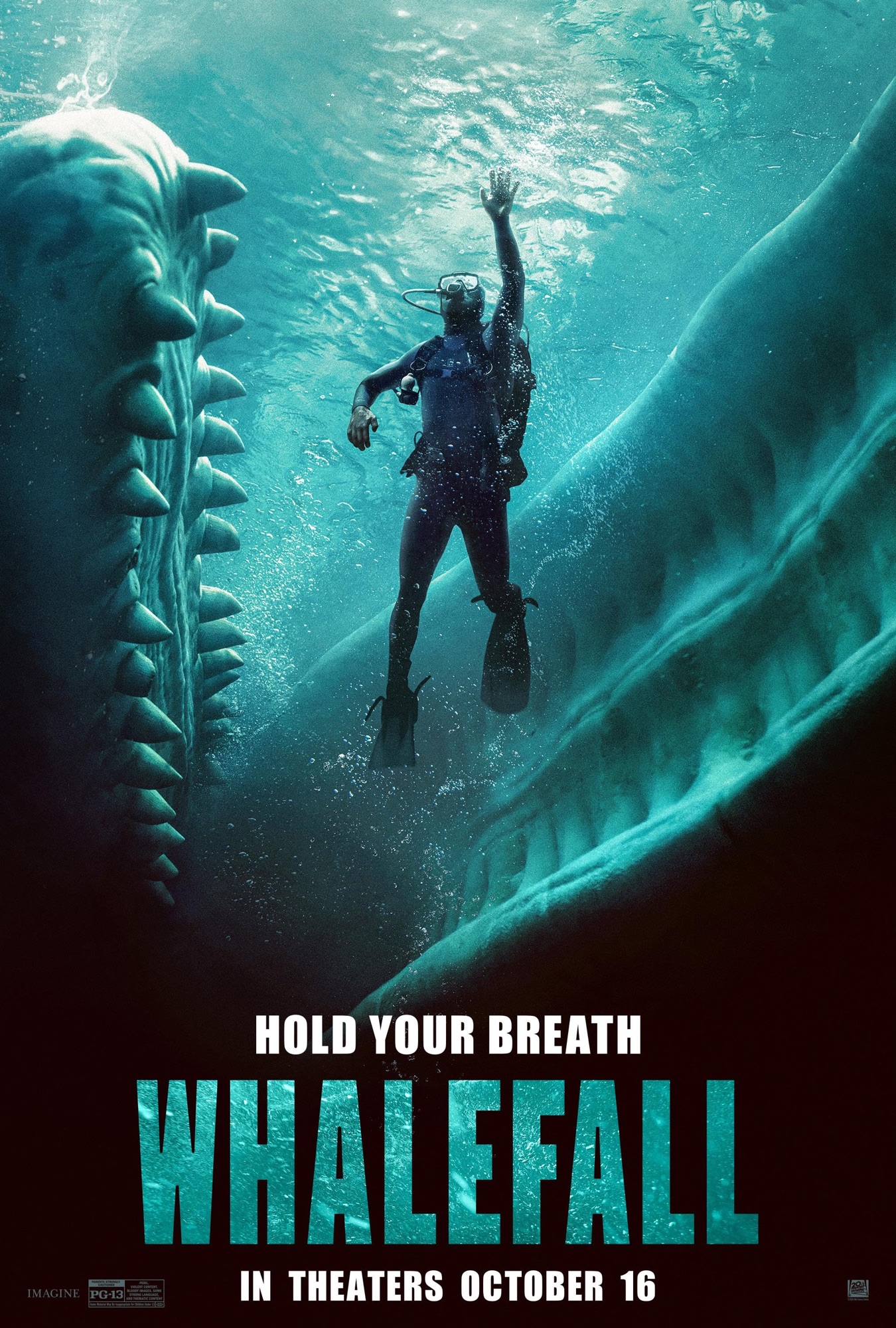


Brian Duffield’s *Whalefall* takes a survival-thriller premise that might seem almost too strange to believe and finds a deeply human sadness within it. Adapted from Daniel Kraus’s novel, the film traps Jay Gardiner (Austin Abrams) inside a sperm whale, using his terrifying ordeal to explore regret, family inheritance, and the conversations death leaves unfinished. The premise carries obvious risks, but Duffield approaches it with care, committing to its emotional and visual world. The result balances visceral spectacle with sincere reflection, even when symbolism occasionally spells out more than it needs to.

The film’s greatest strength is the compassion with which it turns a survival story into an exploration of grief’s physical weight. The whale is more than an obstacle, and Duffield avoids confining it to a single metaphor. Instead, it becomes a space where memory, guilt, and the possibility of reconciliation can coexist. The film’s recurring returns to Jay’s relationship with his late father lend the story a quiet emotional pull, while the flashbacks sensitively show how parental lessons can stay with us long after love has become mixed with hurt and resentment. The screenplay sometimes states these ideas too plainly, but its emotional foundation is strong enough to carry the film through those heavier moments.

Visually, Whalefall is often striking. The production design and effects teams create an interior world that feels organic, hostile, and strangely beautiful, with surfaces that seem damp, damaged, and alive. The sound design gently draws us deeper into the atmosphere, using distant clicks, groans, and vibrations to make the whale feel less like a setting and more like a living presence. Duffield recognizes how confinement can create cinematic tension and finds thoughtful variations in the cramped environment, helping the film feel visually engaging. Even when the narrative slows, the sensory experience remains absorbing.

Austin Abrams takes on a demanding role, carrying much of the film in near-total isolation and delivering dialogue that sometimes strains for profundity. Even so, his performance brings warmth and emotional grounding to the material. He conveys panic, exhaustion, and frustration while keeping Jay’s enduring sadness close to the surface. Josh Brolin adds a rough-edged counterpoint in the flashbacks, though some of the father-son exchanges could have benefited from more variation. The screenplay sometimes turns each lesson into a setup for a later plot point, making the story feel carefully engineered beneath its emotional surface. As a result, moments that might have unfolded naturally can feel a little too prearranged.

Even so, Whalefall succeeds more often than it falters. Its shortcomings seem to come not from reaching too far, but from moments when it doesn’t quite trust its audience. The themes can feel a little insistent, and some revelations arrive just as expected. Still, the film’s emotional sincerity, immersive craftsmanship, and unusual central conceit give it a distinct place in the survival-drama genre. Duffield offers a tender, melancholic reflection on loss, held within a tense struggle to survive. By the end, the film leaves us with an image of endurance that gently lingers, even after the story’s mechanics have faded from memory.

Grade: B+.


Leave a Reply