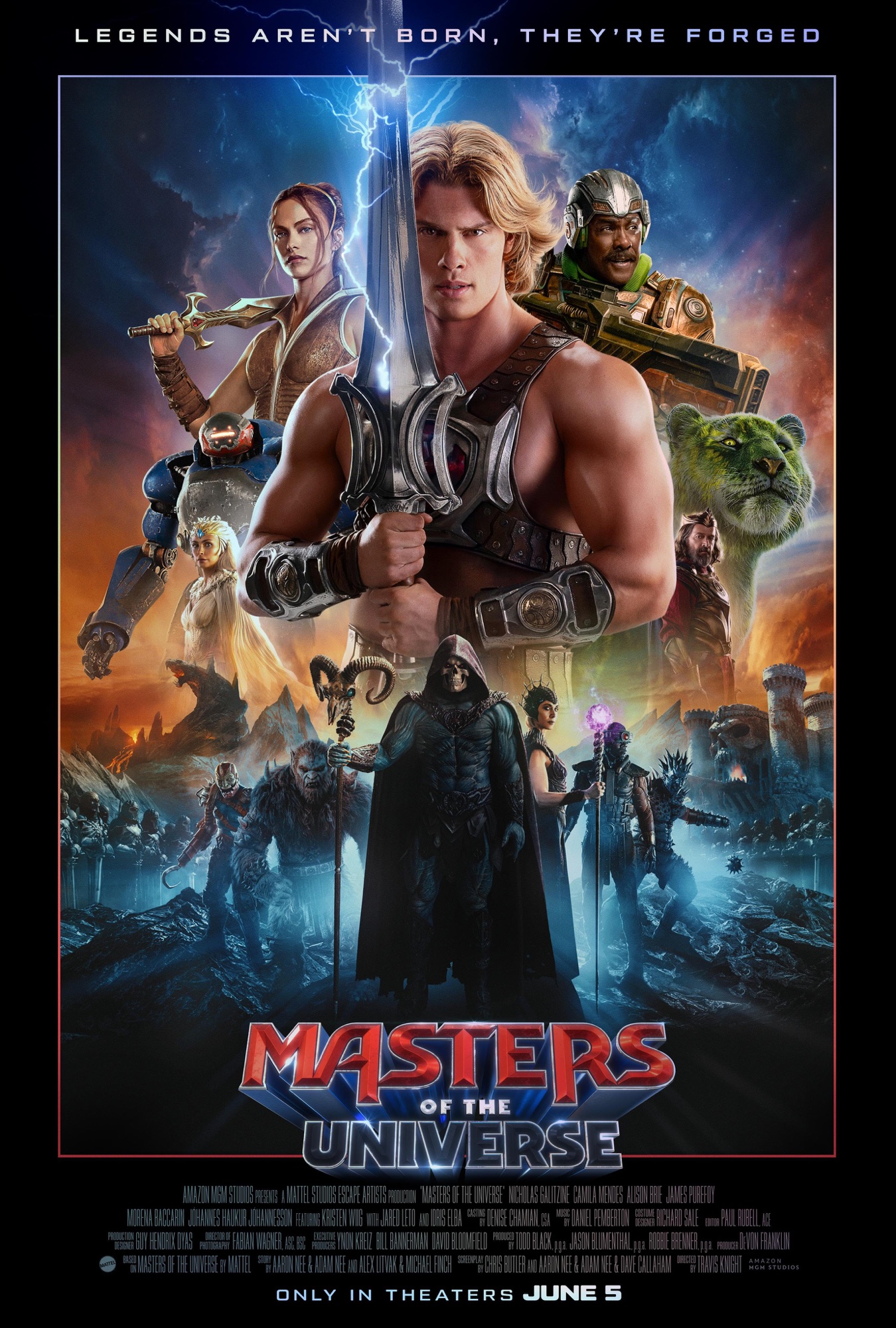


The new Masters of the Universe, directed by Travis Knight and anchored by Nicholas Galitzine’s open‑hearted Adam, moves with a strange confidence. It knows the material carries decades of camp and corporate weight, yet it keeps reaching for something warmer, something that refuses to collapse into pure winking detachment. The film’s first gesture — Adam recounting the wonders of Eternia to a date who abandons him mid‑story — sets the tone. It announces a world where sincerity keeps trying to surface through the noise.

Knight leans into that tension. The Oklahoma City passages give Adam a life of small humiliations and stubborn belief, and Galitzine plays those beats with a steady, unguarded presence. His obsession with the Sword of Power becomes a form of longing rather than a punchline. When he finally retrieves the sword from a comic shop and Beast Man tears through the parking lot, the film shifts into its true register: a collision of the mundane and the mythic that refuses to apologize for either.

Once Teela arrives — Camila Mendes giving the role a grounded, wry steadiness — the film begins to breathe. Her ship cuts through dimensions, and the story follows her lead, moving toward Eternia with a renewed sense of purpose. The return to the ruined capital gives the film its first real emotional charge. Adam’s shock at the devastation, and his dismissal by the warriors who once inspired him, deepens the story rather than flattening it into exposition.

Idris Elba’s Duncan, ragged and imprisoned, becomes the film’s emotional hinge. His scenes with Adam and Teela carry a bruised tenderness, and the escape sequence with Roboto adds a pulse of melancholy beneath the spectacle. The film’s humor — the eye‑rolling Cringer, the heroes reacting to Adam’s childhood nicknames — never erases the stakes. It keeps the world human.

Jared Leto’s Skeletor is a study in theatrical menace. His laugh curdles into self‑awareness, yet his hunger for the Sword of Power remains absolute. The film gives him room to be ridiculous and frightening in the same breath. His confrontation with Adam at Snake Mountain, culminating in Randor’s death, is the moment the film stops playing and commits to its emotional spine.

The final act at Castle Grayskull is where Knight’s direction sharpens. The battles across Eternos have a rhythmic clarity, and the deaths — Trap Jaw’s final fall, Roboto’s destruction — land with weight. Teela’s duel with Evil‑Lyn gives Mendes and Alison Brie a chance to carve out something fierce and personal. When Adam enters the trance imposed by Skeletor, the film finally articulates its thesis: power is not an artifact but a conviction.

Adam’s reconstitution of the Sword of Power becomes the film’s most striking image. It is not a triumph of nostalgia but of self‑recognition. His final defeat of Skeletor, the villain’s body dissolving under the force of his own staff, closes the loop the film has been drawing from the start: belief can be corny, but it can also be transformative.

The epilogue restores Eternos and gives Adam a name he chooses for himself. The refurbished Roboto, Hussein’s arrival, and Teela’s quiet question all point toward a future the film earns. Even the post‑credit scenes — Orko’s moral, Adora’s transformation, Evil‑Lyn’s escape — feel less like franchise bait and more like a world still unfolding.

Knight’s Masters of the Universe never escapes its corporate architecture, but it keeps finding moments of genuine feeling inside it. Galitzine’s performance anchors the film, Mendes and Elba deepen it, and the action sequences give it a pulse. The film’s self‑mockery never curdles into contempt, and its sincerity never drifts into sentimentality. It stands in the space between those poles and holds its ground.

Grade: B+.


Leave a Reply