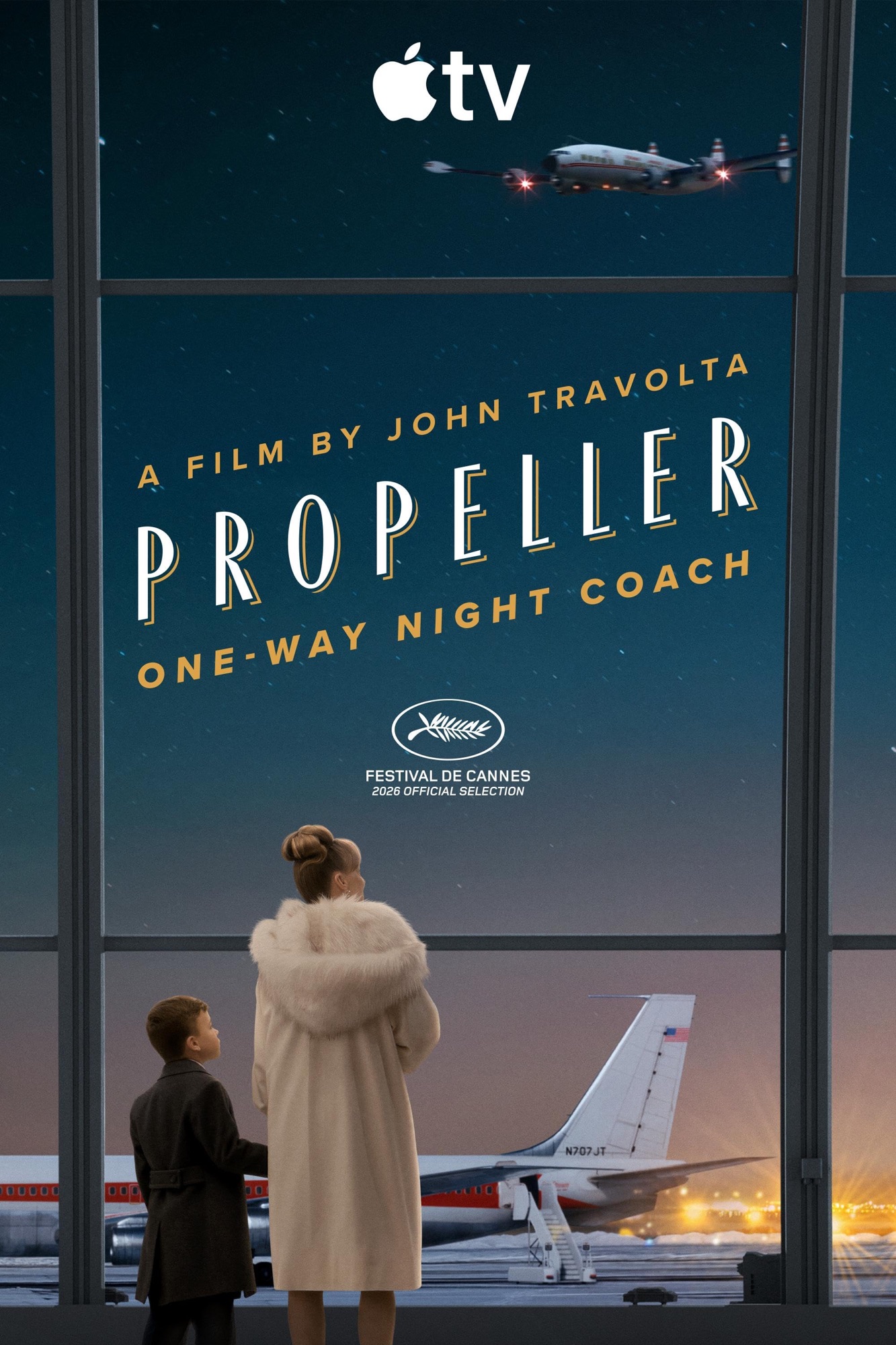


The tenderness in John Travolta’s Propeller One‑Way Night Coach settles over the film with a warmth that never feels forced, a glow drawn from the director’s own devotion to aviation and to the fragile moments that shape a young life. Clark Shotwell’s Jeff stands at the center of that glow, and the film’s greatest strength is the way it turns his first flight into a meditation on how wonder imprints itself on a child who is paying close attention. Travolta leans into nostalgia, yet he does so with intention, letting each detail of Idlewild, each hum of a cabin, each small gesture from a stranger become part of a larger emotional architecture.

Travolta’s direction carries a gentle confidence. He understands that memory is not a museum but a living current, and he lets the film drift between recollection and reflection without losing its pulse. The narration by Travolta as Older Jeff gives the film a soft ache, a reminder that the adult voice is always in conversation with the child who once reached for a future he could barely name. This interplay deepens the film’s emotional stakes and keeps the story from floating away on sentiment alone.

Shotwell’s performance is the film’s quiet triumph. He plays Jeff with an earnestness that never tips into precocity, grounding the film’s romantic tone in something sturdier. His scenes with Kelly Eviston‑Quinnett’s Helen carry a delicate tension, a portrait of a mother and son suspended between fear and possibility. Travolta gives their relationship room to breathe, and the film is better for it.

The supporting cast adds texture without overwhelming the central thread. Olga Hoffmann’s Liz brings a gravity that sharpens the film’s sweetness, her history deepening the story’s emotional register. Ella Bleu Travolta’s Doris enters the film with a brightness that feels earned, not ornamental. Her scenes with Jeff give the film its most openhearted moments, and Travolta frames them with a tenderness that honors the innocence of first affection.

The film’s hopscotching journey across Pittsburgh, Dayton, Chicago, Kansas City, and Denver becomes a study in transition rather than a travelogue. Each stop marks a shift in Jeff’s understanding of the world, and Travolta uses these shifts to explore how kindness, disappointment, and surprise accumulate into something formative. The broken replica plane in Kansas City becomes a small but potent emblem of this process, and Doris’s reassurance gives the moment its emotional lift.

Travolta’s aviation obsession is everywhere, yet it never overwhelms the film. The lingering shots of engines and fuselages, the reverence for the Boeing 707, the glow of midcentury terminals—these choices enrich the film’s romantic tone. They also reveal Travolta’s belief that machinery can hold memory, that the physical world can carry emotional weight when treated with care.

The film’s final act, with its Life magazine reporters and the retiring pilot played by Travolta, risks tipping into self‑mythology. Yet the sequence lands because it remains tethered to Jeff’s experience. The passing of the pilot’s wings to the boy becomes a gesture of recognition rather than spectacle, a moment that honors the film’s central theme: that a single act of generosity can redirect a life.

The epilogue, revealing Jeff’s future with Doris and his career in aviation, gives the film a sweetness that feels earned. It completes the circle without closing it too tightly, allowing the audience to feel the continuity between the boy who boarded a night coach and the man who now guides others through the sky.

Travolta’s debut may not chase grandeur, but it reaches a steady, heartfelt cruising altitude. It is a film built on affection—for family, for flight, for the fragile beginnings that shape us—and it holds that affection with sincerity. In a cinematic landscape often allergic to earnestness, Propeller One‑Way Night Coach feels refreshing in its devotion to memory and its belief in the small gestures that carry us forward.

Letter Grade: B+


Leave a Reply