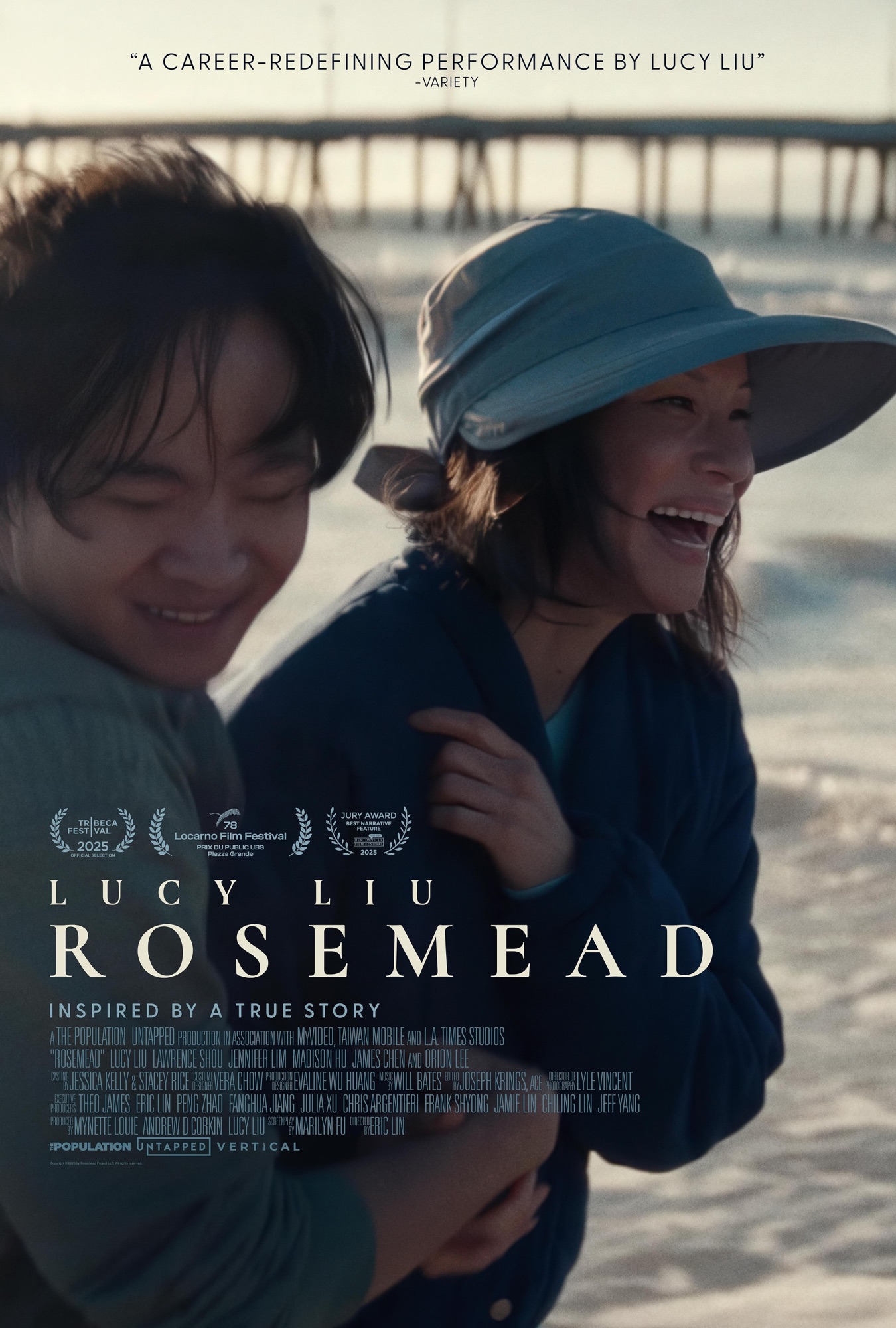


Measured and wrenching, Rosemead moves with a steadiness that honors the gravity of its subject without surrendering to despair. Eric Lin directs with an unforced patience that lets each moment breathe, and Lucy Liu, as Irene, carries the film with a performance built from vigilance, tenderness, and the slow erosion of a woman running out of time. The film’s emotional force gathers through accumulation rather than spectacle, and its restraint becomes its deepest source of power.

The early scenes establish a rhythm of mutual caretaking between Irene and her son Joe, played with raw, unsettled energy by Lawrence Shou. Their exchanges carry warmth, yet each gesture is edged with fear. Lin and screenwriter Marilyn Fu refuse to isolate these characters from the world around them; instead, they embed them in a community whose concern is real even when its boundaries feel porous. The film’s portrait of the San Gabriel Valley becomes a study in how closeness can both shelter and expose.

Joe’s worsening schizophrenia is rendered with clarity and without sensationalism. His jiggling leg in class, the spider‑filled margins of his worksheet, the sudden bursts of agitation—each detail is observed with care. Lin pairs these moments with Irene’s own quiet unraveling as she navigates cancer treatments she hides from her son. The parallel crises create a tension that never feels engineered; it emerges from the simple fact that both mother and son are trying to protect each other from truths they cannot outrun.

The film’s engagement with school‑shooting anxieties is handled with a seriousness that avoids exploitation. Joe’s overwhelmed reaction to an active‑shooter drill, his frantic sprint through empty classrooms, and the administrators’ subsequent alarm all deepen the film’s central question: how do you safeguard someone who is losing his grip on the world while the world itself feels increasingly unsafe? Lin uses these sequences to examine the pressures placed on families already stretched thin by illness, grief, and stigma.

Liu’s performance anchors the film’s moral weight. Irene’s fear is not abstract; it is sharpened by browser tabs filled with tragedies from Sandy Hook, Virginia Tech, and Aurora, and by the discovery that Joe has visited a gun shop out of a confused, spiraling curiosity. Her visits to Dr. Hsu, played with steady compassion by James Chen, reveal a woman searching for any foothold that might keep her son from slipping further. The film’s sorrow grows from the recognition that Irene is running out of footholds.

The middle stretch follows Irene through a series of increasingly desperate interventions—attending Joe’s therapy sessions, confronting the gun‑shop owner, driving through the night to find her missing son. These scenes are not plot machinery; they are expressions of a mother’s last reserves of strength. Lin films them with a calm that heightens their ache, allowing the audience to feel the cost of each decision Irene makes.

When Irene learns her cancer treatment has failed, the film’s emotional stakes sharpen. Her impending loss of custody once Joe turns eighteen adds another layer of urgency. Orion Lee’s presence in flashbacks as Joe’s father provides a quiet counterweight, grounding the family’s grief in memories that feel lived‑in rather than ornamental. The motel memory Joe recounts—dancing and singing with his parents—becomes a touchstone the film returns to with devastating purpose.

The final act unfolds with a terrible inevitability. Irene’s preparations—the deed she leaves with her friend Kai‑Li, the second visit to the gun shop, the birthday cake, the white sneakers—carry a ceremonial weight. Lin directs these moments with a stillness that refuses melodrama. The motel room becomes a space where love and fear converge, and the film’s climax lands with a force that is both shattering and deeply human.

Liu’s portrayal of Irene’s final choice is devastating in its clarity. The film does not excuse her action, nor does it condemn her. Instead, it presents a woman who believes she is sparing her son from a future shaped by violence, abandonment, and untreated illness. The aftermath—her arrest, her death before trial—underscores the tragedy without turning it into a moral lesson. Lin’s compassion extends to every character, and the film’s refusal to simplify its ethical terrain is one of its greatest strengths.

Rosemead ends on a note of quiet devastation, yet it never relinquishes its belief in the dignity of its characters. Lin’s direction, Fu’s script, and Liu’s extraordinary performance create a film that confronts catastrophe without surrendering to it. The result is a work of rare emotional precision—an intimate tragedy shaped by love, fear, and the impossible choices that arise when both run out of time.

Grade: A‑. On Hulu.


Leave a Reply