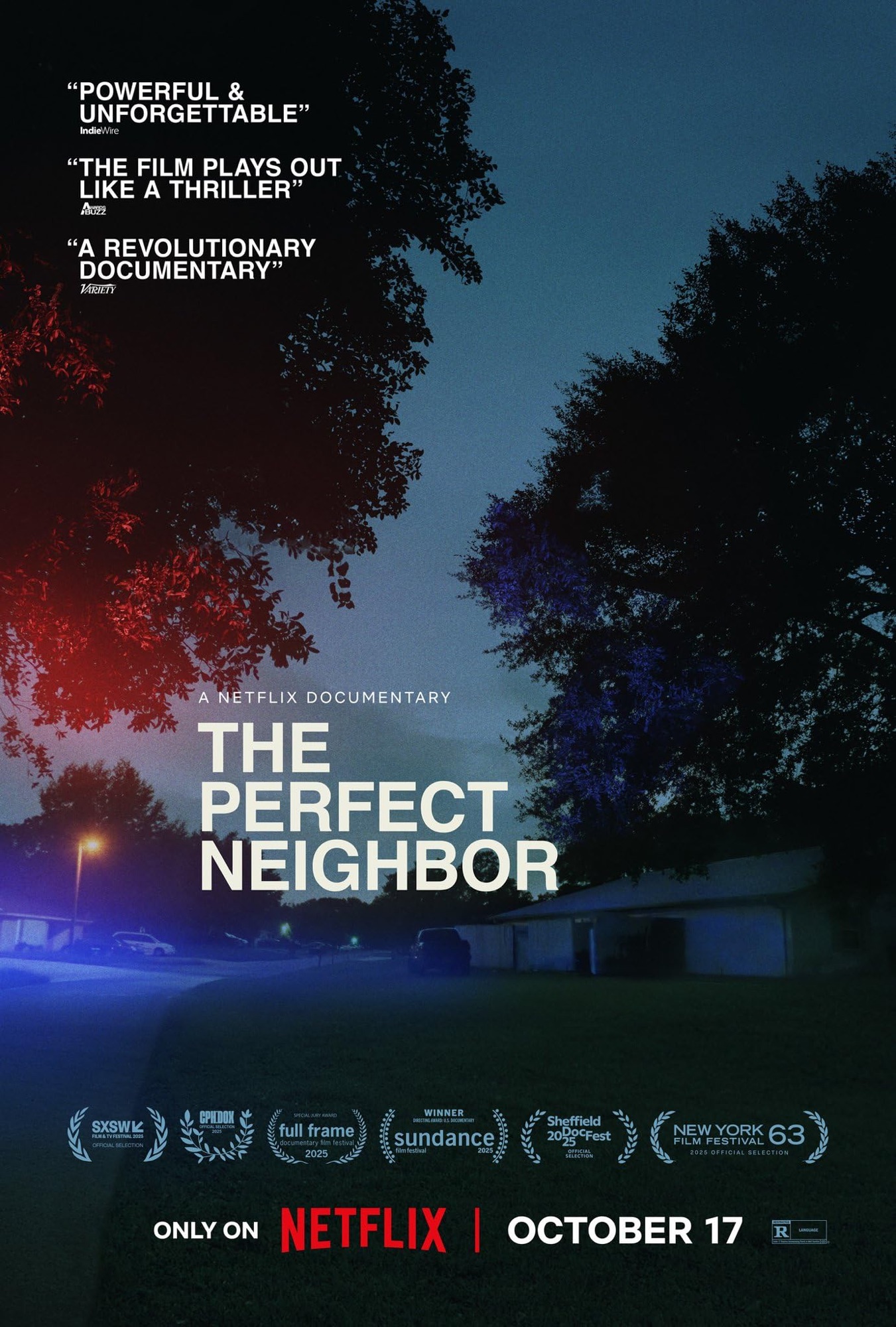


Geeta Gandbhir’s *The Perfect Neighbor* immerses viewers in a gripping, unvarnished portrayal of justice and community. Crafted entirely from police bodycam, dashcam, and surveillance footage, the film painstakingly reconstructs the tragic event—the fatal shooting of Ajike “AJ” Owens, a Black mother of four, by her white neighbor, Susan Lorincz, in Ocala, Florida. With a procedural structure and an unwavering tone, the documentary transforms raw footage into a compelling testimony, bearing witness to a heartbreaking moment that demands reflection.
Over a two-year period, tensions simmered between Lorincz and Owens, revealing a troubling pattern. Lorincz, who describes herself as a peaceful woman, repeatedly calls the police over concerns about neighborhood children—mostly Black—playing nearby. Her complaints grow more frequent, her language increasingly coded, and her attitude progressively hostile. Surveillance footage exposes a cycle of suspicion, grievance, and racialized fear. The confrontation escalates on June 2, 2023, when Owens confronts Lorincz about threats made against her children. In a chilling moment, Lorincz fires a single shot through a locked door, resulting in Owens’s death. Lorincz then claims self-defense under Florida’s Stand Your Ground law.
Gandbhir’s choice to rely exclusively on raw footage transforms the film into a compelling, unfiltered look at justice. By sidestepping sentimentality, it compels viewers to confront uncomfortable truths about law enforcement, racial bias, and legal ambiguity. The film doesn’t preach or take sides; it simply bears witness. This unvarnished approach lets the footage speak volumes, highlighting systemic delays and the weaponization of laws against Black victims, especially in Lorincz’s case.

The title, “The Perfect Neighbor,” is dripping with irony—it’s lifted straight from Lorincz’s own police call. She portrays herself as the epitome of an ideal citizen: quiet, orderly, law-abiding. But as the film unfolds through a compelling montage of footage, it challenges that self-image, exposing how appearances can conceal underlying hostility and how institutional language can hide brutality. Ultimately, the title becomes a powerful meditation on projection, denial, and the isolating emptiness of suburban life in America.
This documentary captivates through its restraint, offering a compelling look at how race, law, and proximity can ignite explosive consequences. While not an exhaustive analysis of Stand Your Ground laws, it zeroes in on a single incident with sharp precision. That focus is what makes it truly powerful.

At times, the film’s dependence on footage leaves gaps that invite viewers to fill in the blanks. These silent spaces compel us to infer motives, unravel context, and sense emotional nuances on our own. This choice embodies the film’s deliberate ethic—Gandbhir places trust in us to observe, interpret, and engage deeply.
This film delves into profound themes of loneliness, the specter of surveillance, and the delicate nature of community life. It reveals how laws can be wielded to stoke fear and how such fear can take on racial overtones. Ultimately, it shows how a simple neighborhood quarrel can escalate into a national tragedy.
The Perfect Neighbor may not be flawless, but its significance is truly profound.
Grade: B+. Streaming on Netflix.


Leave a Reply