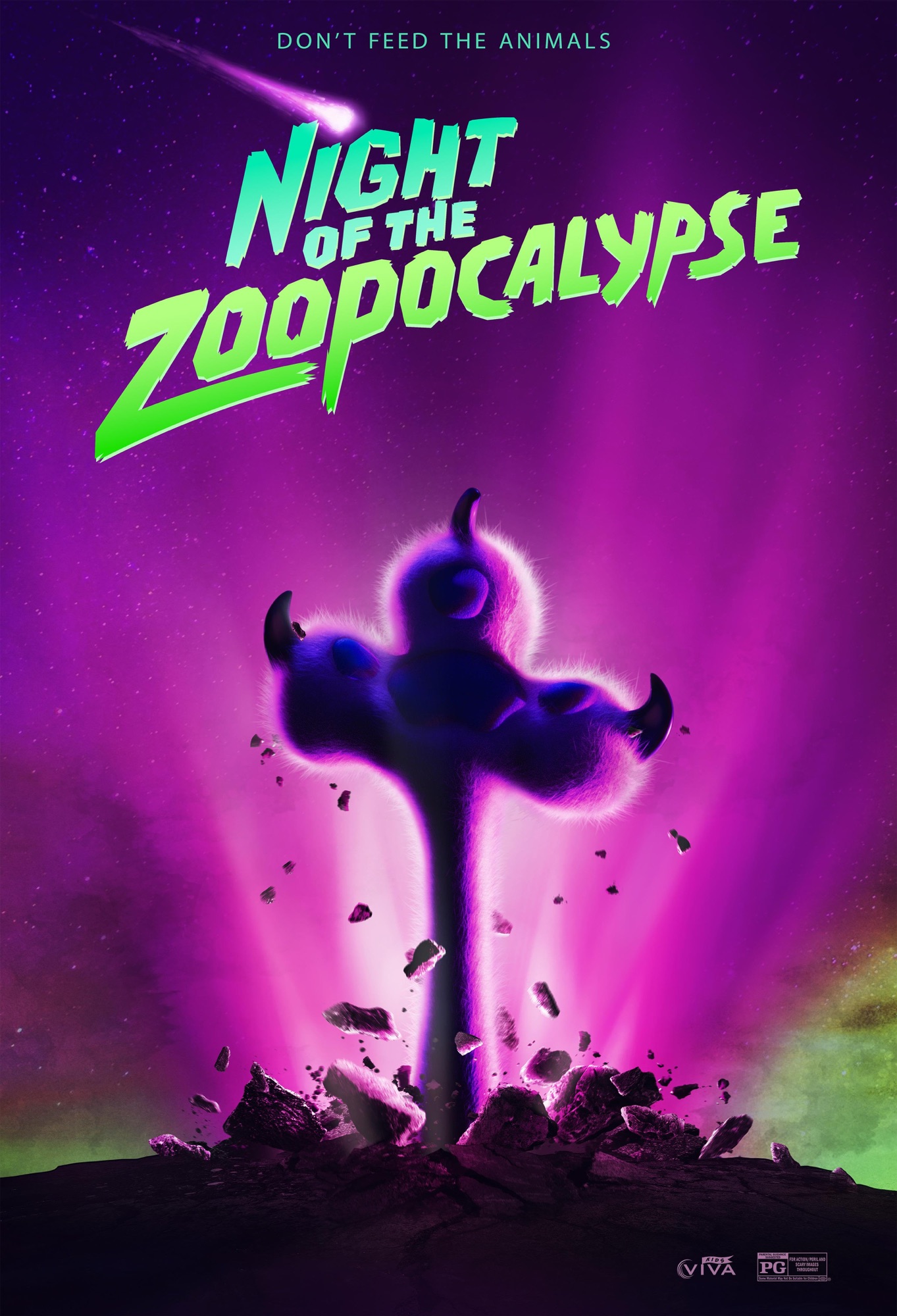


In the tradition of barnyard revolts and dystopian fables, Night of the Zoopocalypse arrives with a snarl, a growl, and a gelatinous thump. Directed with uneven but earnest flair by Richard Curtis and Roderigo Perez Castro, the film is a comic zombie romp set in the Colepepper Zoo, where the animals are not just caged—they’re emotionally cornered. The premise is absurd, the tone is anarchic, and the metaphors are thick as fur. It’s a film that wants to entertain, but also to interrogate the ethics of captivity, the fragility of interspecies trust, and the strange power of music boxes.

Gabbi Kosmidis leads the ensemble as Gracie, a young timber wolf with more emotional depth than most human protagonists. Her performance is grounded and never overplayed, and she carries the film’s thematic weight with quiet conviction. Gracie’s arc—from suspicion to solidarity, from enclosure to escape—is the film’s emotional spine. Kosmidis never winks at the audience, even when surrounded by mutant rabbits and sarcastic ostriches. Her sincerity anchors the chaos.

The plot is a patchwork of genre beats: meteor crash, viral outbreak, ragtag survivors, and a climactic musical cure. It’s messy, but intentionally so. The infected rabbit Bunny Zero is a grotesque delight, and the transformation into “Gum-Beasts” is both comic and unsettling. The film’s zombie mechanics are inventive, especially the soap-and-water cure and the music box twist. These choices are not just gags—they’re thematic gestures toward cleansing, memory, and the artificial rhythms of zoo life.

The film is surprisingly rich as a metaphor for wildness and captivity. Gracie’s pack, trained by the paranoid Gramma Abigale, represents the internalized fear of the caged. Dan, the mountain lion voiced by David Harbour, embodies untamed instinct, and his community resistance speaks to the trauma of confinement. With its gift shops and theme songs, the zoo becomes a symbol of curated nature—where wildness is scheduled and sanitized.

The title, The Night of the Zoopocalypse, plays out literally and symbolically. It’s not just a night of chaos; it’s a reckoning. The animals face their own prejudices, histories of abandonment, and longing for freedom. The “zoopocalypse” is not the end of the zoo—it’s the end of the illusion that the zoo is safe. By morning, the animals are changed, not just cured. They’ve glimpsed something truer than their enclosures.

The film’s comic tone is uneven. Some jokes land with precision—Ash the ostrich and Xavier the lemur are delightful—but others feel forced. Felix’s egotism wears thin, and the brawl in the gift shop feels like filler. Still, the humor never undermines the emotional stakes. The film respects its characters, even when mocking their quirks. It’s a comedy that believes in its own heart.

Curtis and Perez Castro’s direction is spirited but inconsistent. The pacing lags in the second act, and some transitions are abrupt. Yet the visual inventiveness—especially the mutant amalgam and the clock tower finale—shows real imagination. The directors seem more interested in emotional beats than plot logic, and that choice mostly pays off. The film feels handcrafted, not manufactured.

The theme of interspecies trust is well presented. Gracie’s journey from isolation to alliance is mirrored in the group’s evolution. The final scene, where Abigale trusts the other animals, is quietly moving. The film doesn’t preach—it dramatizes. It lets the animals stumble, fight, and forgive. The message is clear: wildness is not the opposite of community.

The film falters in its middle stretch, where character motivations blur and the plot spins its wheels. Felix’s betrayal and redemption feel rushed, and Dan’s coldness is underexplored. Yet the final act redeems these missteps. The music box cure is both absurd and profound, and the image of Gracie activating the clock tower is genuinely stirring. The film ends not with triumph, but with possibility.

Ultimately, The Night of the Zoopocalypse is a comic fable with teeth. It’s not perfect, but it’s alive. It asks what it means to be wild, caged, and part of a pack. It’s a zombie movie, but also a manifesto for animal dignity, told through gelatinous mutants and sarcastic birds. It’s a mess worth watching.

Grade: B+. Showing on Peacock.


Leave a Reply