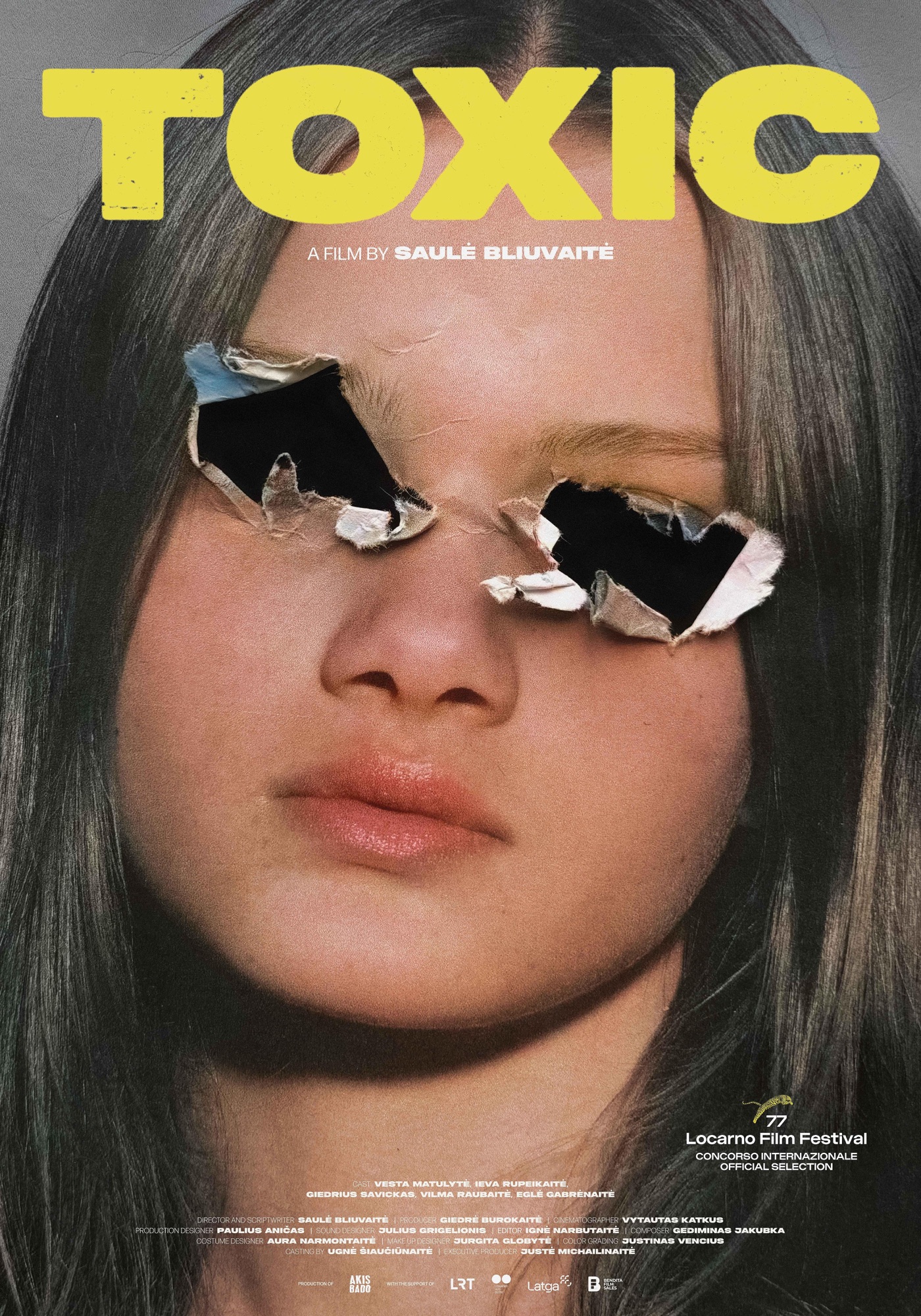


In Toxic, director Saule Bliuvaite opens the door to a world where beauty bruises deeper than fists. Her debut feature moves through a bruised Lithuanian town with eyes fixed on a modeling school that teaches self-erasure more than poise. The academy is no ladder out, only a mirror that asks girls to vanish from within. Yet there is grace in this bleakness, pulled through the bond between two adolescents who find friendship at the edge of harm.
Vesta Matulyte plays Marija with quiet fury and stillness—her body measured daily, her limp mocked, her gaze rarely returned. The camera watches her like a witness, its distance shifting with her dignity. Ieva Rupeikaite’s Kristina is her opposite in heat—agitated, sharp-edged, and vulnerable beneath her bravado. Together, they form the emotional spine of the film, neither one whole but each trying to become less alone.

Bliuvaite’s script offers the plot sparingly. The modeling school is a sequence of humiliations: starved bodies, tape measures, praise for loss. No teacher instructs kindness. No brochure tells the truth. Kristina hunts thinner silhouettes, scraping meals into the dirt and chasing tapeworms for extra credit. Marija learns quickly that her beauty is transactional, but she does not stay for fame, but for Kristina.
The film stumbles slightly in its middle stretch. Characters like Sarunas (Giedrius Savickas), Laima (Jekaterina Makarova), and Diana (Violeta Vasiliuaskaite) flicker without arc. The town remains underdrawn—a backdrop of drab walls and gravel that feels more sketched than felt. Yet Bliuvaite resists exposition with intention. She is not mapping a system; she is mapping damage.

Compared to films like Machuca, The Class, or Wadjda, Toxic leans harder into bodily politics. While those stories circle education and escape, Toxic tightens around appearance and control, asking what girls must sacrifice for the mere dream of movement. Its third-world setting is not exploited but quietly carried in every decaying sidewalk, every heavy breath.
The cast moves carefully inside Bliuvaite’s structure. Egle Gabrenaite as Romas is steel with edges, never indulging sympathy, but never shallow. Jokubas Paskevicius (Rytis) and Tadas Baranauskas (Donatas) linger at the margins of desire and dismissal, offering brief glimpses of the male gaze as economy. Each performance serves the whole, even if some roles remain underwritten.

What succeeds is not narrative but atmosphere. The film’s final gesture—Marija and Kristina, undone but tethered—is less resolution than residue. They are not saved. They are not healed. But they are held, however briefly, in each other’s knowing.
Bliuvaite’s direction is bold and deliberate. Her use of music video aesthetics in dream sequences risks artifice but ultimately builds the inner life of the girls. When reality buckles, fantasy steps in—not to soothe but to remind us of what they might have been. This contrast lifts the film above mere realism.
The themes are clear. Toxic asks what girls give away just to be seen. It shows how institutions dress up exploitation as an opportunity. It does not offer answers or hope wrapped in bows. But it provides presence, which alone can be a kind of protest.
Grade: B+. Streaming on Mubi.


Leave a Reply