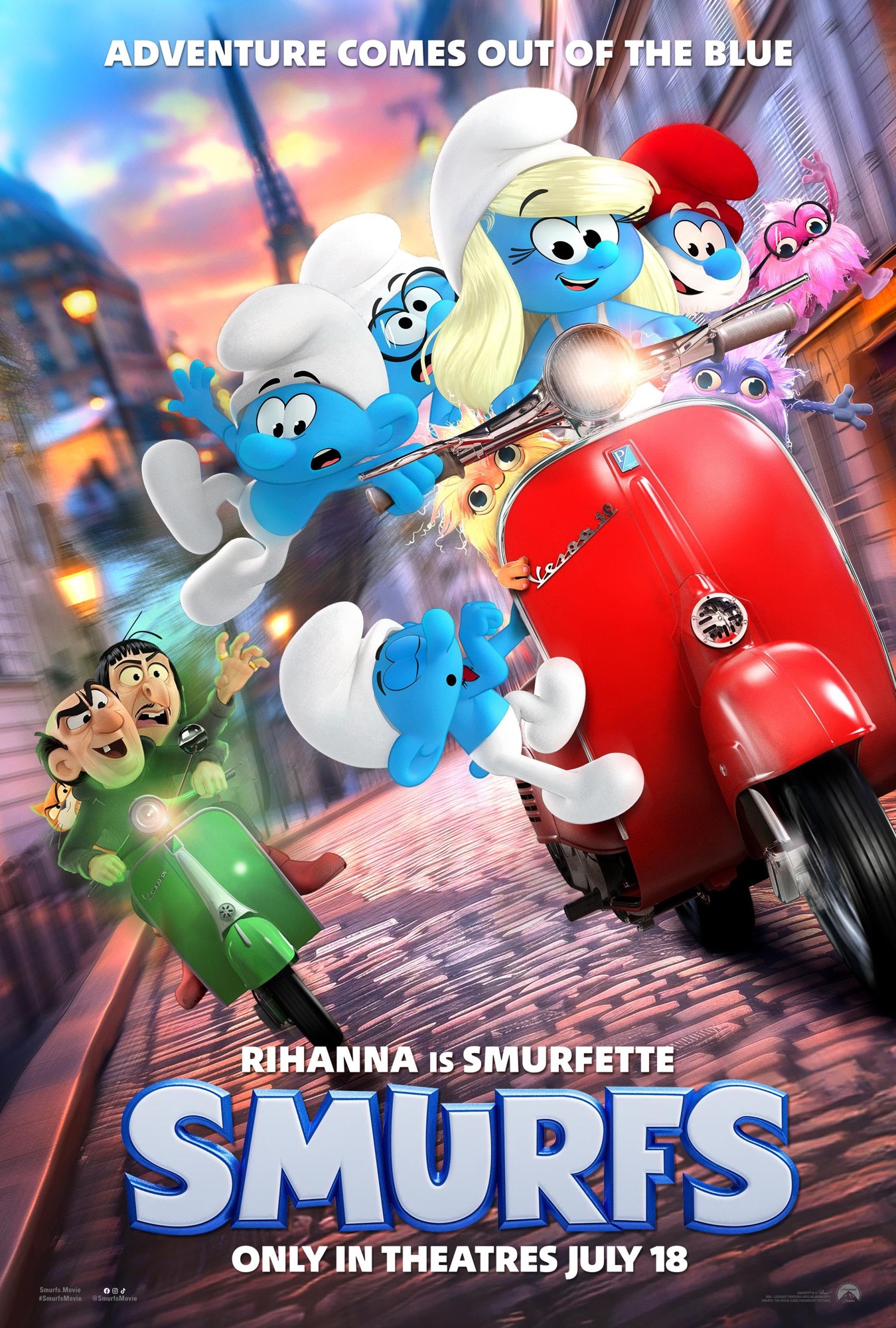


Chris Miller’s Smurfs twinkles with the kind of sugar-rush irreverence that only a fairytale built on mushroom houses and interdimensional wizards could deliver. This latest installment in the kaleidoscopic Smurfs franchise tosses canon into a blender, resulting in a comic, candy-colored mess that’s part triumph, part migraine. Somehow, it almost works.

Rihanna voices Smurfs with surprising restraint, trading bubblegum for balm. Her performance anchors the frenzy, bringing a faint melancholy to the only female Smurf on a quest through the real world. She carries scenes where exposition spills faster than sense, and her vocal shifts—soft, doubtful, wry—lend texture to a character who has long flirted with caricature. She’s the film’s steady breath.

Other voices land with mixed magic. John Goodman’s Papa Smurf is as warm and weathered as expected, even if his scenes are trimmed thinner than his beard. James Corden’s No Name Smurf is the film’s comedic gamble—sometimes hilarious, sometimes exhausting. JP Karliak handles double villain duty (Gargamel and Razamel) with campy glee, chewing lines like he’s tasting every syllable for spice. Amy Sedaris, as Jaunty, a sentient book, steals nearly every scene she flutters through.

The plot—rescue Papa Smurf from evil wizards while defining one’s cosmic destiny—careens between fairy tale solemnity and Saturday morning cartoon chaos. The themes of identity, chosen family, and heroic self-definition bob in and out of focus. There’s a heart buried beneath the spell-casting and pratfalls, but it struggles to speak clearly.

Miller’s direction thrives in the chaotic grandeur: swirling portals, glowing spell-circles, a Snooterpoot rave that looks like a Renaissance fair exploded in a laser tag arena. But the tonal gear-shifting—between slapstick and philosophical—is clumsy. When Mama Poot (voiced with laconic brilliance by Natasha Lyonne) offers spiritual wisdom mid-mission, it feels like a different movie trying to get a word in.

Compared to earlier Smurfs sequels, Smurfs is bolder but less cohesive. Its ambition outpaces its discipline. Sony’s earlier entries leaned heavily on nostalgia and safe storytelling; here, Miller tries to elevate the material with layered lore and genuine weirdness. The gamble pays off in moments, though it sometimes leaves the film stumbling over its Smurf-shoes.

Visuals dazzle—bioluminescent forests, levitating villages, evil lairs carved from comets. The world-building is wild and overstuffed, like Miller challenged every designer to invent without asking “why.” The result? Scenes that feel like pages from eight different books glued together, but with enough charm to keep us reading.

The climax—Papa Smurf’s rescue, Smurfette’s soul-searching, and a hastily choreographed wedding to seal a magical pact—feels both satisfying and excessive. Depending on mood, there’s a plastic sincerity to the final scenes that may feel moving or manipulative. Still, there’s undeniable sweetness in watching little blue beings forge meaning from madness.

Ultimately, Smurfs is a sugar-high fable that thinks big and lands halfway. The cast is well-used, the themes hum beneath the glitter, and the direction leans brave even when it stumbles. It’s not a masterpiece, but it’s not forgettable either—just another cosmic spin on a village full of tiny blue optimists who refuse to stop believing.

Grade: B+.


Leave a Reply