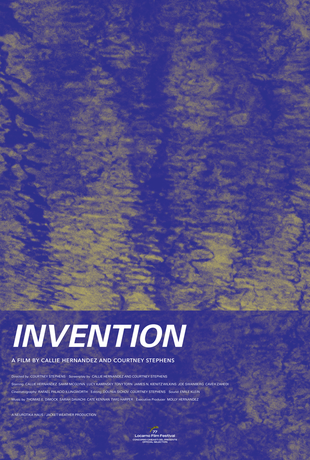


Courtney Stephens’ Invention moves like smoke curling through rooms of memory: elusive, personal, and strangely ceremonial. It’s less a film than a kind of séance with the archive, gathering fragments of familial detritus—audio reels, feverish patent diagrams, domestic footage—and stitching them into a visual elegy that resists conventional closure. As a narrative, it flirts with incompletion; as a meditation on grief, it feels deeply rooted.
The story orbits a daughter reckoning with her conspiracy-obsessed father’s death and the inheritance of an improbable invention—a “healing device” whose function is never made fully clear. But the film isn’t interested in technological specificity. It’s the gesture of passing on, the strange intimacy of the heirloom, that animates the documentary. Stephens uses actual footage of actress Callie Hernandez’s late father, which lends the piece spectral authenticity; grief becomes both a subject and a cinematic method.

Where the film succeeds is in its treatment of legacy as ritual. The daughter’s discovery isn’t just of a patent—it’s of a psychological blueprint, a myth of healing that loops back into the body’s memory. Stephens’ direction leans into silence and stillness, drawing tension from whisper and breath rather than confrontation. It’s a confident approach, though it occasionally verges on preciousness; one longs, at times, for a jolt of friction or contradiction to push against its meditative veneer.
Plot-wise, the film is deliberately porous. We are given few details about the father’s conspiratorial leanings, and fewer still about the device’s origins. While this ambiguity protects the film’s poetic rhythm, it also leaves the emotional stakes uneven. The drama hums quietly, but never quite crescendos. Still, Hernandez’s presence is tender, her reactions understated yet suggestive of deeper psychic excavation. The casting here is less performance than embodiment, a conduit for unspoken histories.
Stephens frames the father-daughter relationship like a Möbius strip, spiraling inward rather than forward. There’s no clear resolution, just layered encounters with memory and mechanical relics. This approach—lyrical, recursive, almost devotional—feels deeply suited to the subject matter, even as it demands patience from its audience. It is not a film of revelation but of the possibility of slow revelation.

Where Invention falters slightly is in its self-contained aesthetic. The archival textures, beautiful and solemn, sometimes risk aestheticizing grief in ways that feel overly curated. The film gestures toward emotional messiness but rarely plunges into it. Still, one could argue this restraint is the point—that mourning, for some, is a quiet unpacking, not a cinematic reckoning.
Streaming on MUBI, the film finds its ideal home: a space for slow, experimental cinema that values emotional suggestion over dramatic exposition. Stephens’ work resists genre, sitting somewhere between documentary and speculative memoir. The invention at its heart is metaphor, and what it “heals” may not be the body, but the fragmented memories we live with and through.

Ultimately, Invention offers a portrait of inheritance not as an artifact but as an atmosphere. It’s not just what the daughter is given, but what she absorbs—what lingers, what shifts, what remains unnamed. The device, the archive, the memory—they blur and echo until one wonders whether invention itself is the genre of mourning.
It is a film that dares to treat grief like a frequency, something tuned into slowly. Not everything lands, and not every image deepens, but the sincerity is palpable. The direction, while gentle, is articulate. The themes are effectively told, even if the structure occasionally feels opaque.

Grade: B+. Streaming on MUBI.


Leave a Reply