Tag: emotional restraint
-

Butchart Repose
I wrote Butchart Repose after walking through the Butchart Gardens in British Columbia. The poem began as a record of fatigue and distance—the moment when beauty becomes something you must leave behind.
-

The Transparent Mother
The Transparent Mother began as a refusal to sentimentalize disappearance. I wanted to write a poem where the mother’s vanishing wasn’t metaphor but physical fact—bare feet, bloody toes, a face turned away. The poem inherits her instability without naming it.
-

A Mother’s Request
A Mother’s Request emerged from a desire to honor the physical and emotional pull of homeland in the face of death. I wrote it as a response to the quiet grief of diaspora—the longing to return, not metaphorically, but bodily, to the soil that shaped us.
-

The Road They Will Leave By
The Road They Will Leave By” began as a meditation on exclusion and memory. I wanted to write a poem that refused sentimentality and simile, one that relied on physical detail and emotional pressure to convey the quiet violence of being remembered wrongly—or not at all. The soldier’s camouflage, the elders’ breath, the locking of…
-
Birds and Milkweed
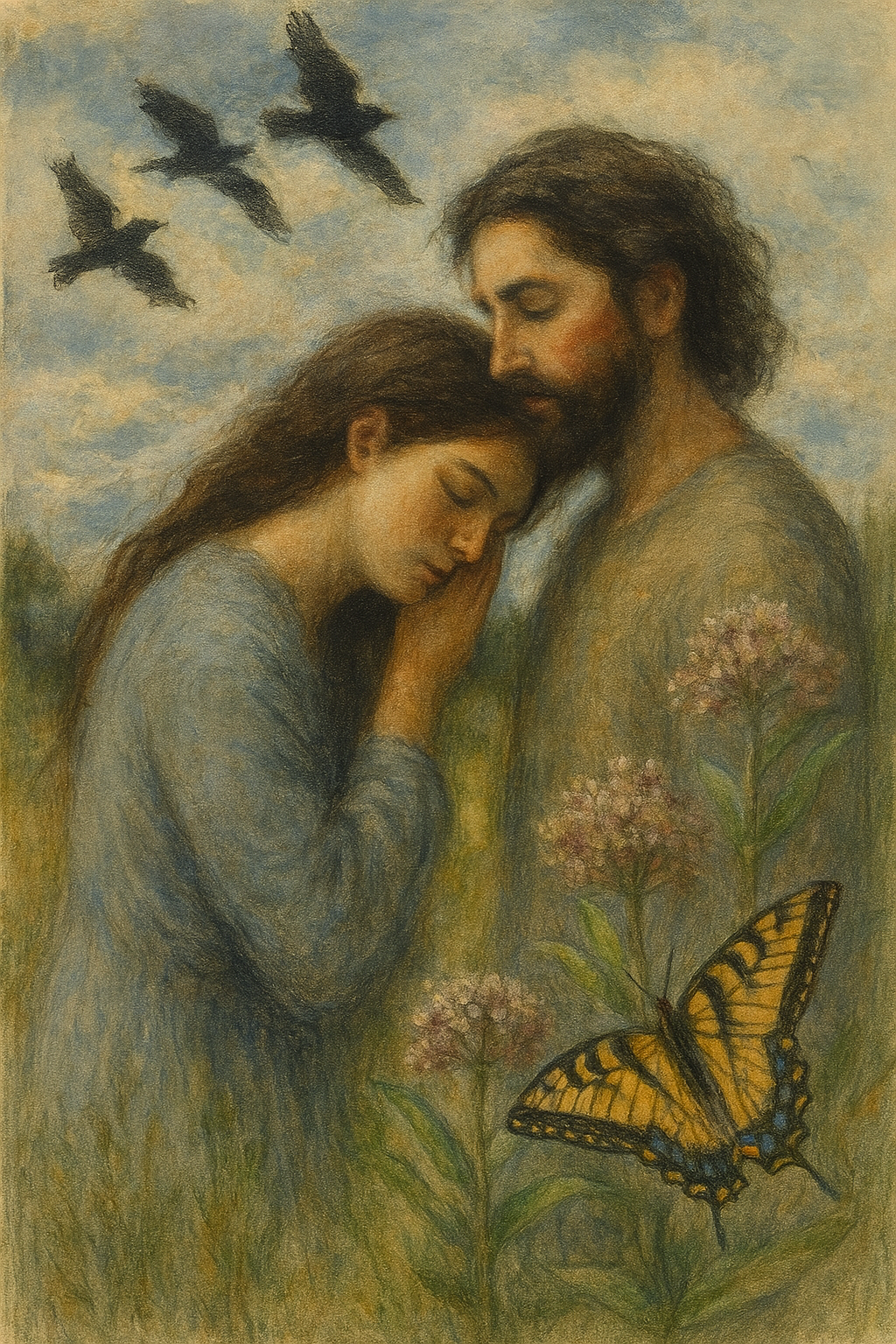
Birds and Milkweeds emerged from a moment of listening—pressing my ear to my wife’s chest and imagining wings. The poem enacts the illusion of flight that love offers, and the beauty that remains after we fall. Butterflies and milkweed form a memento mori—not of grief, but of transformation. I wanted to write a poem that…
-
For My Older Brother
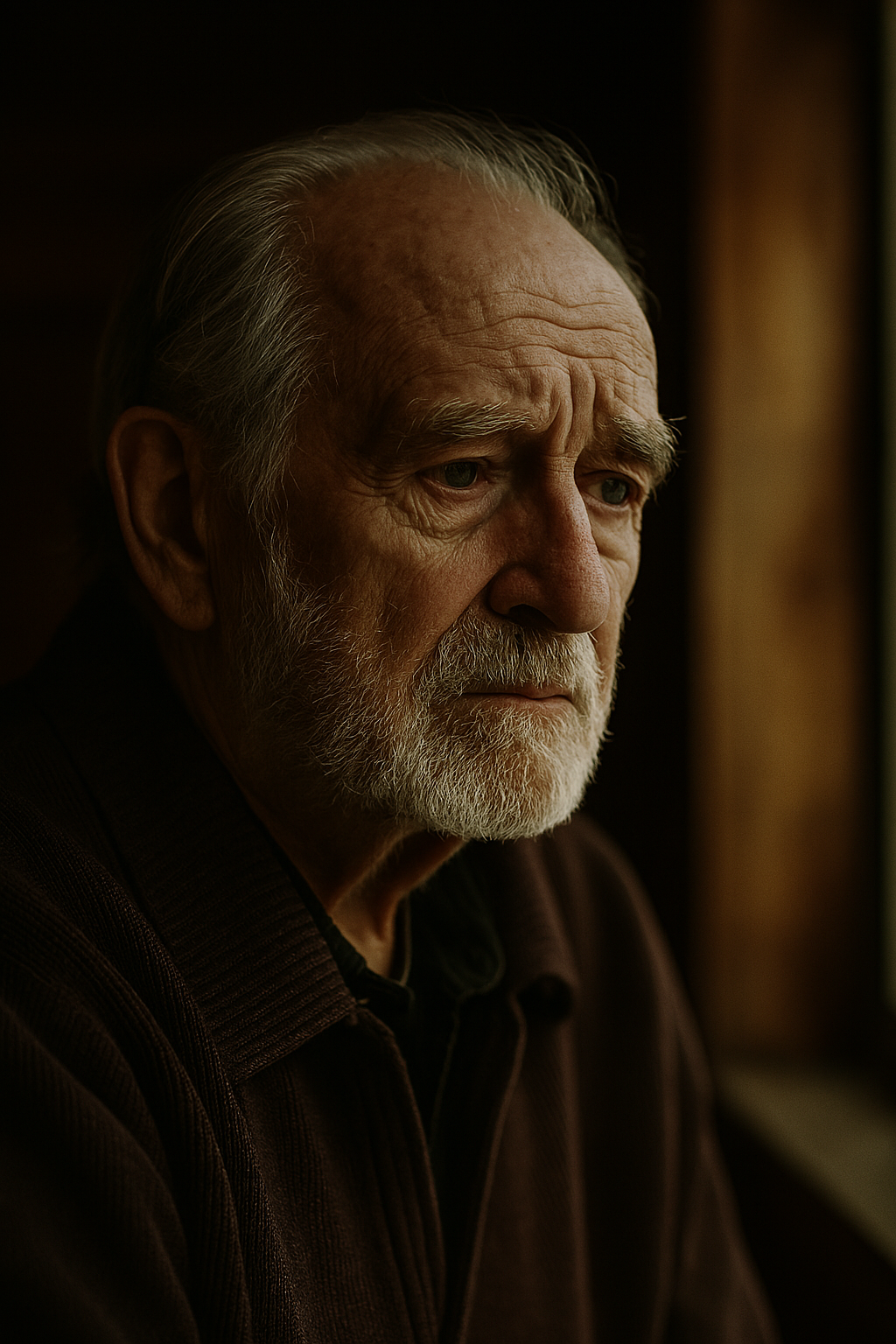
“For My Brother” came from a quiet moment my brother and I shared, shaped by past pain and recovery. The poem uses body and thought as symbols, with the slash mark showing how deep wounds can leave lasting marks. I wrote it to honor his survival and the work he had done to heal.
-

Blue Mercy
“Blue Mercy” began as a quiet observation—a fly, a door, a gesture. But beneath its domestic stillness, I found a philosophical hinge: mercy as both restraint and release. The poem is an allegory of consequence, where the blue swatter becomes a symbol of ethical tension—between intervention and surrender, between light and disappearance. My wife’s presence,…
-

Under the Sacred Fig
“Under the Sacred Fig” began as a meditation on lineage, migration, and the quiet rituals that shape identity. Inspired by Nguyễn Phan Quế Mai’s Under the Bodhi Tree, I sought to transplant the emotional architecture of ancestral shade into Puerto Rican soil. The fig tree became a hinge—between generations, languages, and departures. This poem honors…
-

Getting the Algorithm
Getting the Algorithm emerged from a period of recursive grief and speculative clarity. I wanted to write a poem that refused sentimentality while still honoring the emotional residue of illness, authorship, and identity. The mathematical symbols are not metaphors—they are hinges. Each glyph carries consequence: ∫ as funeral, ∅ as death, ≠¬ as refusal. The…
-

Manual for grieving a house blowing away…
Manual for Grieving a House Blowing Away…” emerged from a moment of quiet devastation—watching my home unravel not in fire or flood, but in the slow erosion of memory and ritual. I wrote it as a guide for what cannot be saved, and what must. The poem resists sentimentality and instead offers a liturgy of…
-

Soft Closure
Soft Closure” emerged from the quiet aftermath of loss—when grief no longer demands spectacle but settles into the architecture of daily life. The poem is built around a single domestic gesture: a door closing softly. It resists sentimentality and instead leans into restraint, letting silence and echo do the emotional work. I wanted to evoke…
-
One Face Only
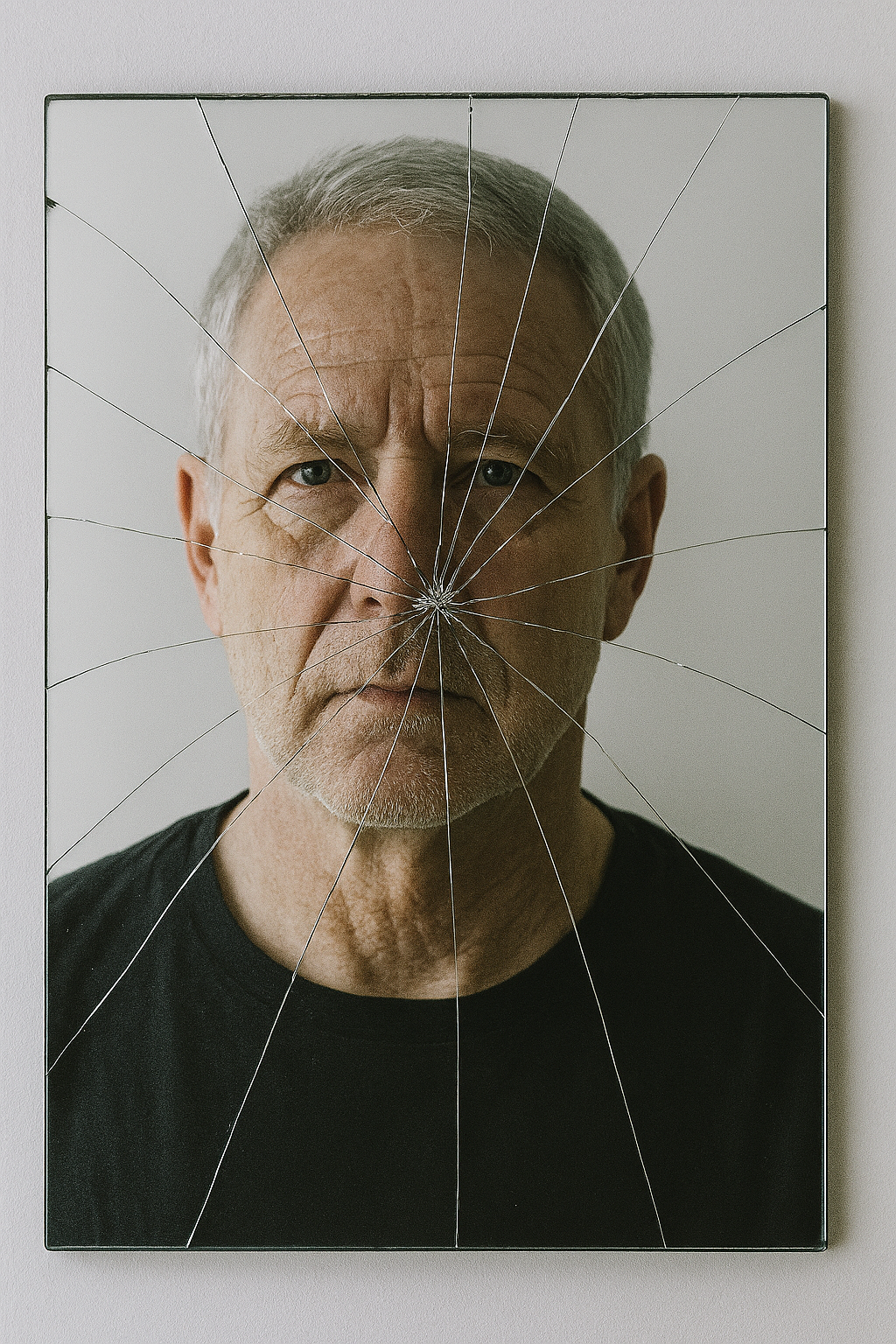
One Face Only began as a quiet refusal. I had just turned seventy and found myself staring into a mirror—not with nostalgia or regret, but with clarity. The poem resists the impulse to chase idealized versions of self. It’s about choosing one flawed reflection over a pile of broken possibilities. The cracked mirror became a…
-

January Dream, 1987
January Dream, 1987 emerged from a dream visitation that blurred grief with peace. My mother, who had died decades earlier, returned in the dream not to ascend, but to sign love into my palm—wordless, tactile, and precise. The poem resists sentimentality and myth, honoring ambiguity and consequence. It’s an American sonnet that turns on ethical…
-

Flight Track
Flight Track began as a meditation on the quiet obsession of watching a plane’s progress across a screen. I was drawn to the emotional architecture of measurement—how altitude, speed, and descent become metaphors for survival. The poem uses restraint and ritual to explore what it means to track motion without touching it, and how even…
-

Shedding
Shedding began as a meditation on the rituals we inherit and the ones we invent to survive grief. I wanted to write a poem that honored the quiet choreography between father and son—the way they speak through thermostats, boiled peanuts, and Dolphins talk. The “fortune cookie” structure emerged as a way to hold fragments of…
-
Brief Encounter on Aisle Five
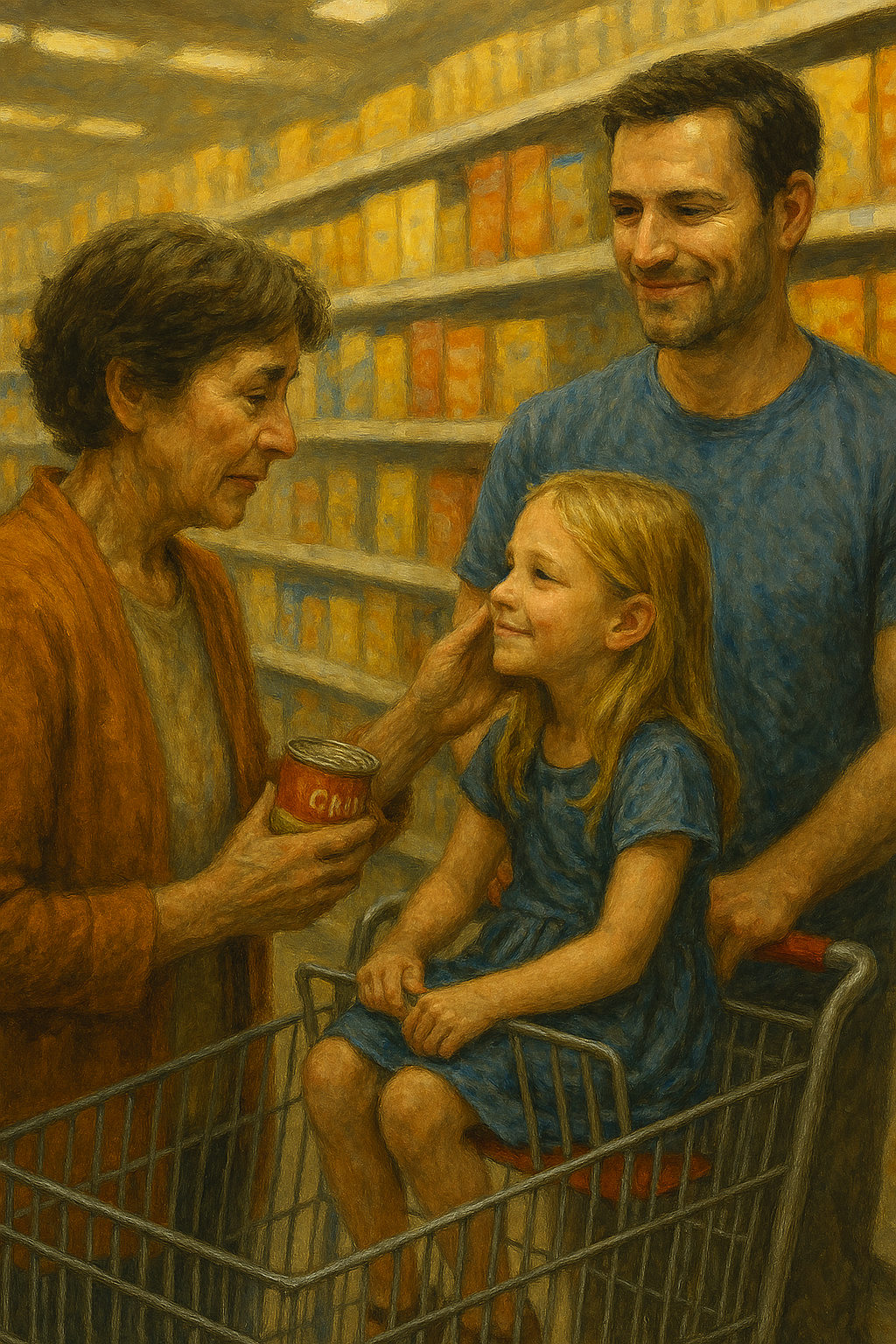
Brief Encounter on Aisle FiveIt is this way:She sees him first—aisle five, cereals— where the honeyed light fall softly on him— and her. The way he cradles Cheerioson the cart’s edge—firm in his handsso if they slip, they fallinto the safety of the cart,into the touch of his little girl-—lets her knowhe once belonged to…