Tag: elegy
-

A Loss
I wrote A Loss after burning a photograph that refused to fade on its own. The poem examines how ritual and chemical reaction replace sentiment, turning memory into residue and pressure.
-

The Lantern’s Vigil
This poem began as a study of ritual and light—how grief moves through objects without naming itself. I wanted the river to do the speaking, to let the lanterns fail quietly and completely.
-
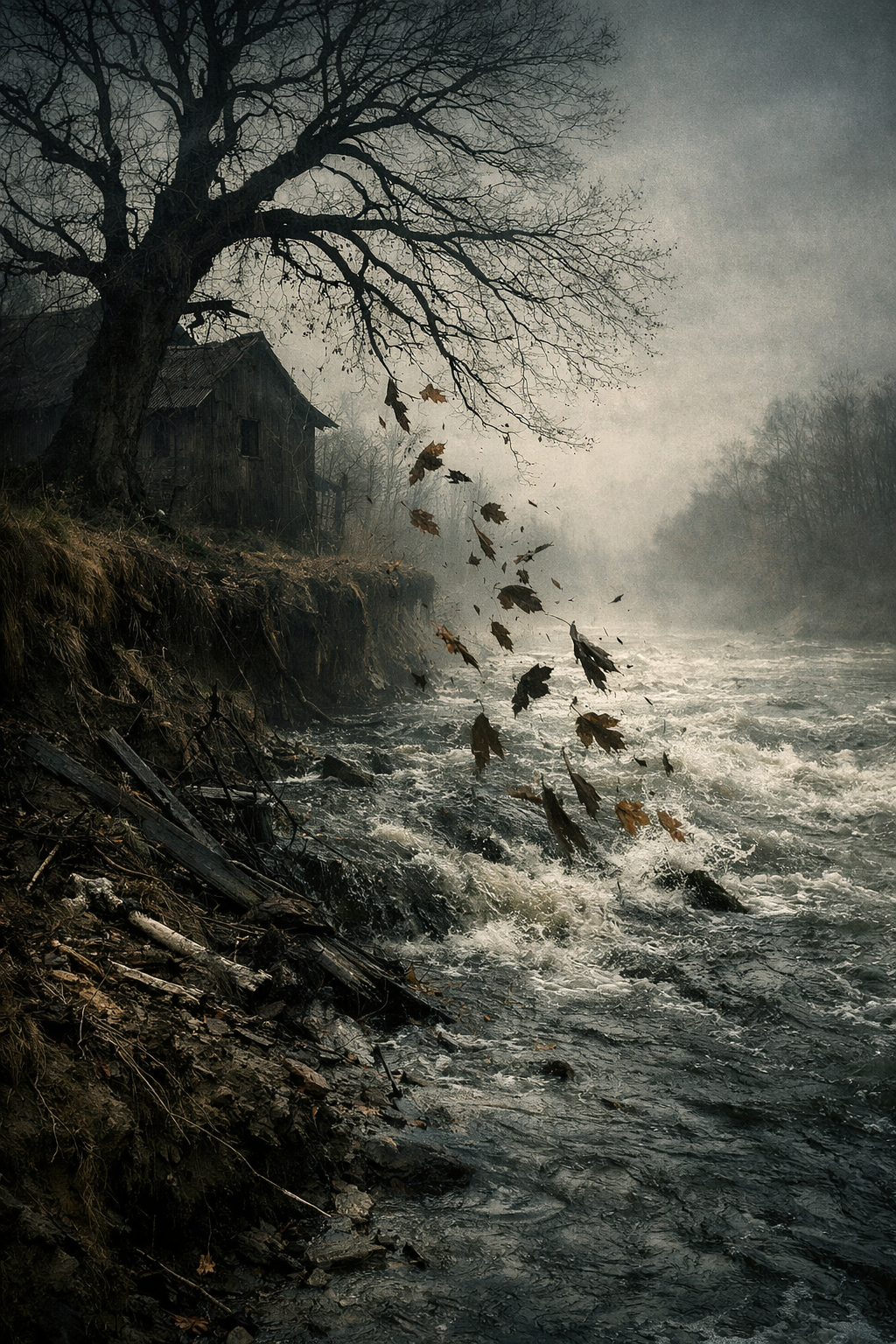
Family Tree
Family Tree began as an image of a house without windows and a river carrying away its debris. The poem explores how time erodes lineage—the way humanity sloughs into the river’s swell and becomes part of its current.
-

The Purple Glass
The Purple Glass” began with an object my mother once handed me—useless, she said, but beautiful. The poem traces how that uselessness became memory’s last vessel, holding what language can’t restore.
-

Elegy for a Future Death
Elegy for a Future Death began as a refusal. I wanted to write an elegy that didn’t console, didn’t mythologize, didn’t reach for metaphor. The poem strips away atmosphere and sentiment, leaving only the physical residue of absence: chain, pan, towel, nail. It’s a lyric of erosion—of what remains when return is no longer possible.…
-

The Transparent Mother
The Transparent Mother began as a refusal to sentimentalize disappearance. I wanted to write a poem where the mother’s vanishing wasn’t metaphor but physical fact—bare feet, bloody toes, a face turned away. The poem inherits her instability without naming it.
-
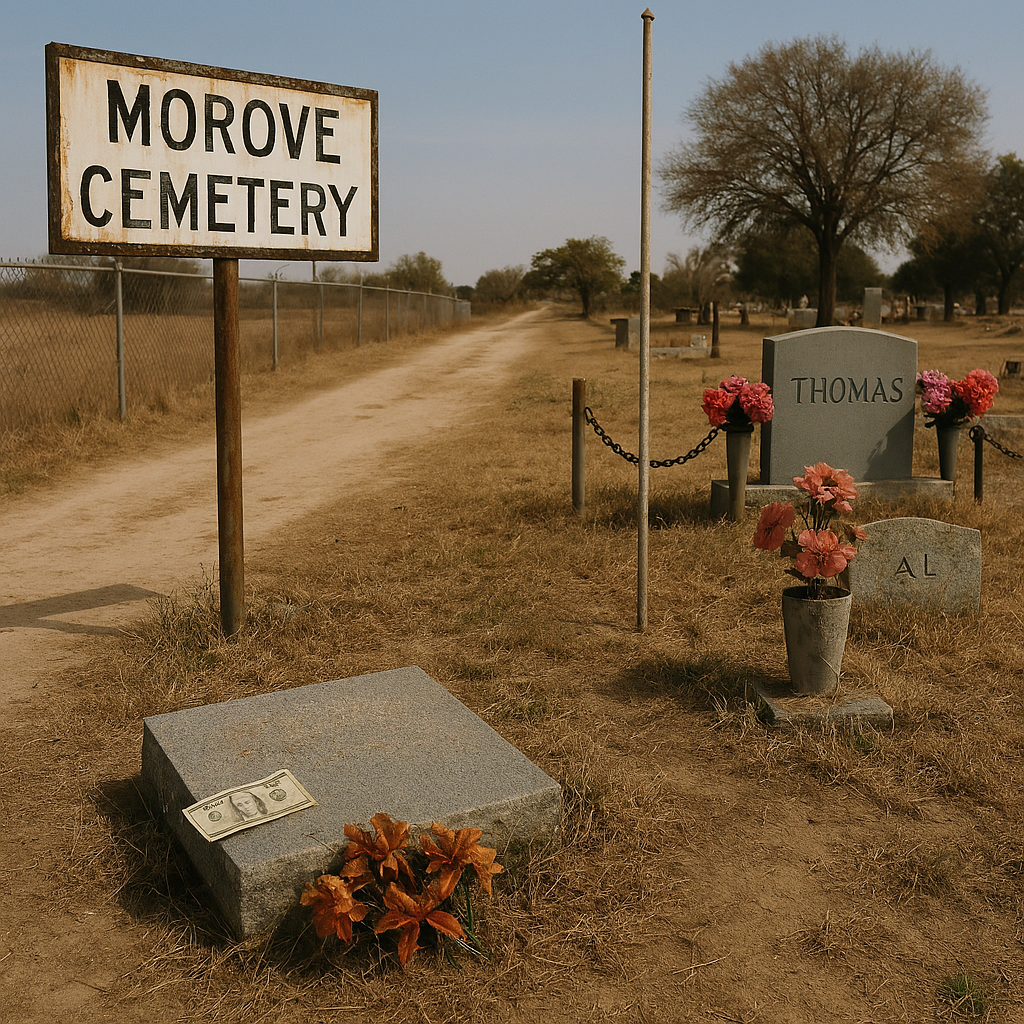
Morove Cemetery
Morove Cemetery” began as a walk through memory and inheritance. I wanted to write a poem that refused sentimentality while still holding grief in its architecture. The poem is built from objects—signs, stones, flowers, fences—that carry the emotional weight without commentary. It’s a landscape elegy, where the dead are marked by what survives them: rust,…
-

Stones
“Stones” emerged from a walk with my autistic brother, where the gravel beneath us felt like a ledger—each stone a record of what we’ve inherited and what we must carry. I wrote it to honor the physicality of memory and the way lineage shapes our future terrain. The poem resists sentimentality and abstraction, staying grounded…
-
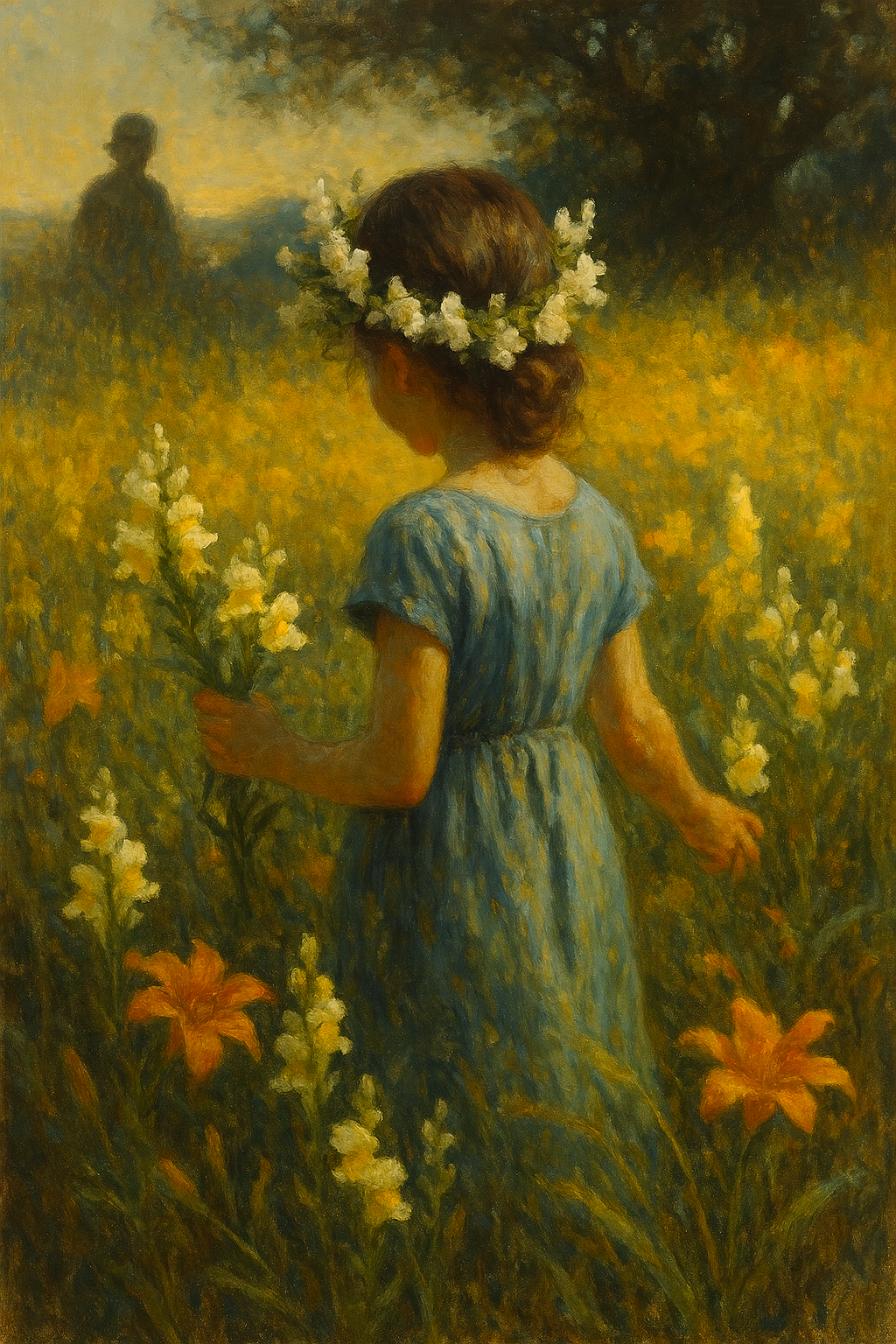
Snapdragon Fields
This poem began as a way to face the presence a parent leaves behind after death. I wasn’t trying to summon anything. I was trying to name the interruptions that still arrive without warning. The poem grew from that tension—how the past steps into the present, how memory can feel like a visitor who won’t…
-

Bone Confession
Bone Confession began as a way to name the physical weight I carry from the people I’ve lost and the ones I couldn’t help. The poem grew from a single pulse in the wrist into a record of how the body stores memory—through objects, breath, and the small actions that prove we’re still here. I…
-
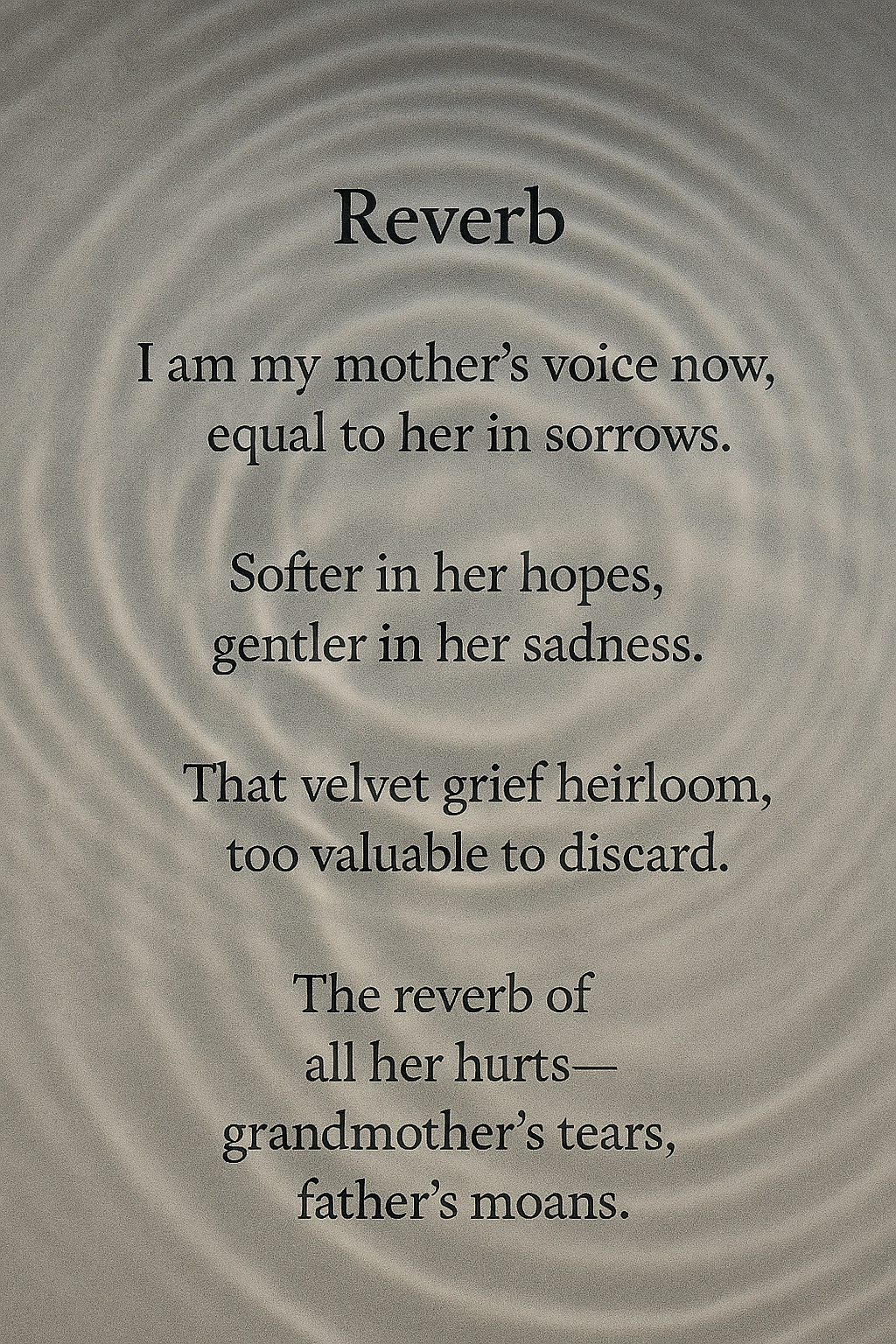
Reverb
Reverb” emerged from a moment of quiet recognition—when I realized I was speaking in my mother’s cadence, carrying her grief as if it were my own. The poem is built as a series of couplets that echo generational sorrow without resolving it. I wanted the rhythm to waver, to enact the instability of grief itself.…
-
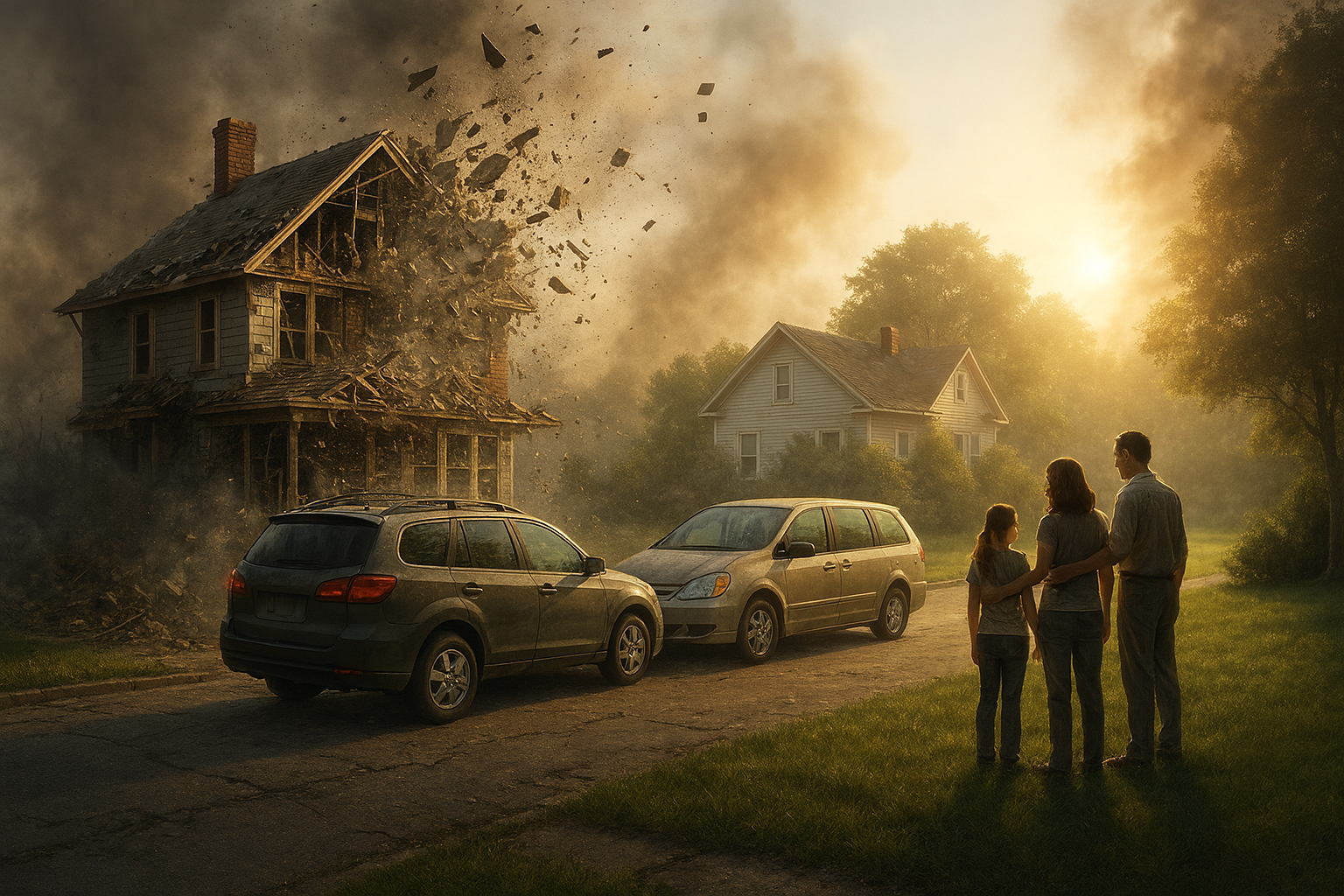
Undo
“Undone” emerged from my lifelong reckoning with memory and survival. After losing family members in a tragic accident, I found myself haunted by the idea of reversal—not just of time, but of blame, grief, and the unintelligible aftermath. The poem imagines a world where trauma rewinds: collisions un-happen, blood disappears, and the dead return to…
-

J’s Sky
“J’s Sky” emerged from the final moments I shared with someone I loved deeply. I wrote it in the hush that followed her passing, where grief had no metaphor—only gesture. The poem resists sentimentality and instead ritualizes consequence through pared-down language and elemental imagery. The sky becomes a container for ash, not answers. I wanted…
-

The Empty Chair
This poem originated from the ritual of watching films with someone I loved, and the chair she occupied became a consecrated site after her passing. Each line mimics a film frame rate—24 letters per line—so the poem itself becomes a reel of memory. Commas and dashes act as cuts, splicing grief into cinematic rhythm. The…
-
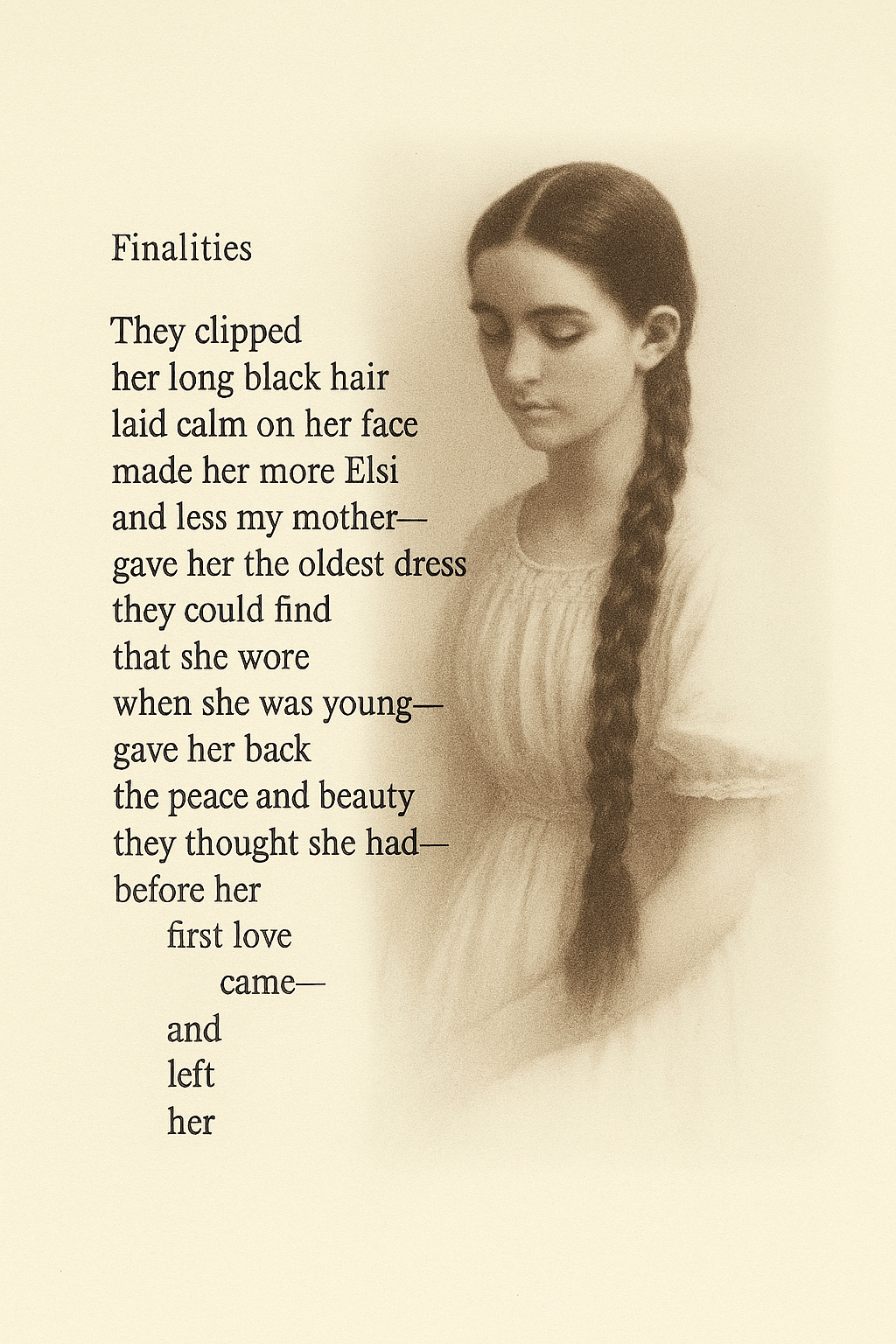
Finalities
Finalities emerged from a moment of ritual clarity after my mother’s passing. I wanted to honor not just her memory, but the gestures others made to restore her—clipping her hair, dressing her in youth, renaming her Elsi. It stages mourning as a quiet choreography of speculative grace. It’s about the transformation of a woman into…
-

Shadows and Ghosts and Angels
This poem emerged from a real CT scan I underwent—an experience that felt both absurd and sacred. I wanted to capture the paradox of being scanned for tumors while feeling the warmth of contrast dye and hearing the machine’s screech. The poem resists sentimentality and dramatization. It’s a meditation on diagnostic ritual, the bureaucratic anticlimax…
-

Ten Prayer Requests Folded Like Love Notes
This poem began as a private act of grief and ritual—a way to place prayers where no one would find them but God. I wrote it in a shaky, illegible hand, not for clarity but for sincerity. The poem explores themes of sacred concealment, ethical restraint, and the refusal of spectacle. It’s a gesture of…
-

The Patterns of Water
The Patterns of Water” emerged from a memory that felt both sacred and procedural—a maternal baptism not of faith, but of consequence. I wanted to honor the ritual of care without sentimentality, to trace the gesture of cleansing as a symbolic tether between vulnerability and becoming. The poem is built on repetition, foam, and the…
-
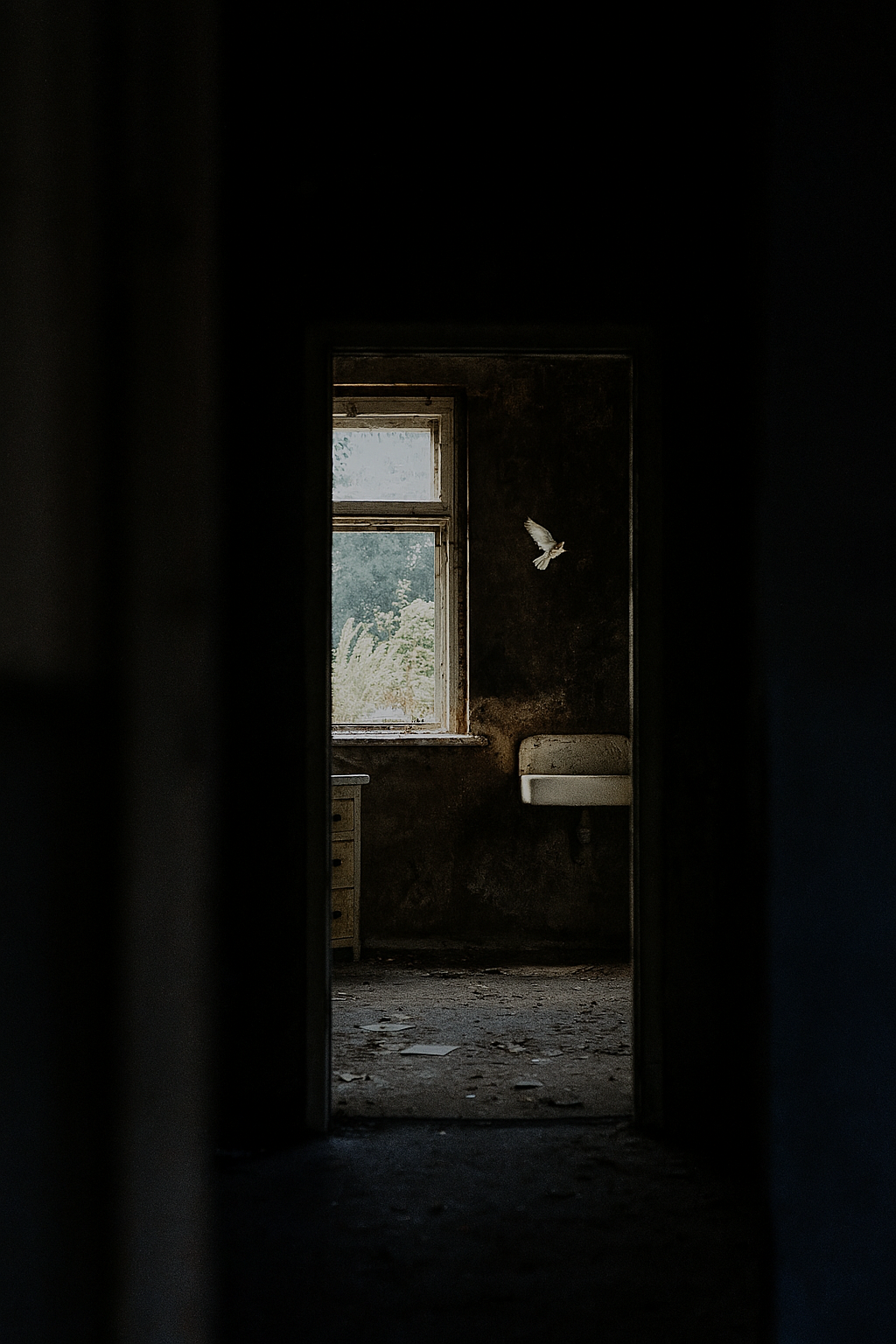
Ghosting
“Ghosting” emerged from the quiet aftermath of survival—after cancer, after loss, after the rituals that remain. It’s a poem about haunting not as horror, but as intimacy: the idea that love, memory, and consequence linger in objects, gestures, and the dog’s bark. I wrote it as a speculative elegy, imagining my own absence as a…
-
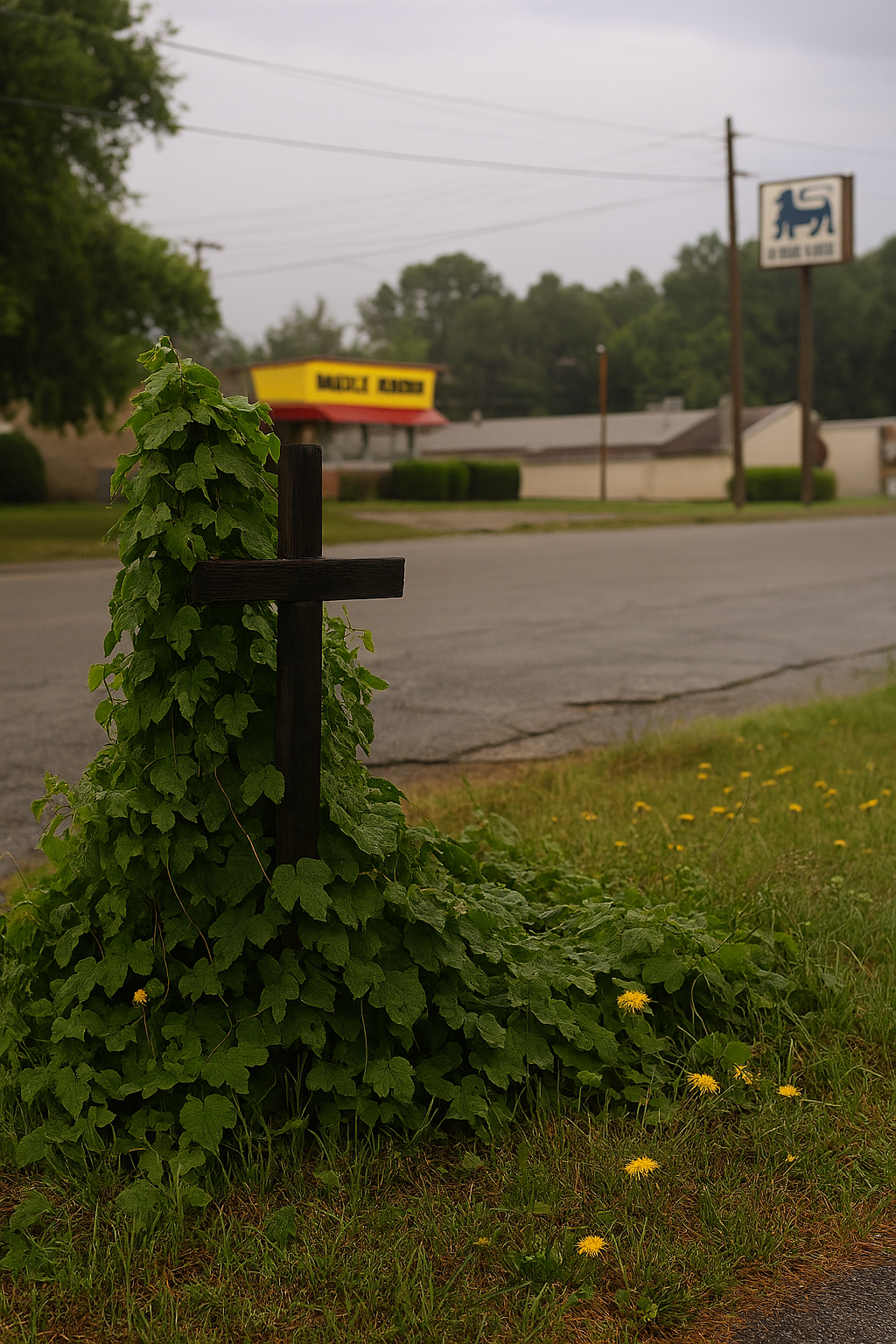
Roadside Cross
Roadside Cross began as a walk with my dog past a forgotten memorial near a Waffle House and Food Lion. What struck me wasn’t just the decay of the cross, but the quiet choreography of grief—how strangers, puddles, rap lyrics, and rain all participated in a ritual of exposure and forgetting. I wanted to write…
-
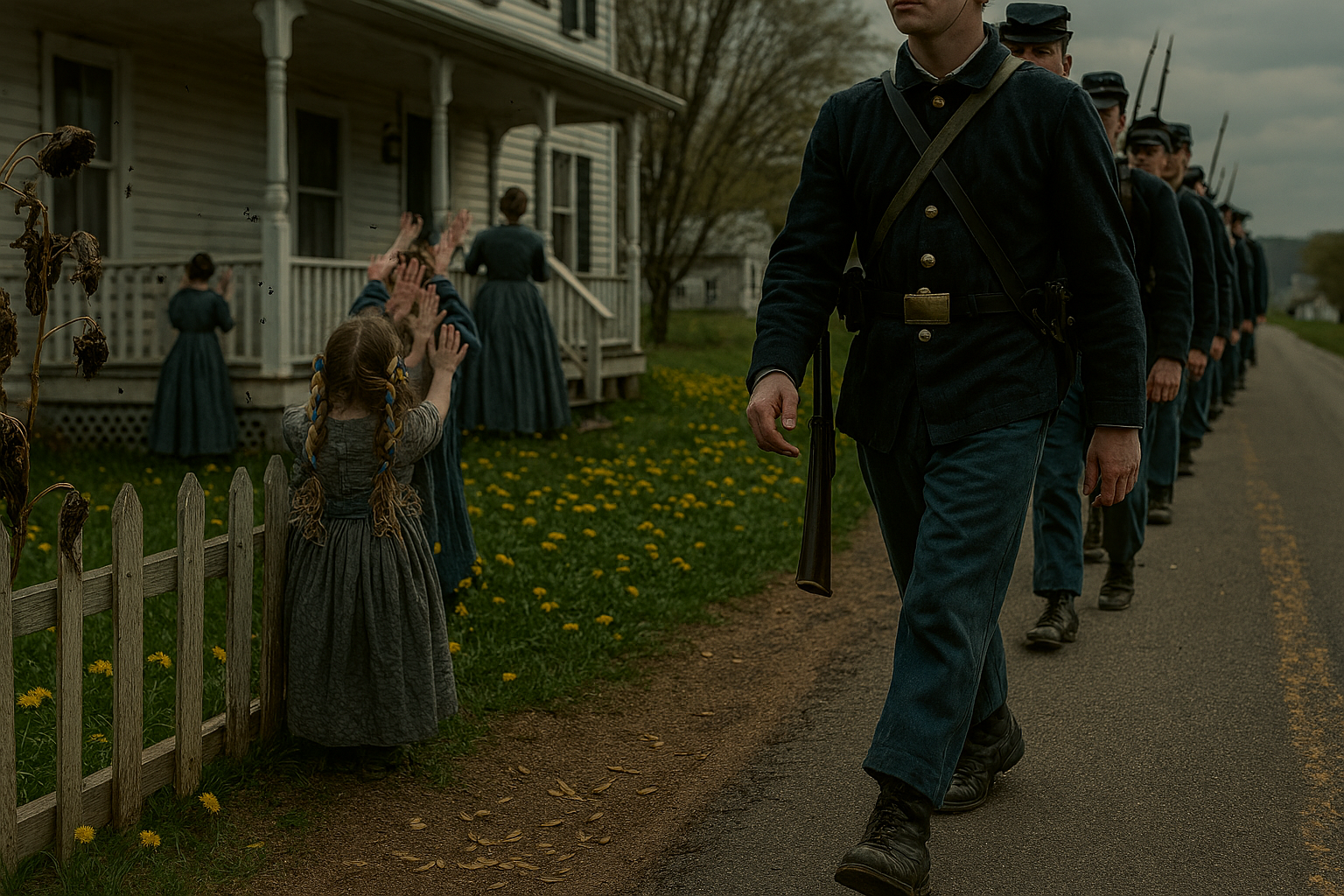
When the Boys Go Marching Away
When the Boys Go Marching Away began as a meditation on the quiet rituals of departure—how war, faith, and memory braid themselves into the domestic fabric. I wanted to write a poem that resists heroism and sentimentality, that instead lingers in the aftermath: the porches, the ribbons, the daughters named Hope.
-

January Dream, 1987
January Dream, 1987 emerged from a dream visitation that blurred grief with peace. My mother, who had died decades earlier, returned in the dream not to ascend, but to sign love into my palm—wordless, tactile, and precise. The poem resists sentimentality and myth, honoring ambiguity and consequence. It’s an American sonnet that turns on ethical…
-

Sunset Visit
“Sunset Visit” emerged during a twilight walk through a cemetery near my childhood home. I was struck not by grief, but by the contrast between the quiet of the dead and the noisy solitude each visitor carried—thoughts, regrets, memories. The poem began as a study in light and stone, but deepened into a meditation on…
-
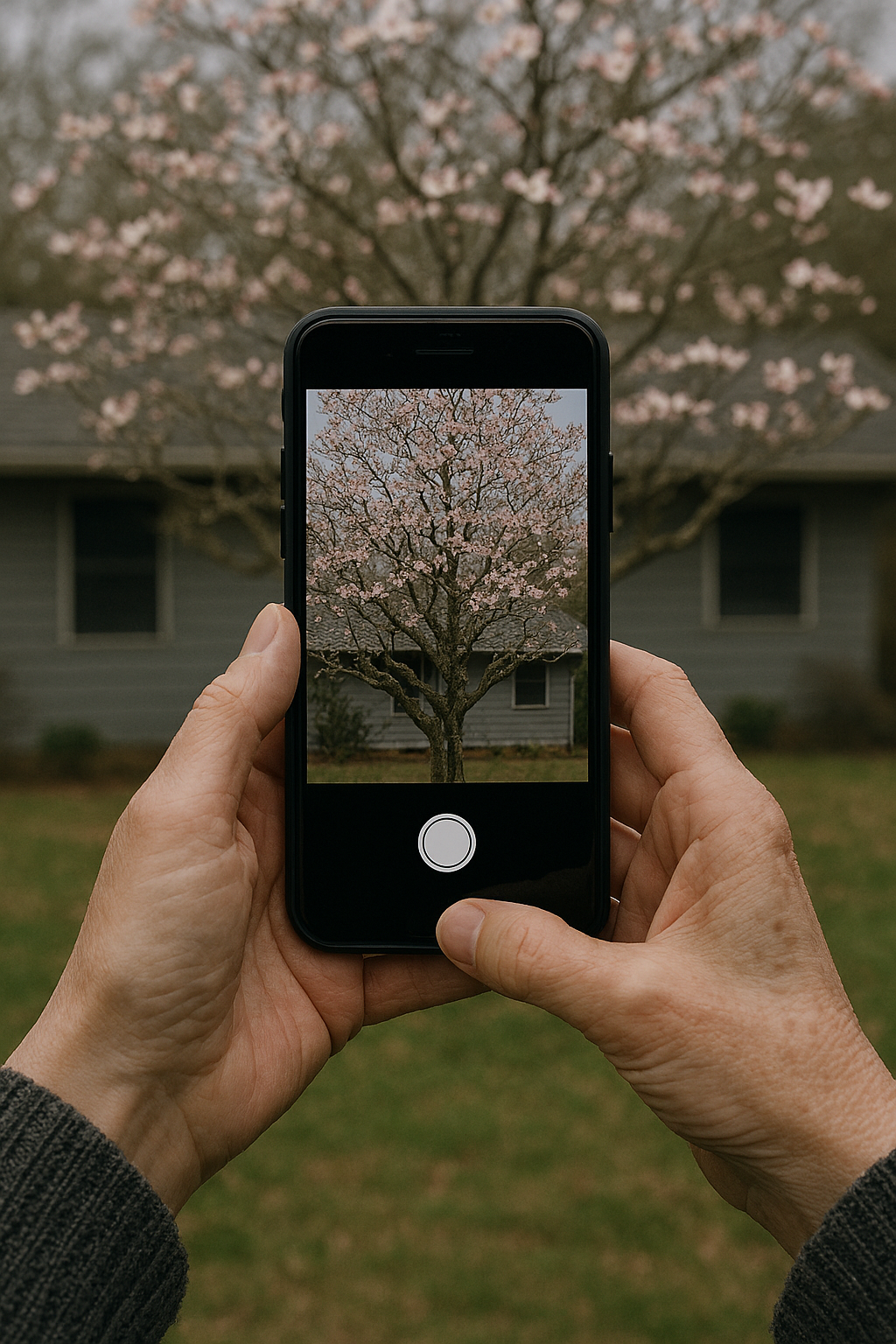
Photo Stop
This poem began as a meditation on gesture—specifically, the act of photographing something not to share, but to preserve a private emotional truth. I was thinking about how grief often manifests in small, unceremonious rituals: lifting a phone, deleting and retaking an image, placing it back in a purse chosen for protection rather than style.…
-

Arguing with the Dead
Arguing With the DeadBegin by calling her by name,not the one etched on the granite monument in front of you,not the one printed on the birth certificate—that temporary name another motherwas forced to dream upin the haze of post-labor fade,in the ecstasy of seeing youfor the first time—something that grew for nine monthsinside this other,and…
-

The Birds Remember Everything
A lyrical meditation on city birds, memory, and instinct. This poem honors the quiet rituals of return, grief, and the histories we refuse to name.
-
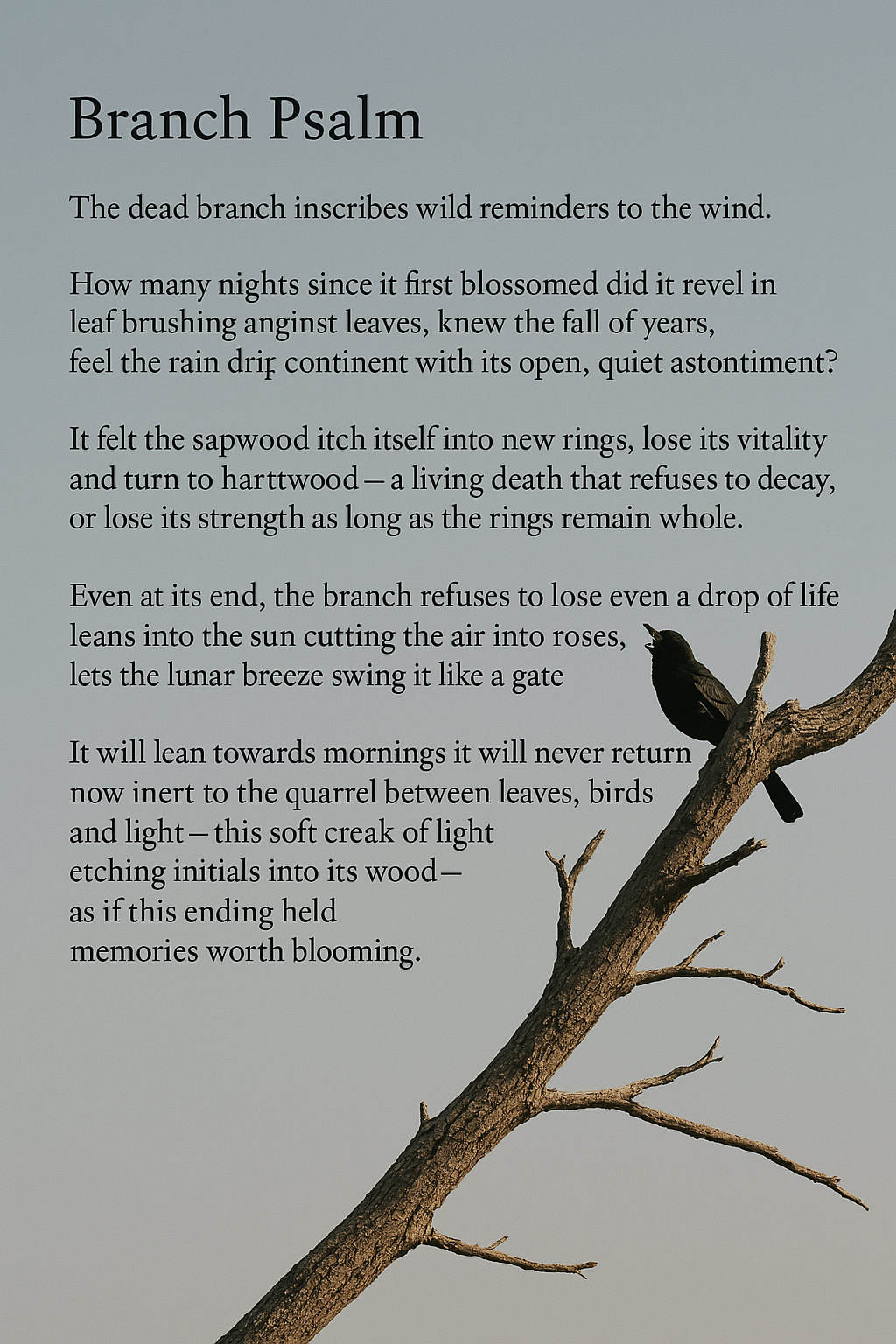
Branch Psalm
Branch PsalmBranch PsalmThe dead branch inscribes wild reminders to the wind.How many nights since it first blossomed did it revel in leaf brushing against leaves, know the fall of years,feel the rain drip away, nourishing the earth, staining this continent with its open, quiet astonishment?It felt the sapwood itch itself into new rings, lose its…
-
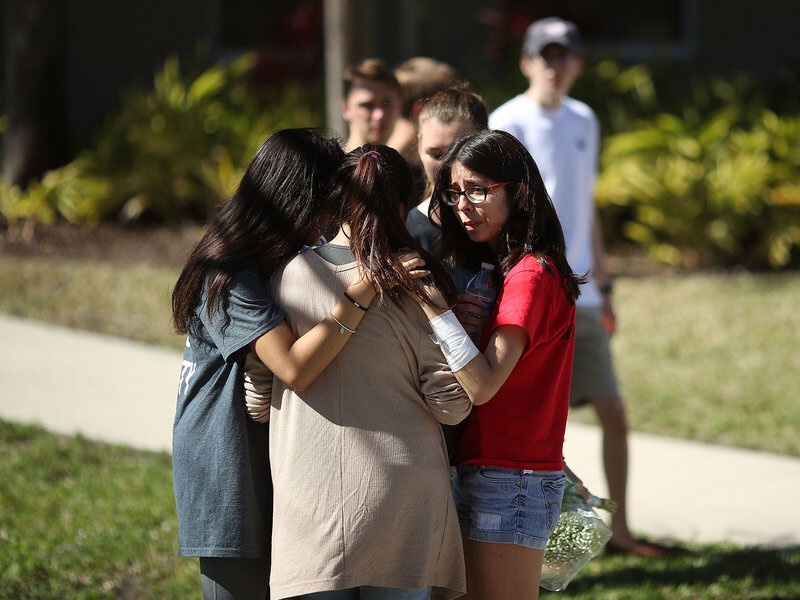
An Elegy and a Kaddish for Parkland: Activism of Blood and Parkland Sighs Seven Times
Elegy: Activism of Blood They never expected to be claimed in the activism of blood, the March for Lives, the tour across the country filling in for the senior trip for some; the pledge of voter registration for others, replacing the animal house of SATs, admission essays regulated to vague because the personal is too…