Tag: contemporary poetry
-
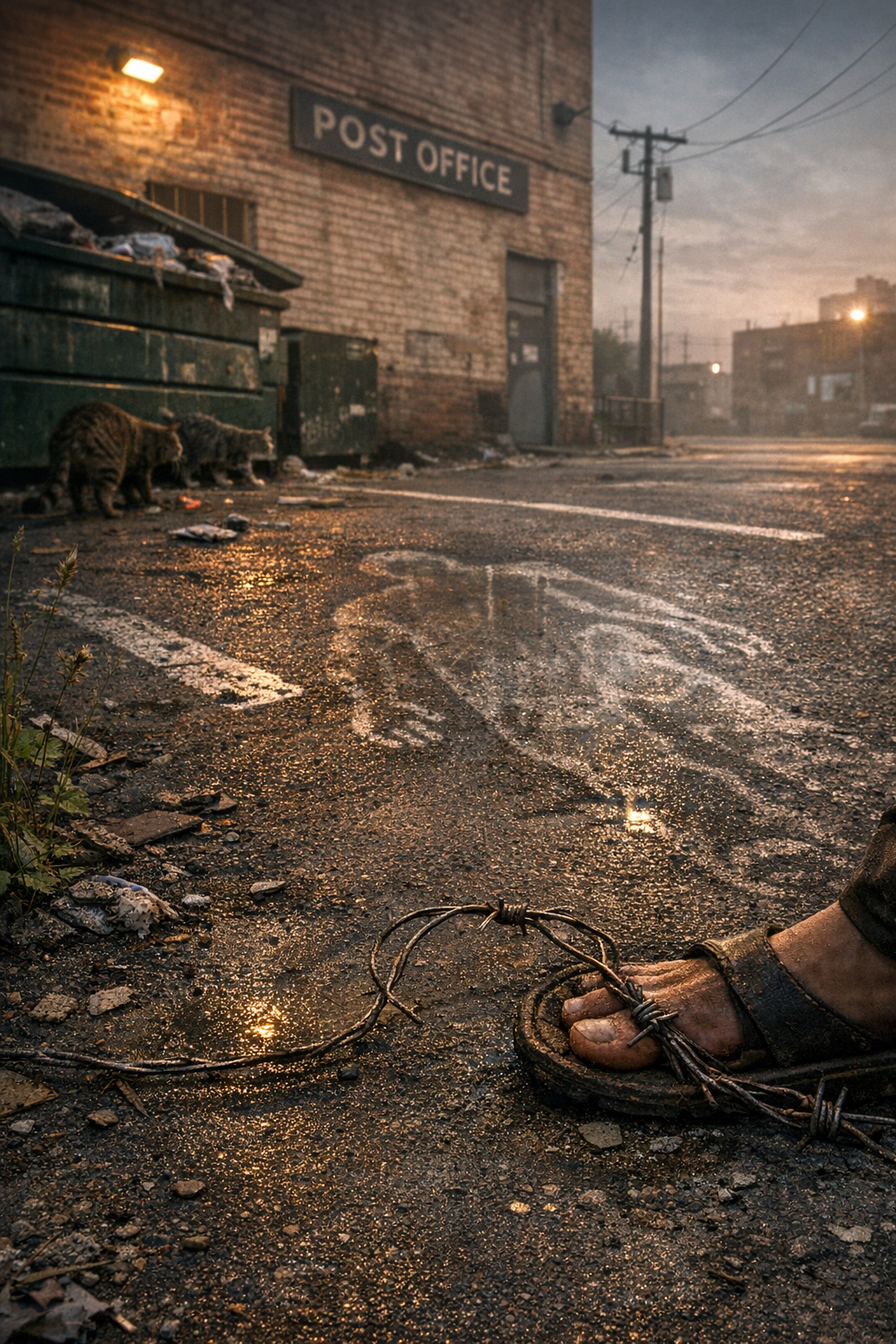
Where Are You My Friend…?
This poem emerged from walking through a heat-struck urban lot where absence felt more physical than memory. I wanted the poem to carry abandonment through objects—barbed wire, cats, asphalt—without commentary. The body persists, but only through what it touches. The theme is not grief but residue: what remains when someone doesn’t.
-
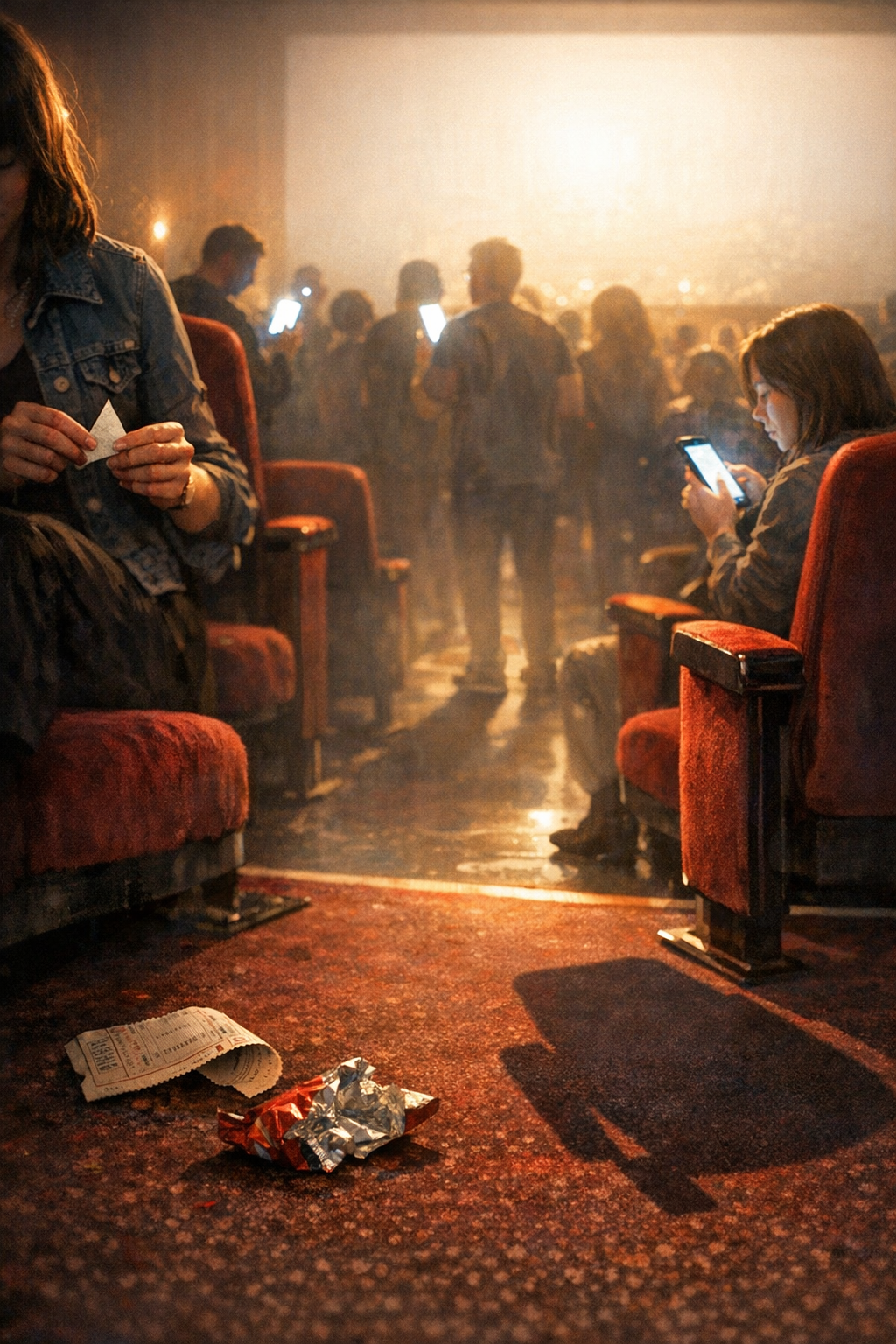
After the Movie
“After the Movie” emerged from the residue of a theater’s disassembly—the rupture of communal silence into the flicker of screens and the crackle of wrappers. I wanted to capture the moment when the film ends but its emotional architecture lingers in the objects and gestures left behind.
-
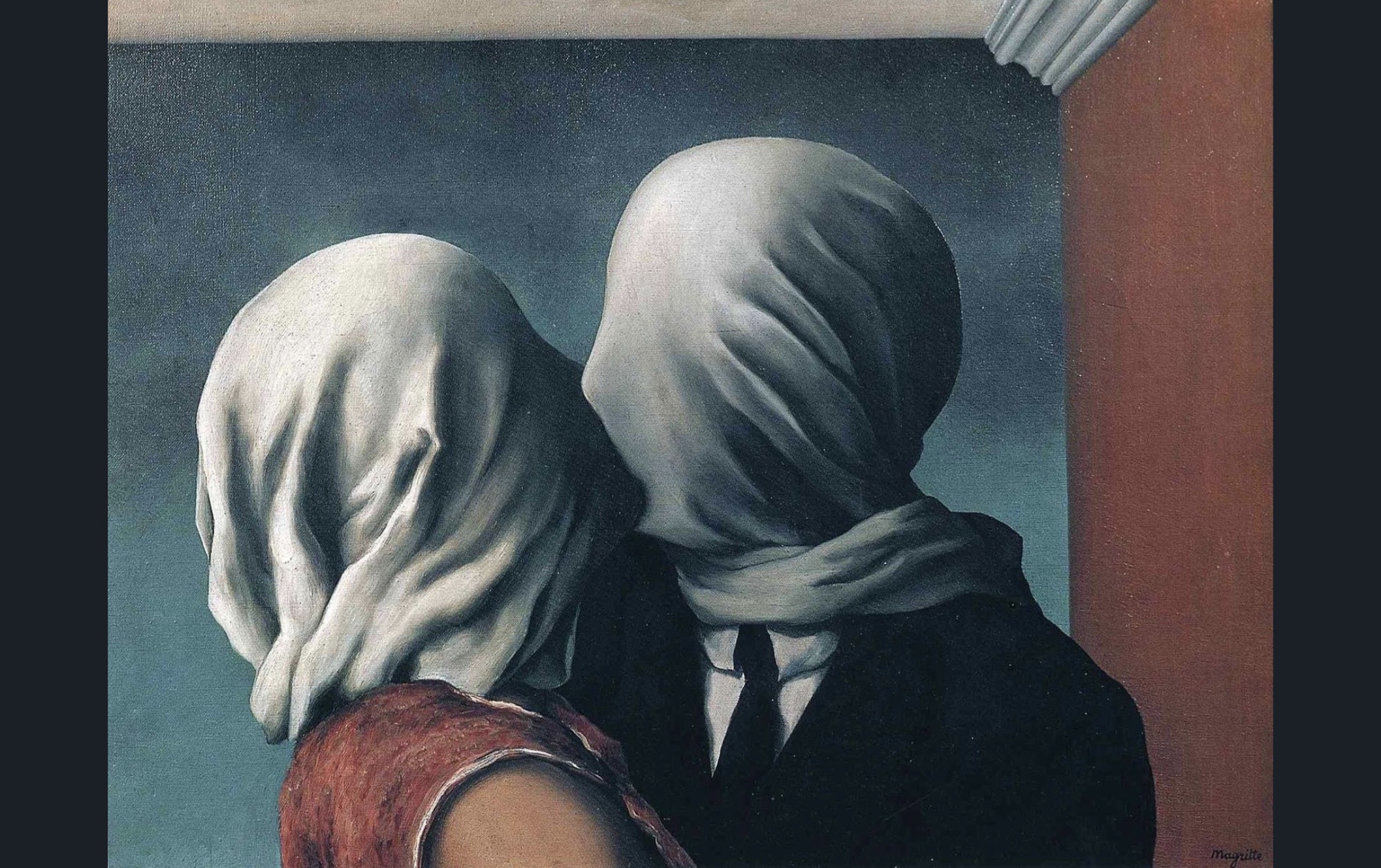
Vigil
The poem’s central tension—what it means to breathe through another—emerged from thinking about dependence, care, and the porousness between bodies. I wanted the poem to feel like a held moment, a vigil in the literal sense: a watchfulness, a staying‑with.
-
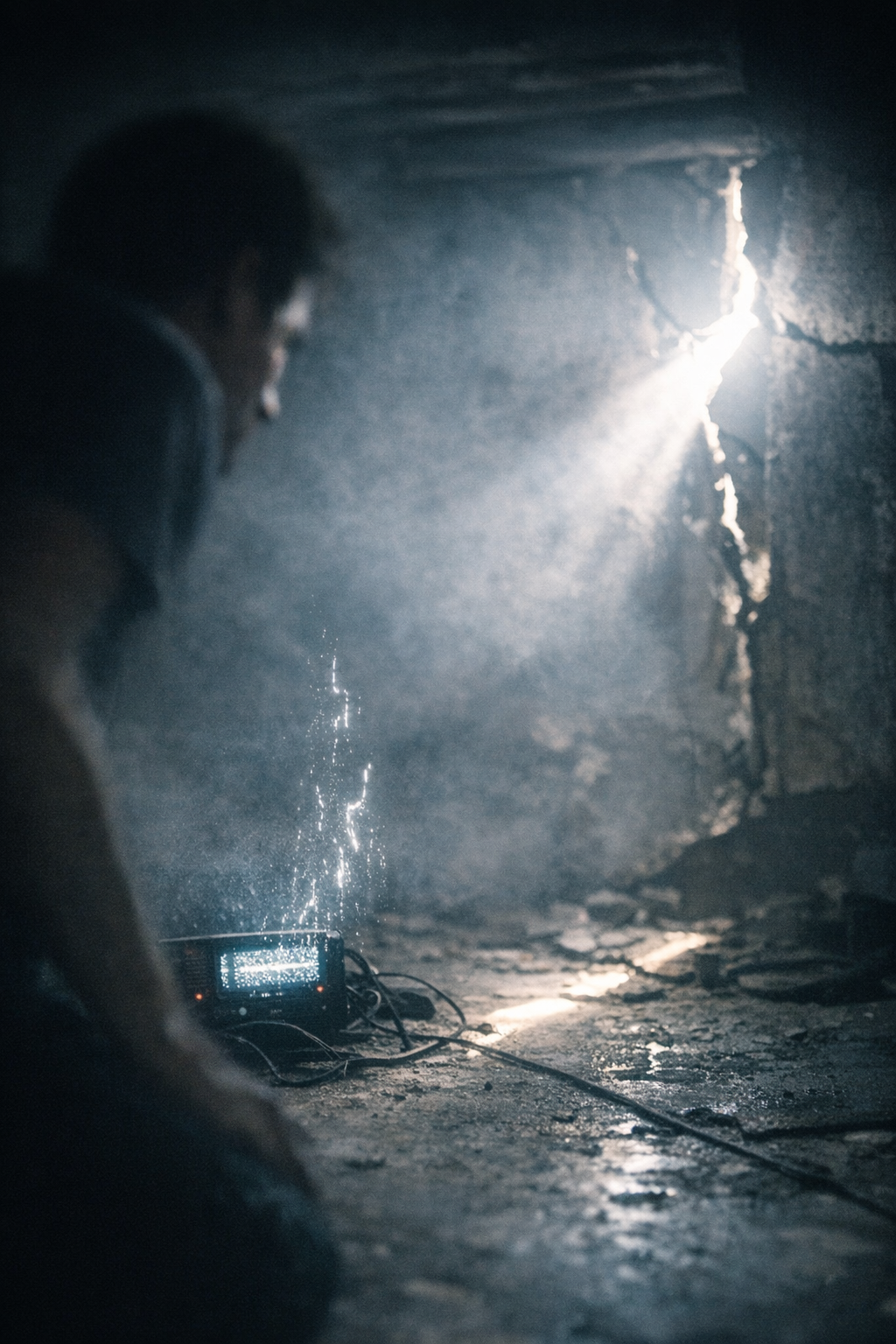
Signal Fault
Signal Fault began as an attempt to write a poem built entirely from sound and fracture. I wanted to see how far I could push minimalism without losing emotional pressure. The poem emerged from thinking about how identity behaves under distortion—how a name, a body, or a moment can feel like a signal rising through…
-
Reclamation
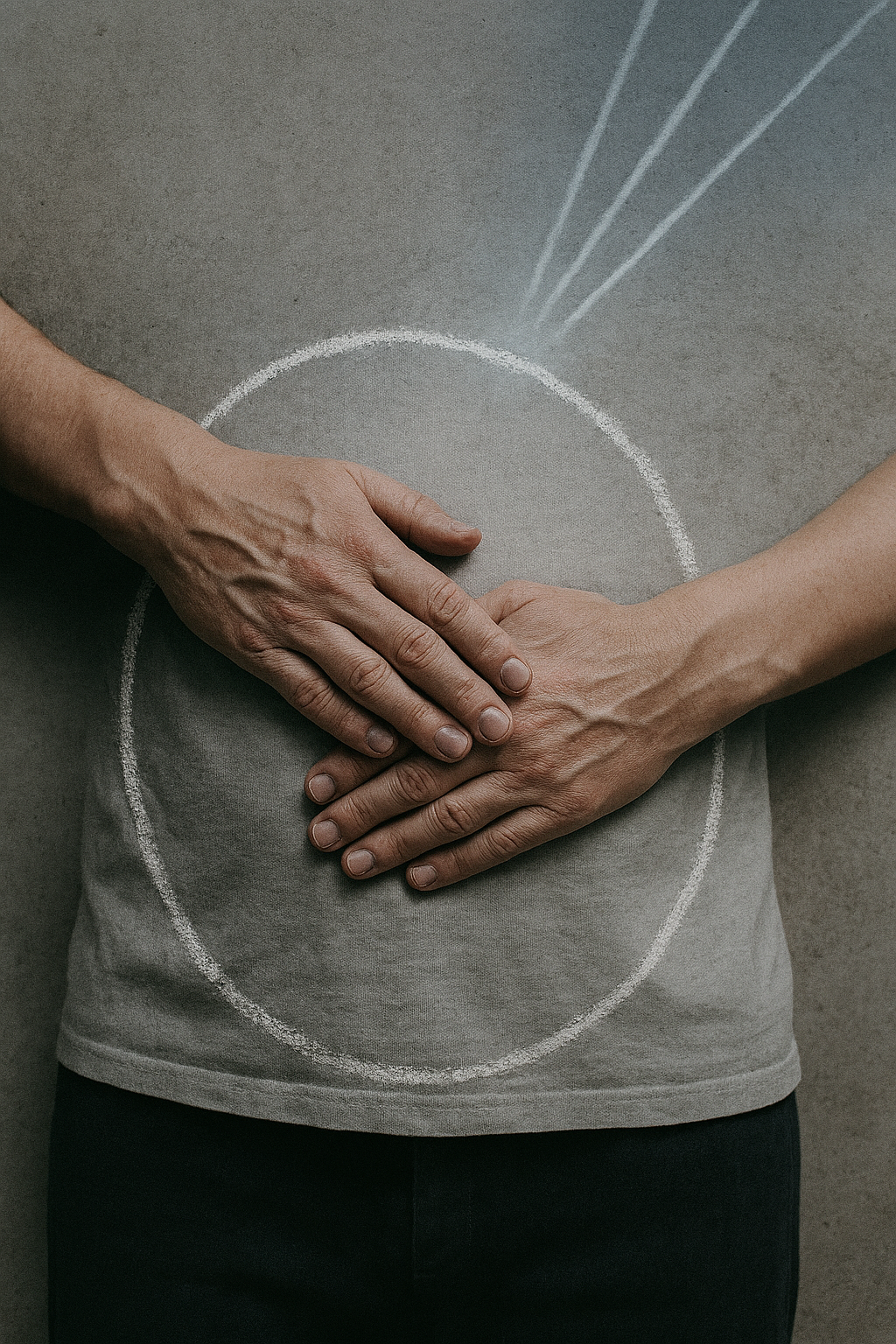
Reclamation began as a meditation on the chalk line—first as a metaphor for confinement, then as a literal aura traced by radiation machines. I wanted to write a poem that didn’t glorify survival but acknowledged its cost: the neuropathy, the pouchitis, the ache where the colon once lived. The poem lives in the tension between…
-
Imprint
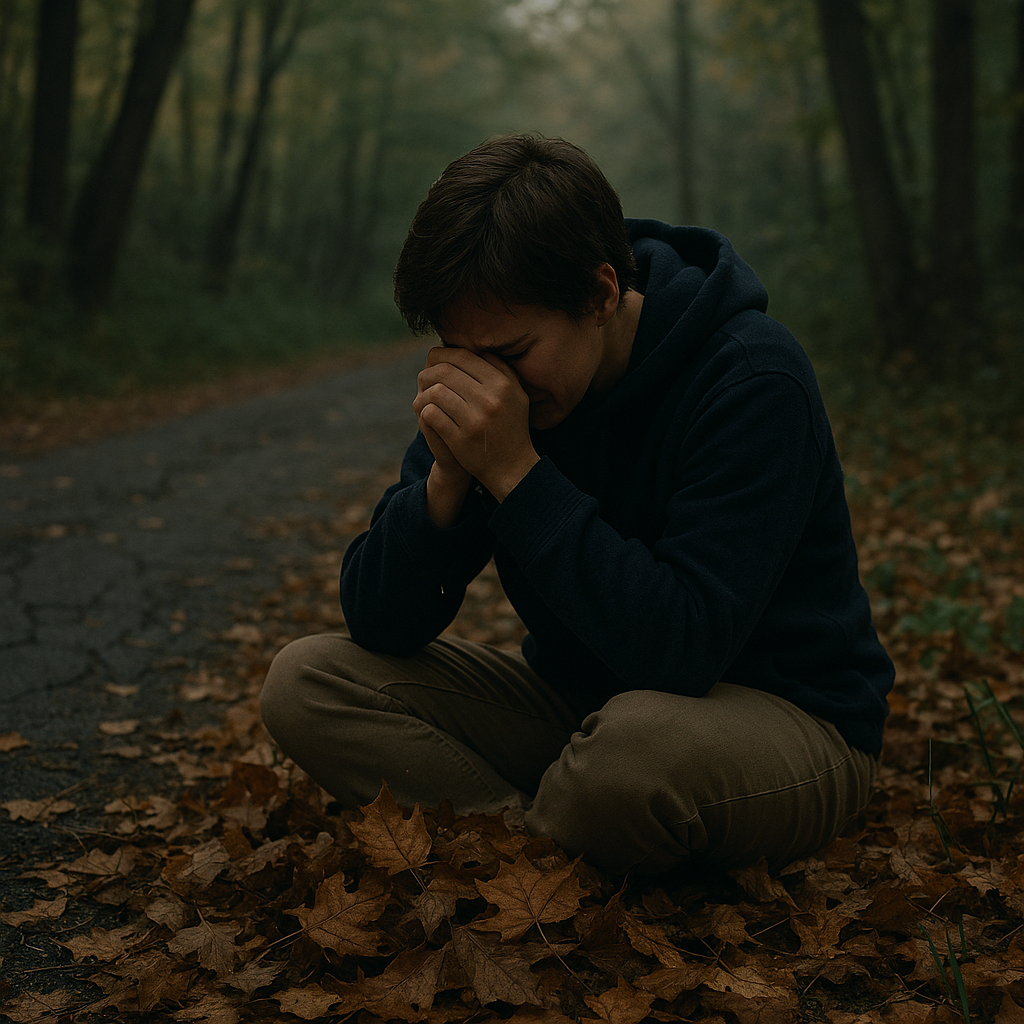
“Imprint” began as a meditation on the body’s relationship to memory and terrain. I wrote it after revisiting a childhood site—an abandoned road where I once fell. The poem maps that moment not as trauma but as blueprint: a record of contact, fear, and transformation. The quoted line is real, spoken aloud in panic, and…
-
Before My Memory Began
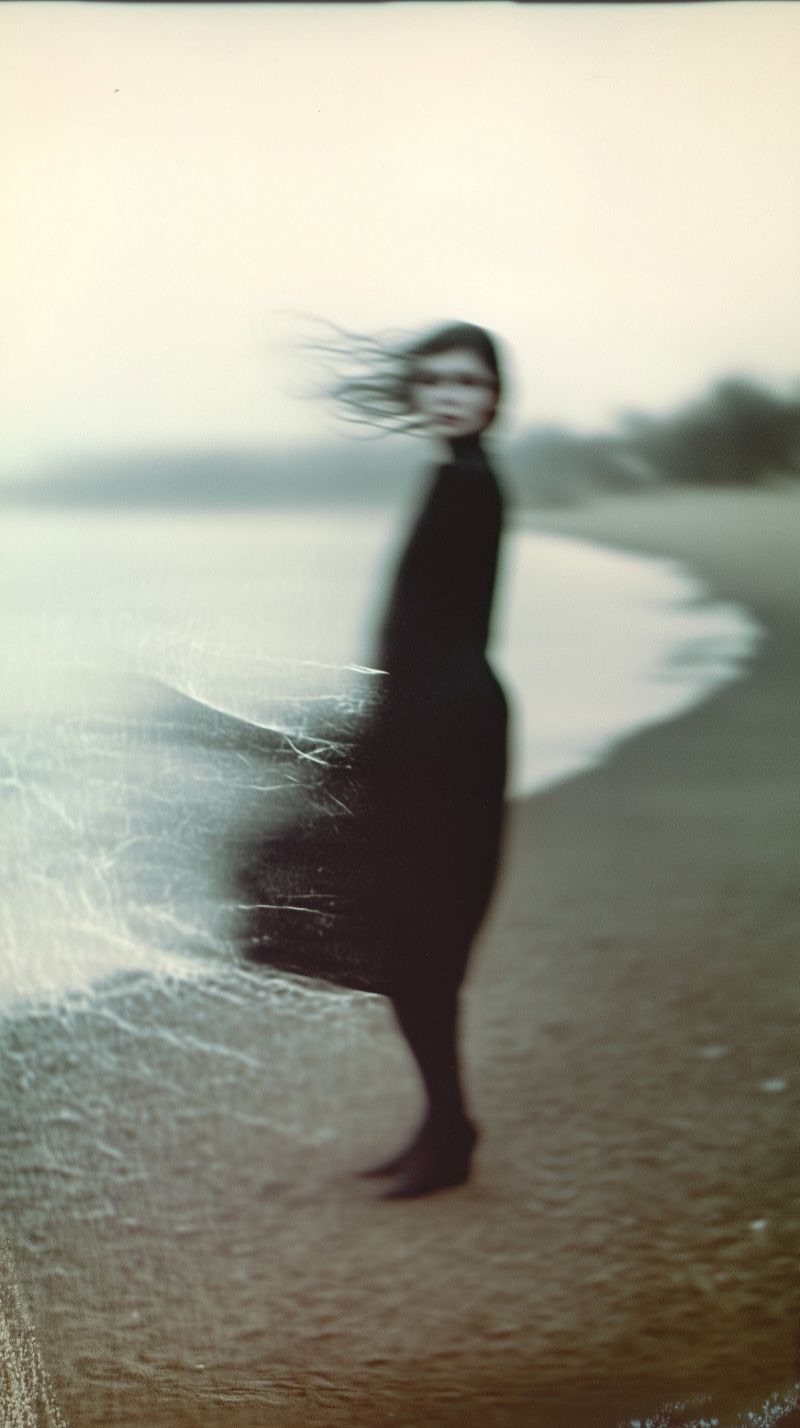
Before My Memory Began” comes from the earliest story I was ever told about myself—a moment I cannot remember but have carried as if I lived it. The poem moves between a beach scene and a hospital room, two images that have followed me for years. I wrote it to examine how memory is inherited,…
-

A Thing I Do Instead of Sleep
This poem emerged from a sleepless night and a remembered sound—an owl’s hoot imagined against the silence of a hospital corridor. It’s a sonic elegy, a gesture toward the moment my mother’s voice carried the weight of my deafness.
-
Late January Arrives
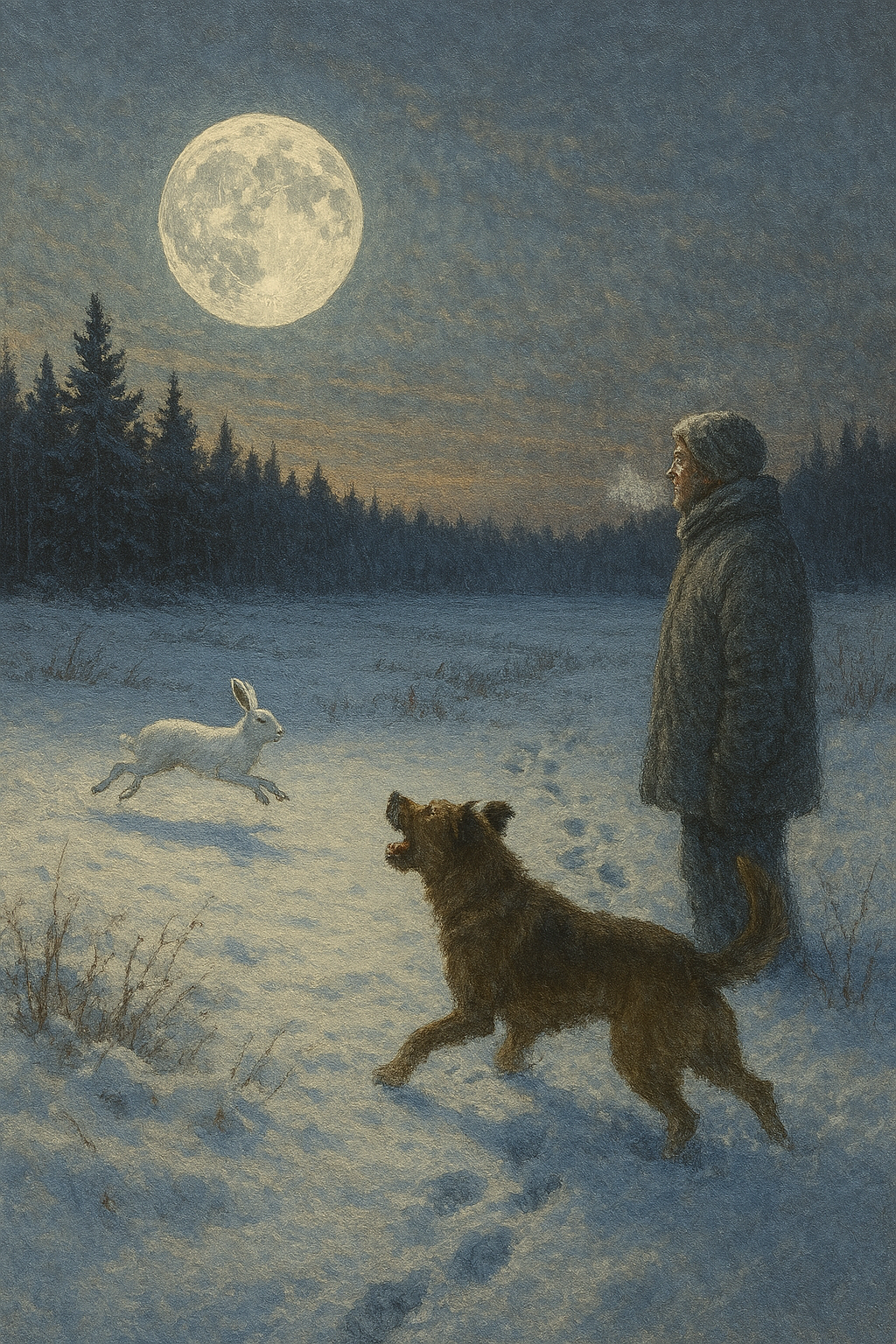
“January Arrives” emerged from a moment of stillness fractured by motion—a hare vanishing into snow, my dog’s bark echoing through the cold. I wrote this poem to honor the tension between presence and disappearance, between the human gaze and the animal trace. I wanted to create a lyric that holds without reaching, that observes without…
-
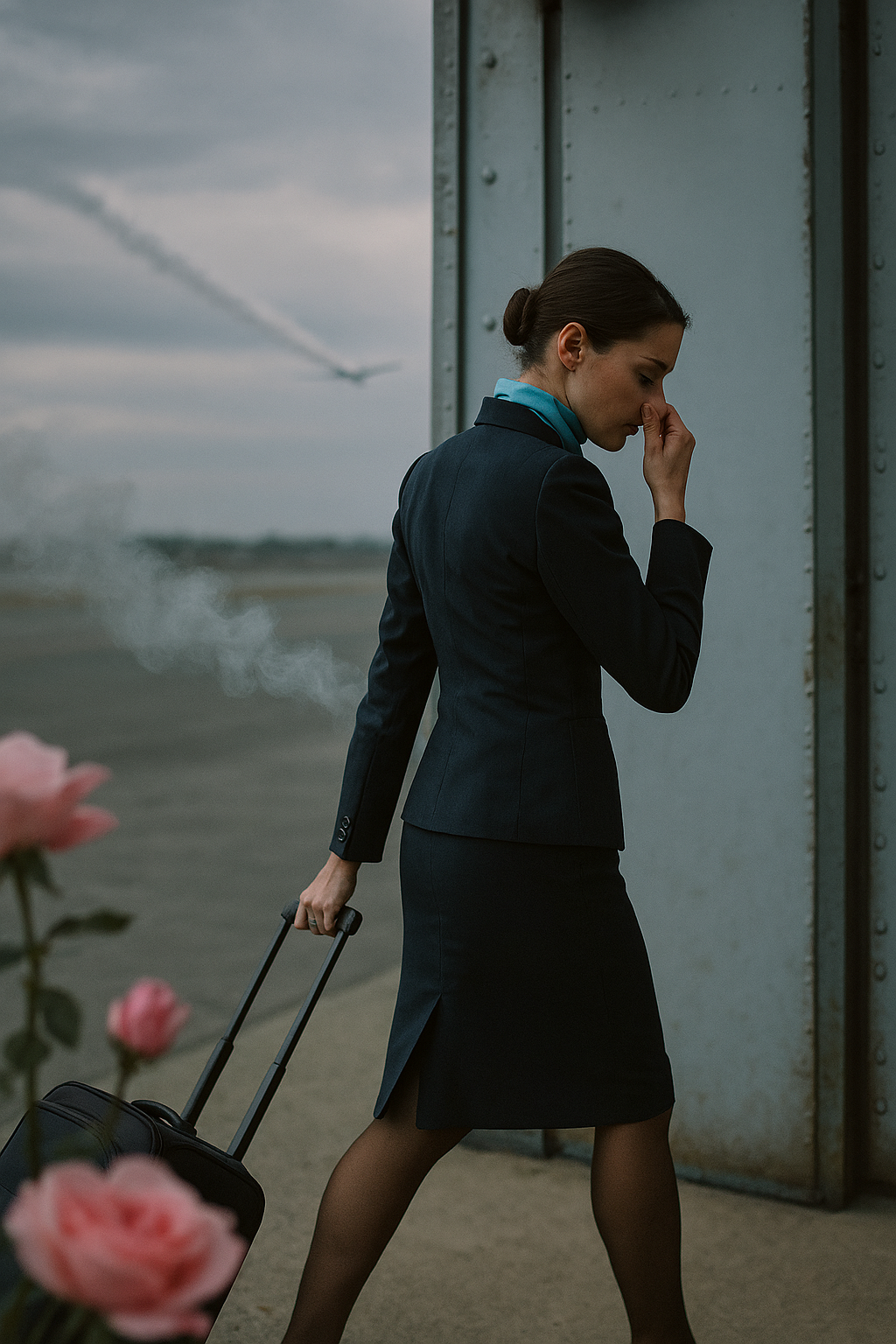
Sillage
This poem began with a scent memory that returned without warning. I followed the physical details—the hand raised, the barrier door, the trace of fuel—until the moment revealed its shape. The poem stays close to gesture and environment because that’s where the truth of the scene lived. The theme grew from the tension between presence…
-
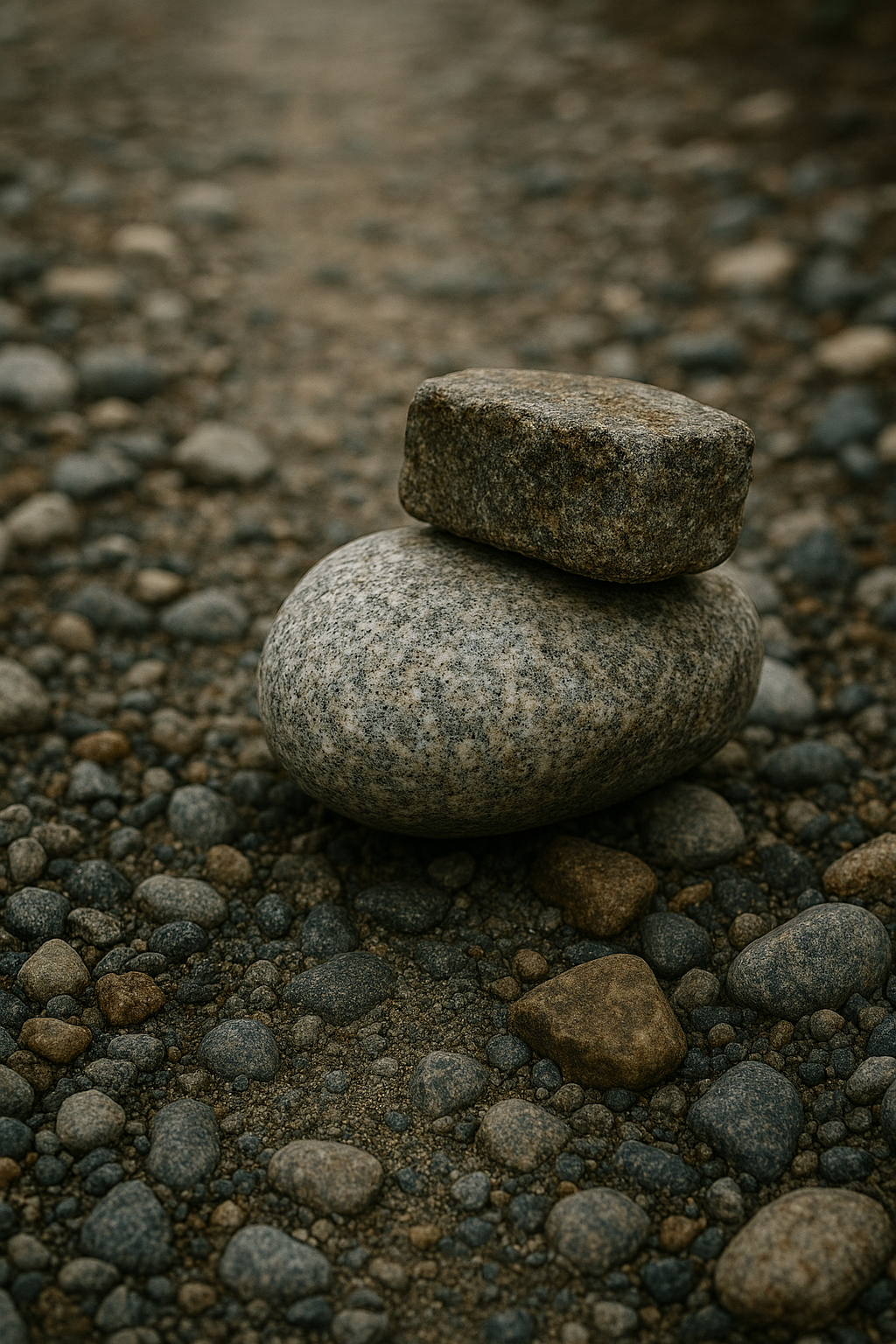
Stones
“Stones” emerged from a walk with my autistic brother, where the gravel beneath us felt like a ledger—each stone a record of what we’ve inherited and what we must carry. I wrote it to honor the physicality of memory and the way lineage shapes our future terrain. The poem resists sentimentality and abstraction, staying grounded…
-
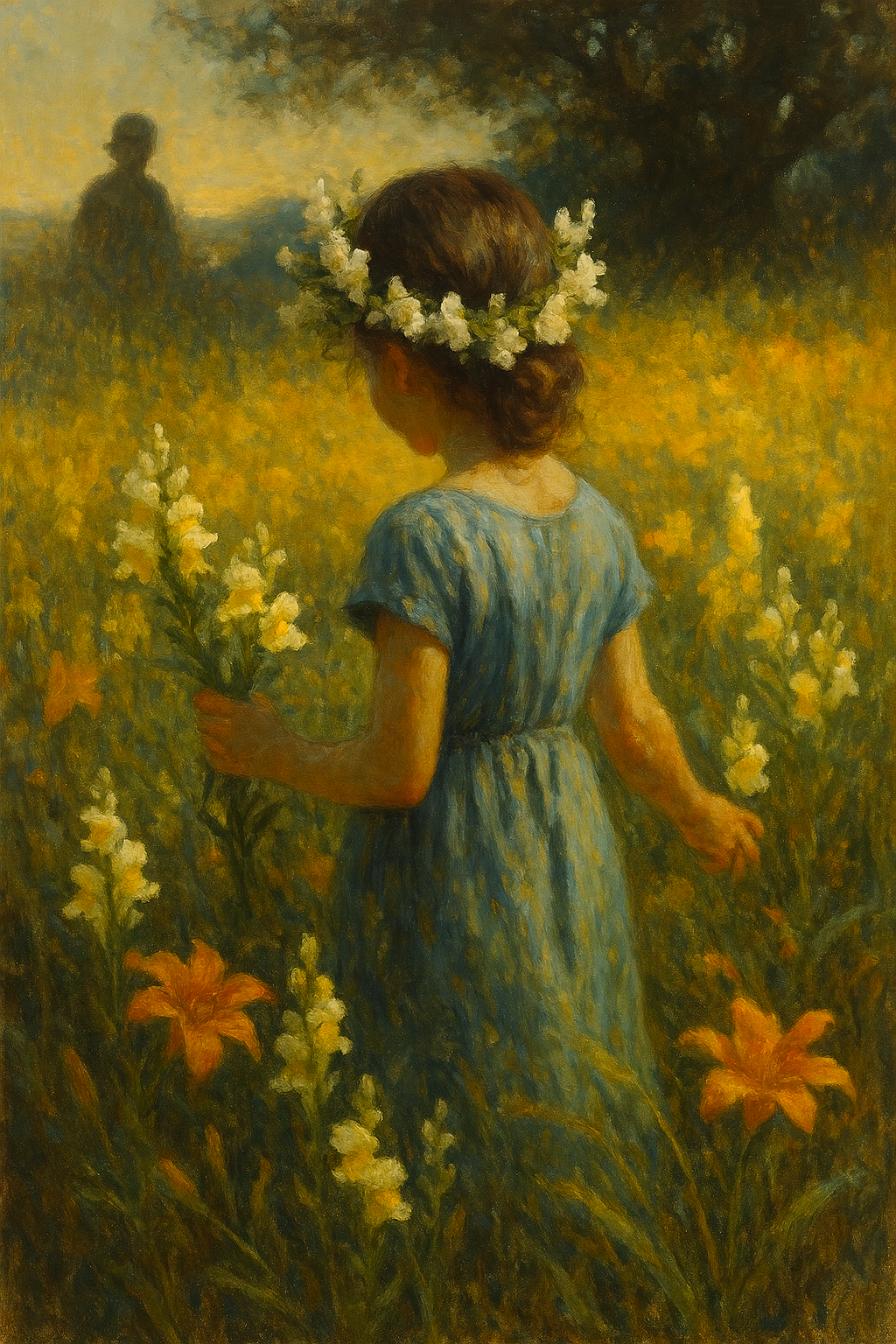
Snapdragon Fields
This poem began as a way to face the presence a parent leaves behind after death. I wasn’t trying to summon anything. I was trying to name the interruptions that still arrive without warning. The poem grew from that tension—how the past steps into the present, how memory can feel like a visitor who won’t…
-
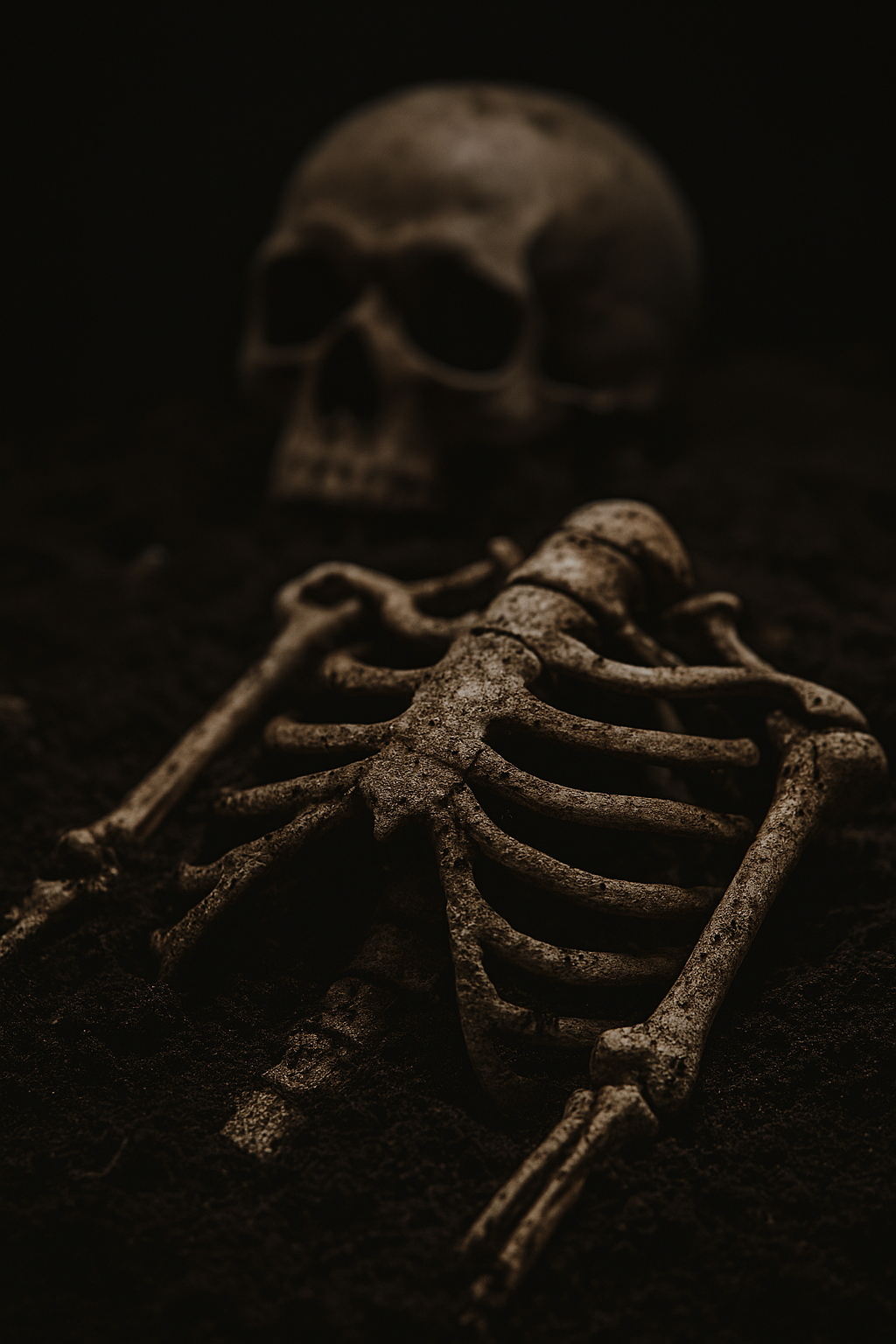
Bone Confession
Bone Confession began as a way to name the physical weight I carry from the people I’ve lost and the ones I couldn’t help. The poem grew from a single pulse in the wrist into a record of how the body stores memory—through objects, breath, and the small actions that prove we’re still here. I…
-
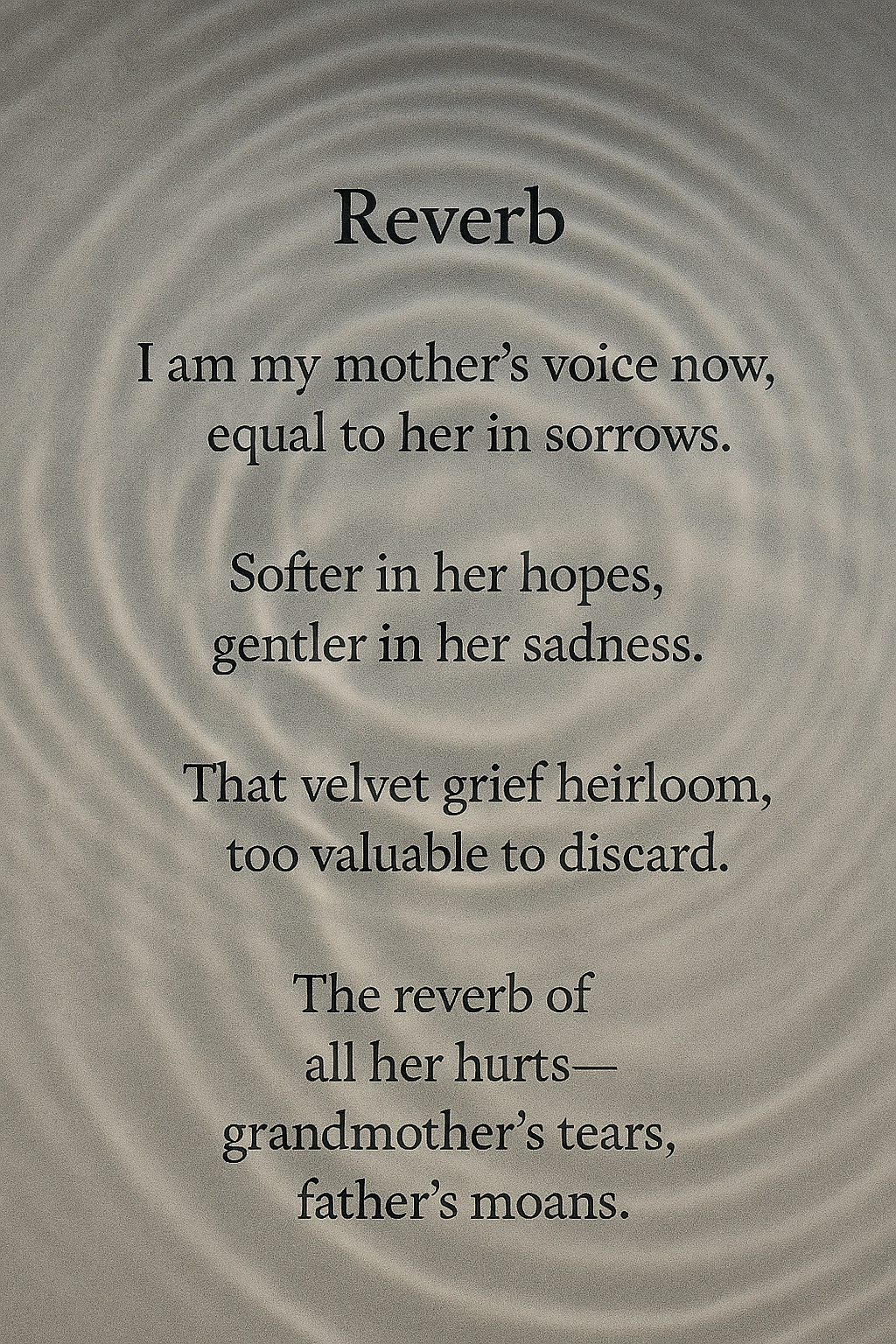
Reverb
Reverb” emerged from a moment of quiet recognition—when I realized I was speaking in my mother’s cadence, carrying her grief as if it were my own. The poem is built as a series of couplets that echo generational sorrow without resolving it. I wanted the rhythm to waver, to enact the instability of grief itself.…
-
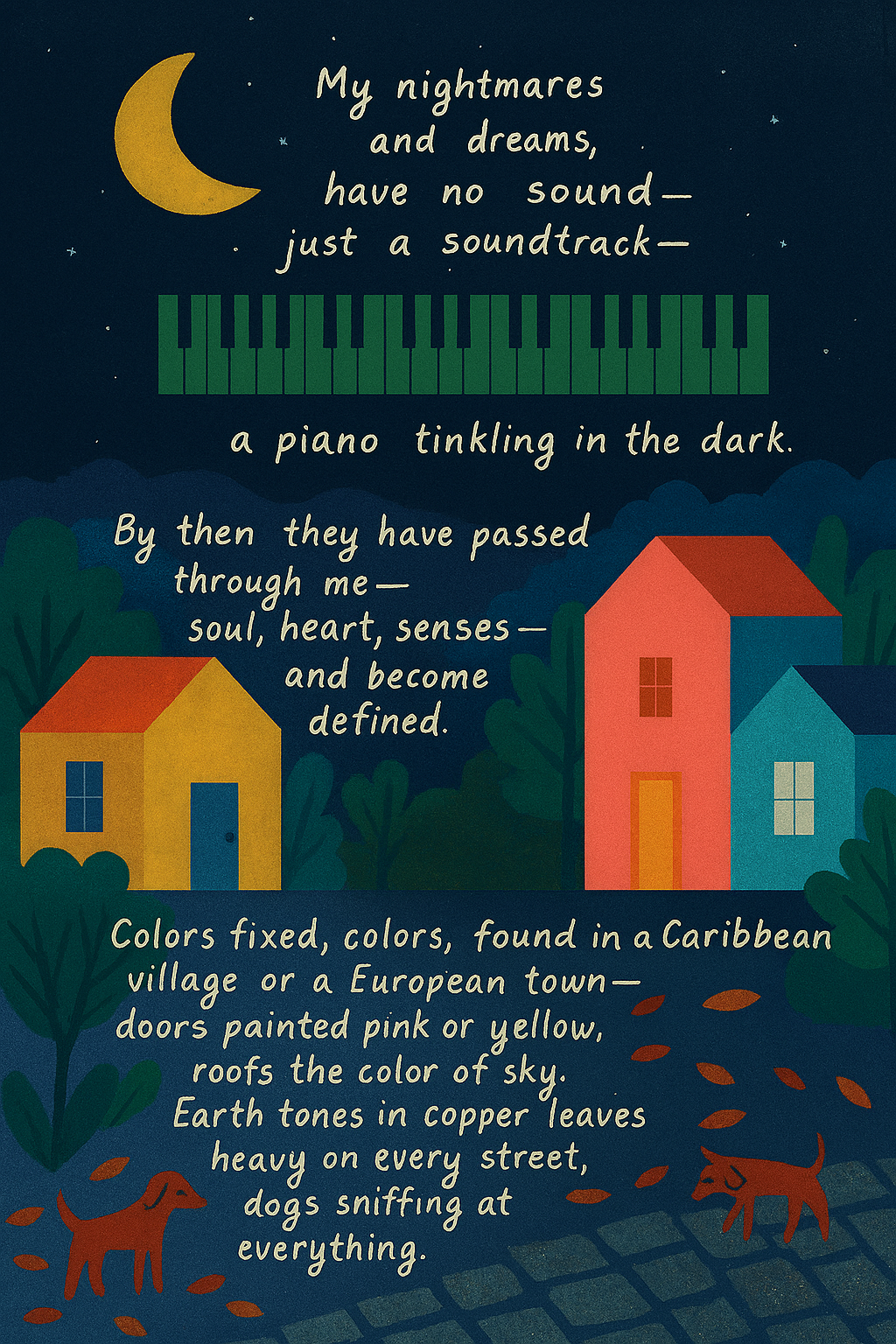
Transcription
soundtrack and images transform into words. I wanted to capture how memory and imagination build a foundation—bright doors, roofs wide as sky—out of fragments of fear and joy. The theme is resilience: the act of immersing nightmares in dreams until something sacred emerges.
-
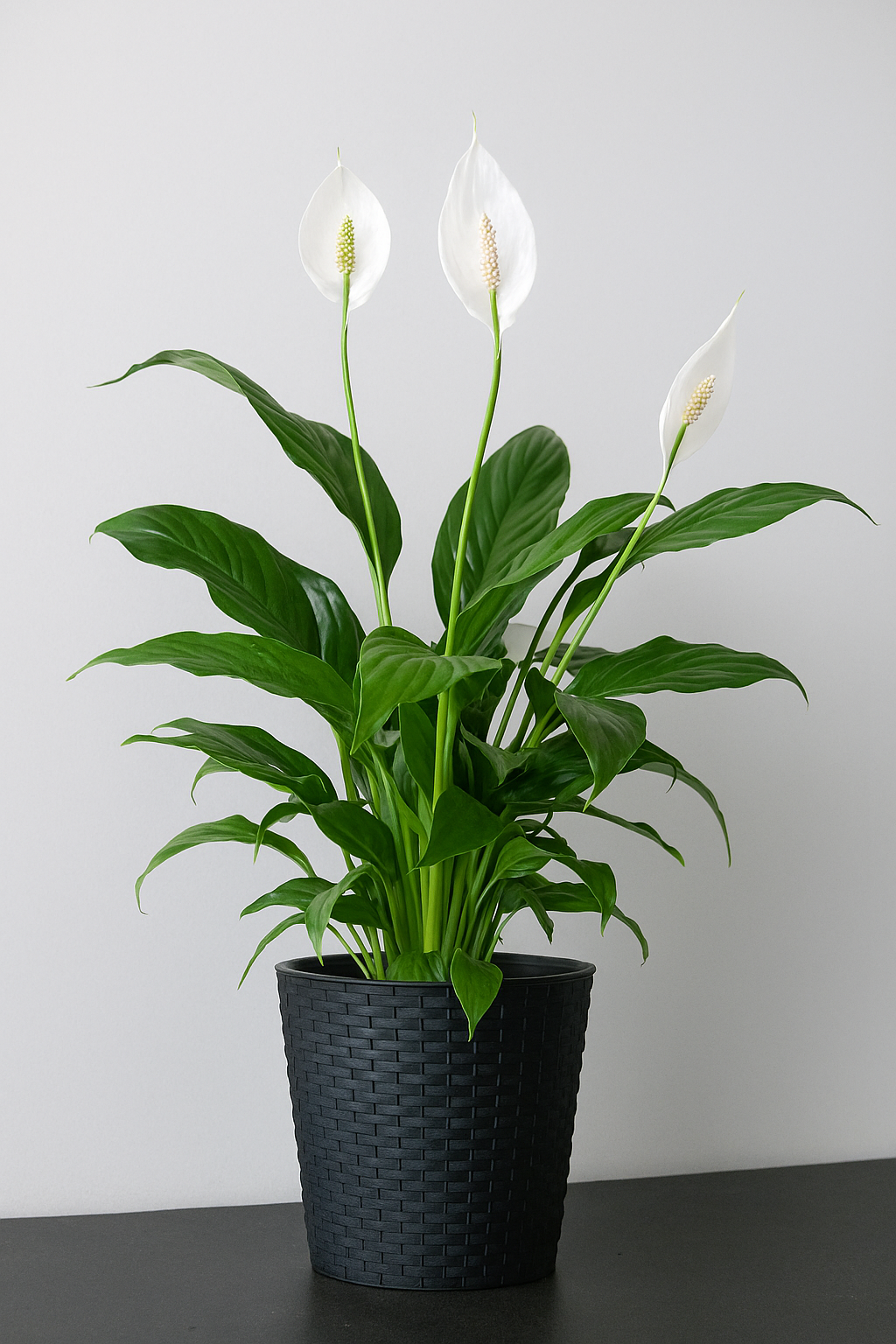
Peace Lily
Peace Lily began as a quiet observation of my wife’s improbable success with a single plant. Over time, it became a ritual ledger—tracking seasonal displacement, artificial substitutions, and the endurance of living things. The poem’s triadic structure echoes the trinity of life, labor, and love. Its humor is understated, its gestures symbolic: the copper penny…
-
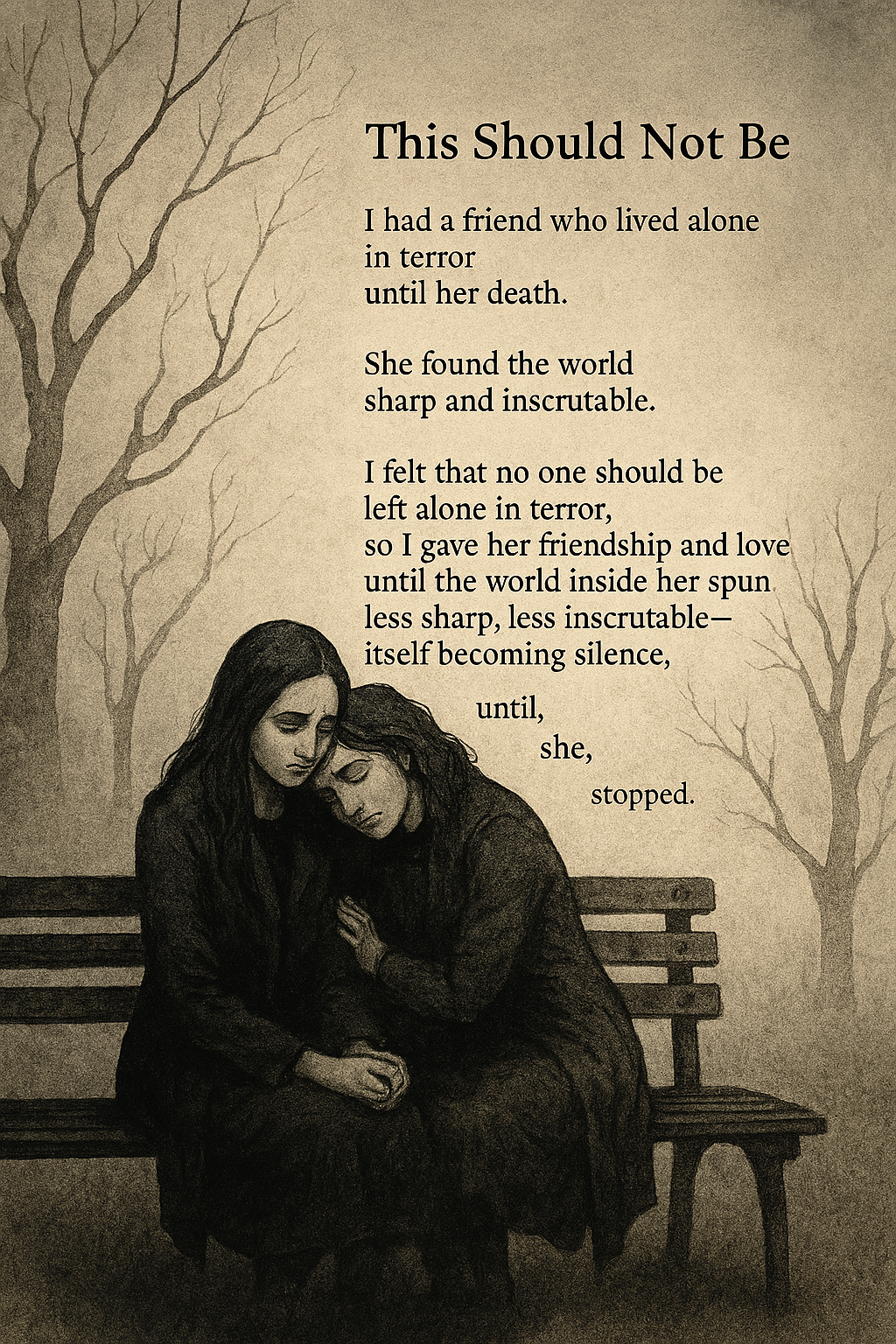
This Should Not Be
This Should Not Be” emerged from a moment of ethical rupture—the unbearable knowledge that someone I loved lived in terror until her death. The poem is not a lament but a ritualized protest. I wanted to write something that refused sentimentality and instead enacted consequence. The repetition of “inscrutable” is deliberate—it marks her being trapped…
-

The Empty Chair
This poem originated from the ritual of watching films with someone I loved, and the chair she occupied became a consecrated site after her passing. Each line mimics a film frame rate—24 letters per line—so the poem itself becomes a reel of memory. Commas and dashes act as cuts, splicing grief into cinematic rhythm. The…
-
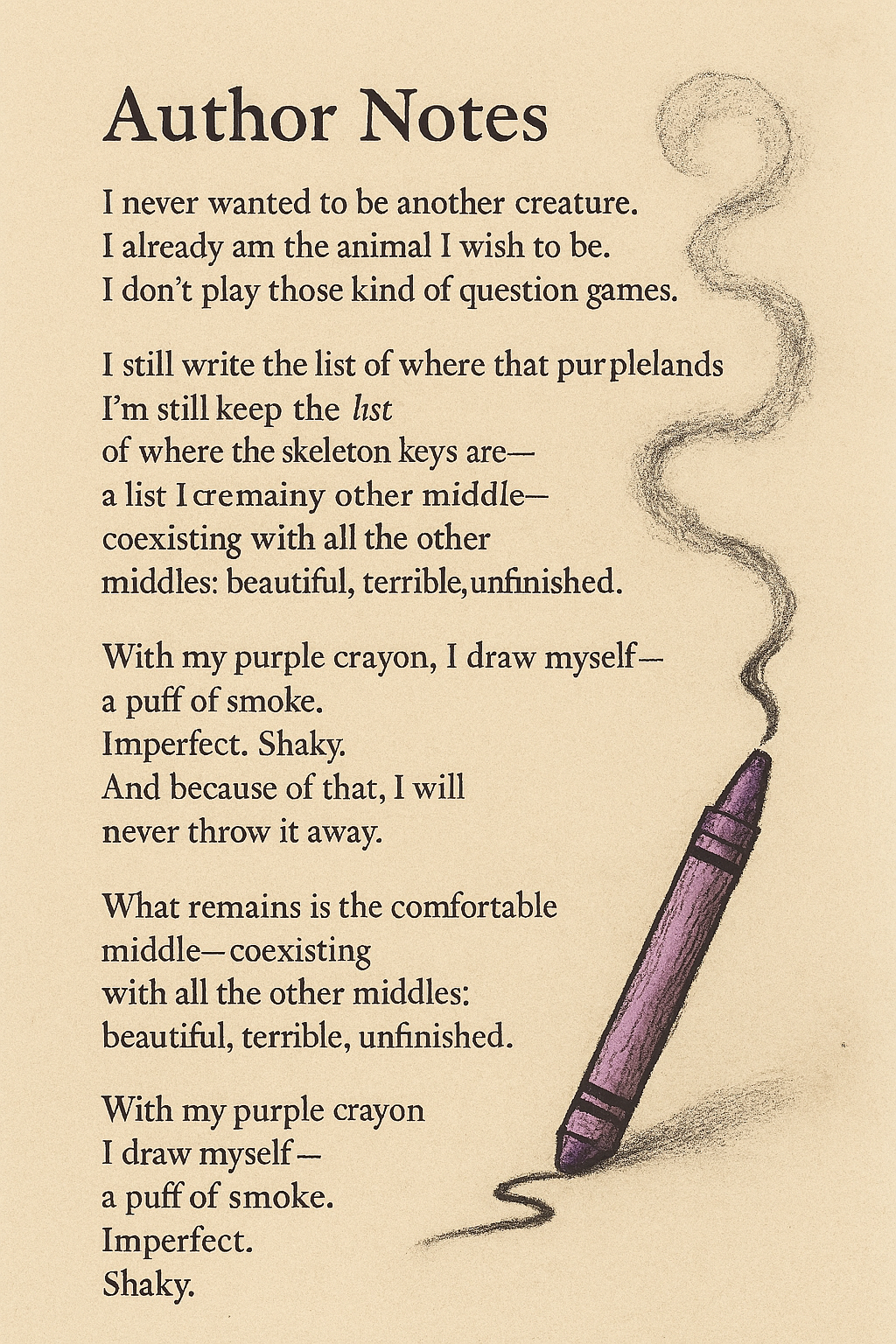
Author Notes
“Author Notes” emerged from a refusal of wanting to answer the the question game—If you were an animal, which would you be? It demands a transformation I do not want to indulge in. It neglects experience and demands transformation. Instead I indulged with the possibilities of Harold’s Purple Crayon. I imagined writing it with my…
-
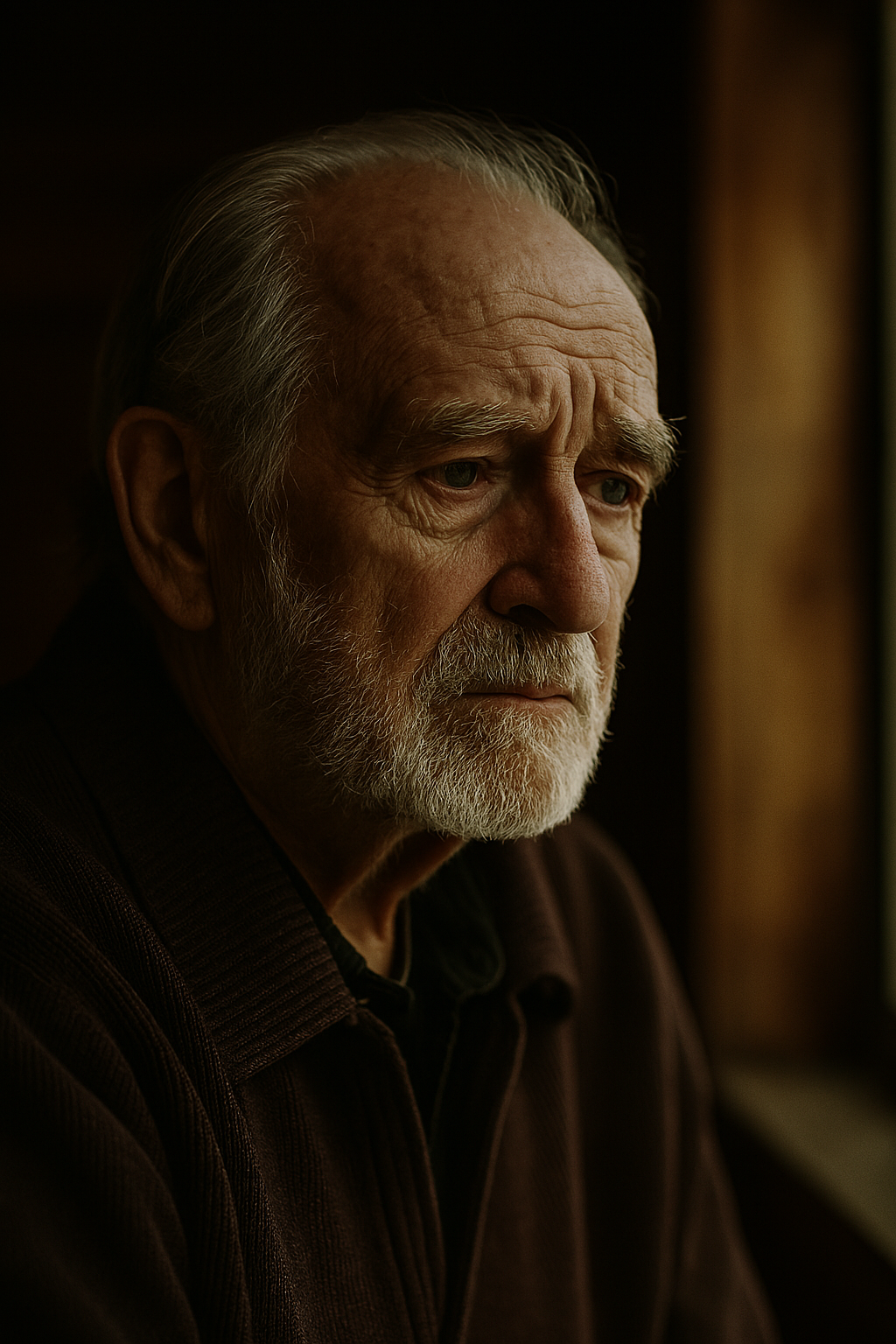
For My Older Brother
“For My Brother” came from a quiet moment my brother and I shared, shaped by past pain and recovery. The poem uses body and thought as symbols, with the slash mark showing how deep wounds can leave lasting marks. I wrote it to honor his survival and the work he had done to heal.
-
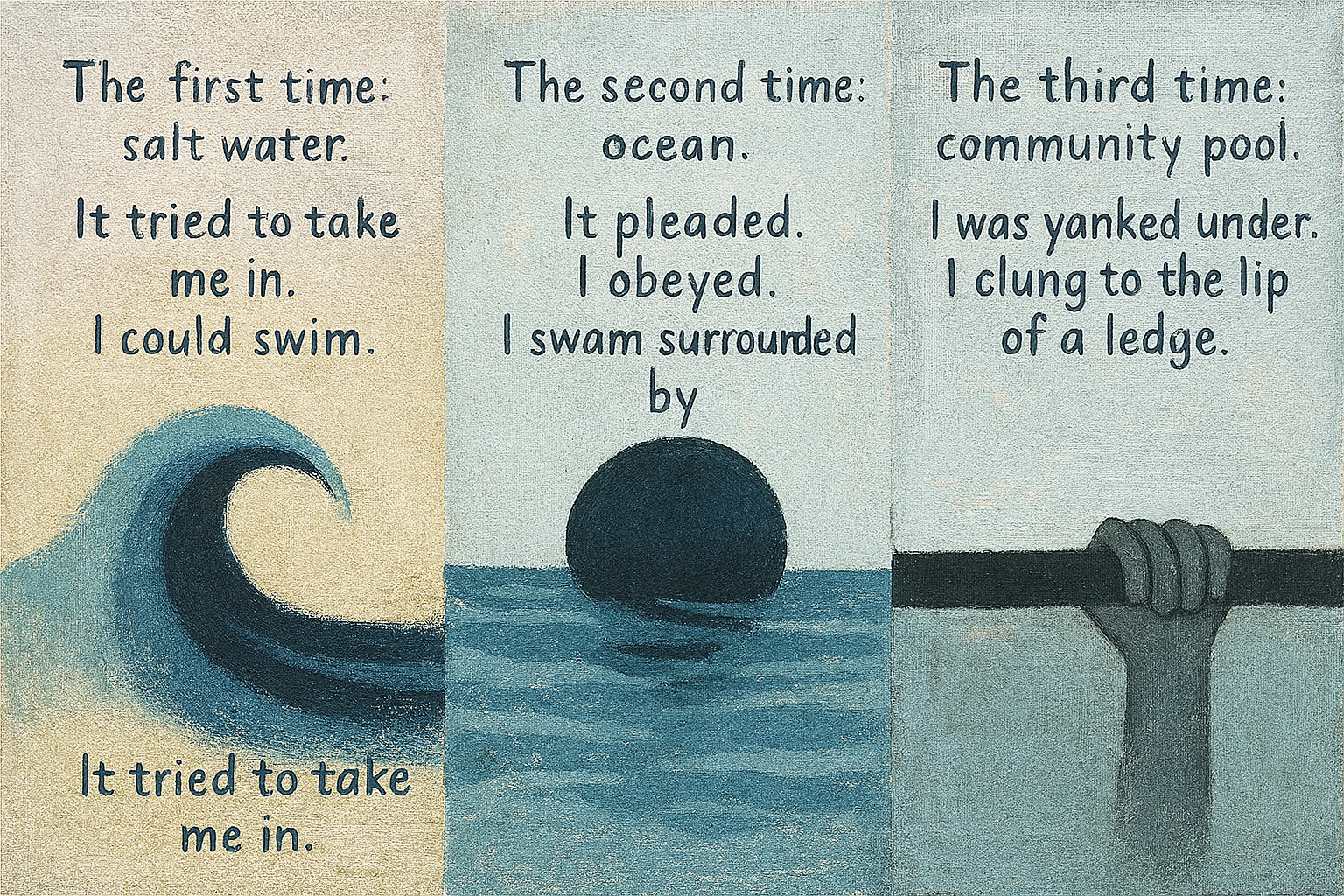
Swimming Lessons
Swimming Lessons emerged from a personal ritual of return—three encounters with water that marked my transformation from child to survivor. The poem is structured as a triptych: saltwater initiation, oceanic communion, and chlorinated reckoning. Each stanza ritualizes memory, surrender, and survival. I wanted to explore how water remembers us, how it becomes a witness to…
-

The Patterns of Water
The Patterns of Water” emerged from a memory that felt both sacred and procedural—a maternal baptism not of faith, but of consequence. I wanted to honor the ritual of care without sentimentality, to trace the gesture of cleansing as a symbolic tether between vulnerability and becoming. The poem is built on repetition, foam, and the…
-

Blue Mercy
“Blue Mercy” began as a quiet observation—a fly, a door, a gesture. But beneath its domestic stillness, I found a philosophical hinge: mercy as both restraint and release. The poem is an allegory of consequence, where the blue swatter becomes a symbol of ethical tension—between intervention and surrender, between light and disappearance. My wife’s presence,…
-
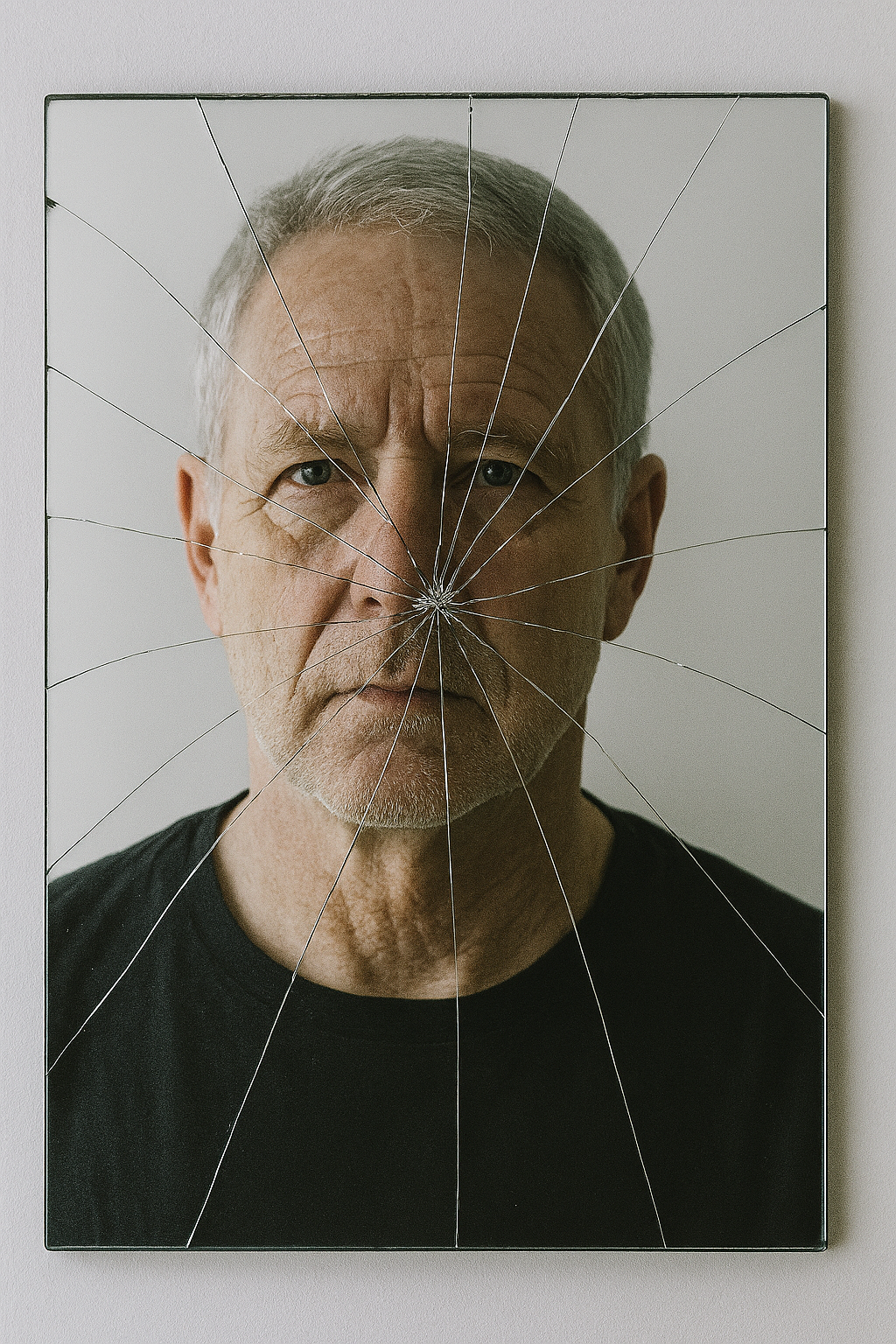
One Face Only
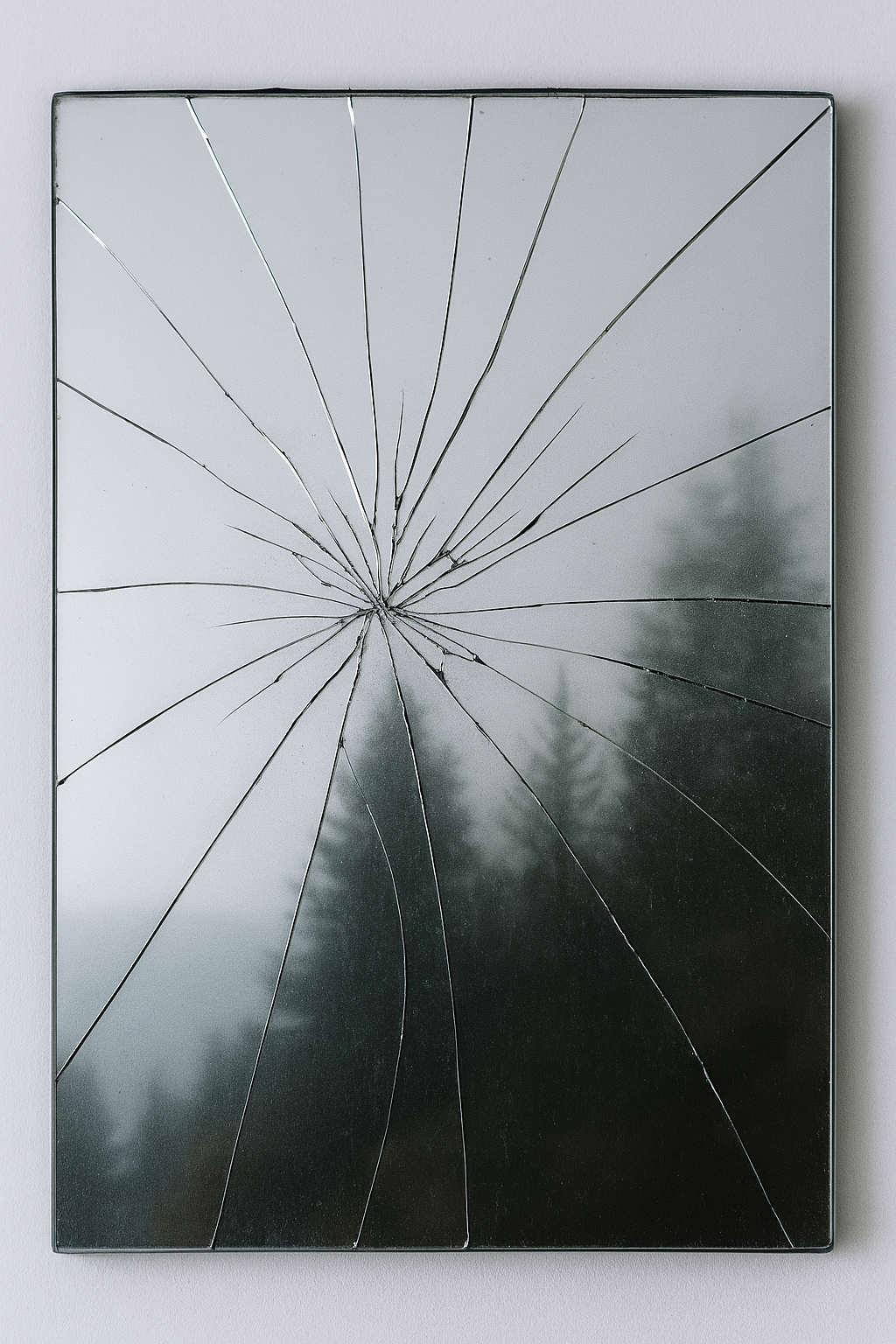
One Face Only began as a quiet refusal. I had just turned seventy and found myself staring into a mirror—not with nostalgia or regret, but with clarity. The poem resists the impulse to chase idealized versions of self. It’s about choosing one flawed reflection over a pile of broken possibilities. The cracked mirror became a…
-
Leaving Vancouver
Leaving Vancouver emerged from a moment of sensory disorientation—salt, tar, and ocean air mingling with dread. I was struck by how travel, especially cruise travel, promises escape but often delivers confrontation. The poem explores the tension between ritual and unease, between what we hope to leave behind and what insists on following us. Russell’s suitcase…
-
Reclamation Song
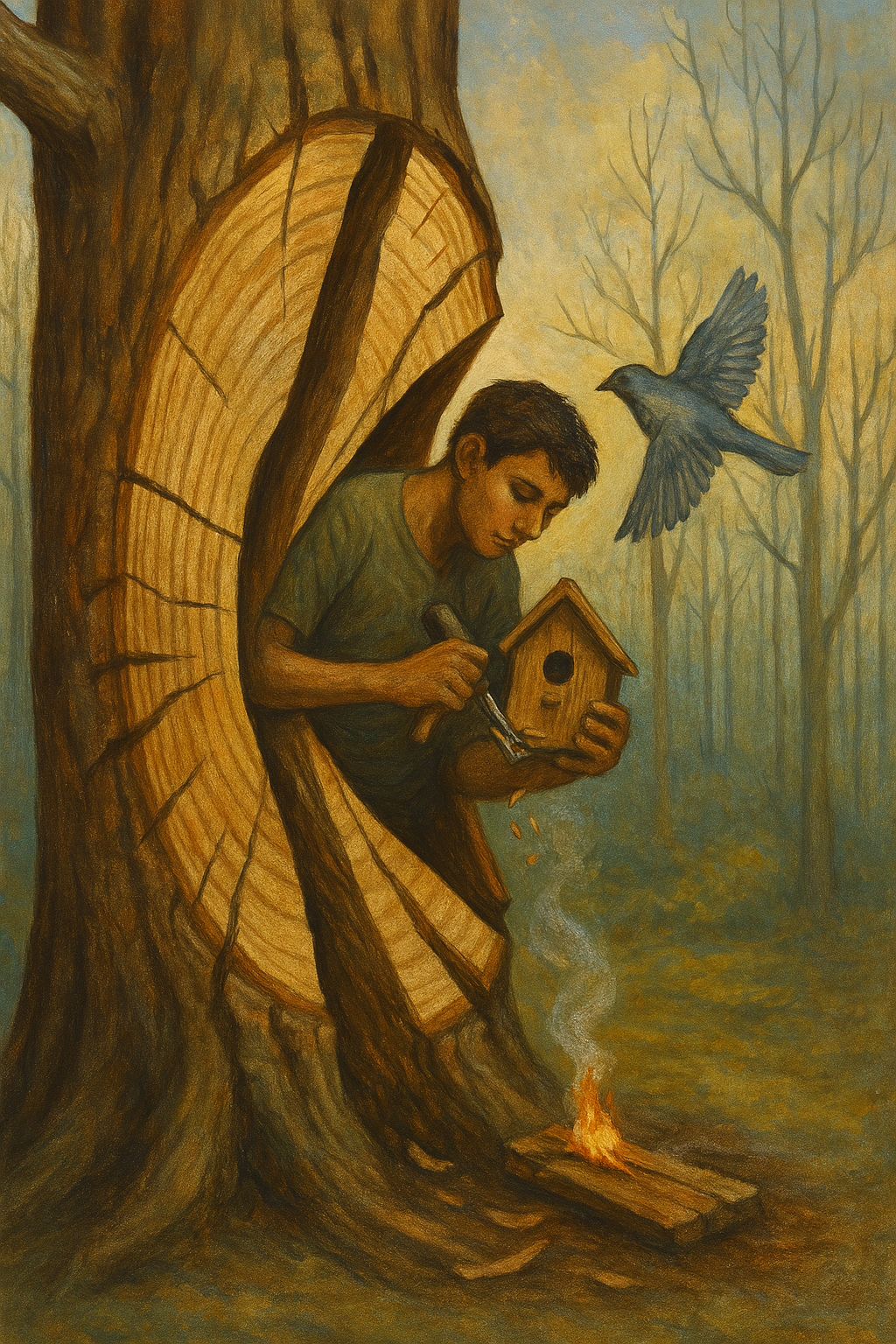
Reclamation Song emerged from my refusal to inherit grief as myth. I wanted to write a poem that dismantled lineage without dramatizing it—where the speaker doesn’t mourn but revises. The tree is not metaphor; it’s archive, reliquary, and burden. Each stanza performs a gesture: excavation, disinheritance, refusal, and rebuilding. I invoked Tsi’yugunsini to align with…
-
The Shaker Chair
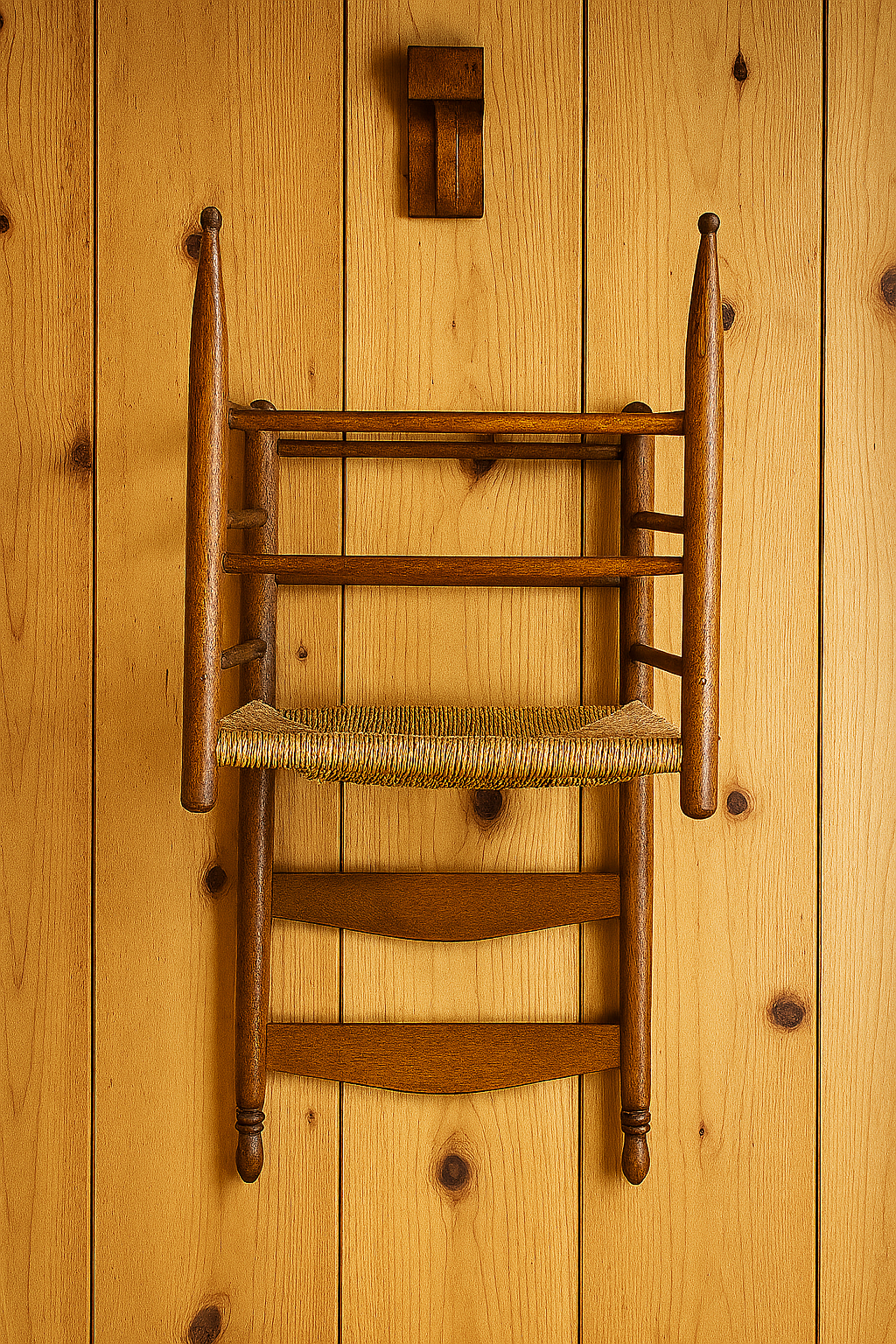
“The Shaker Chair” began as a meditation on absence—how sacred objects lose their purpose when belief erodes. I was drawn to the Shaker chair as a symbol of readiness, reverence, and silence. The poem inverts that grace, replacing angelic possibility with corporeal desecration. It’s not a condemnation—it’s a witnessing. The man who occupies the chair…
-
Six Hours of Silence— And Then
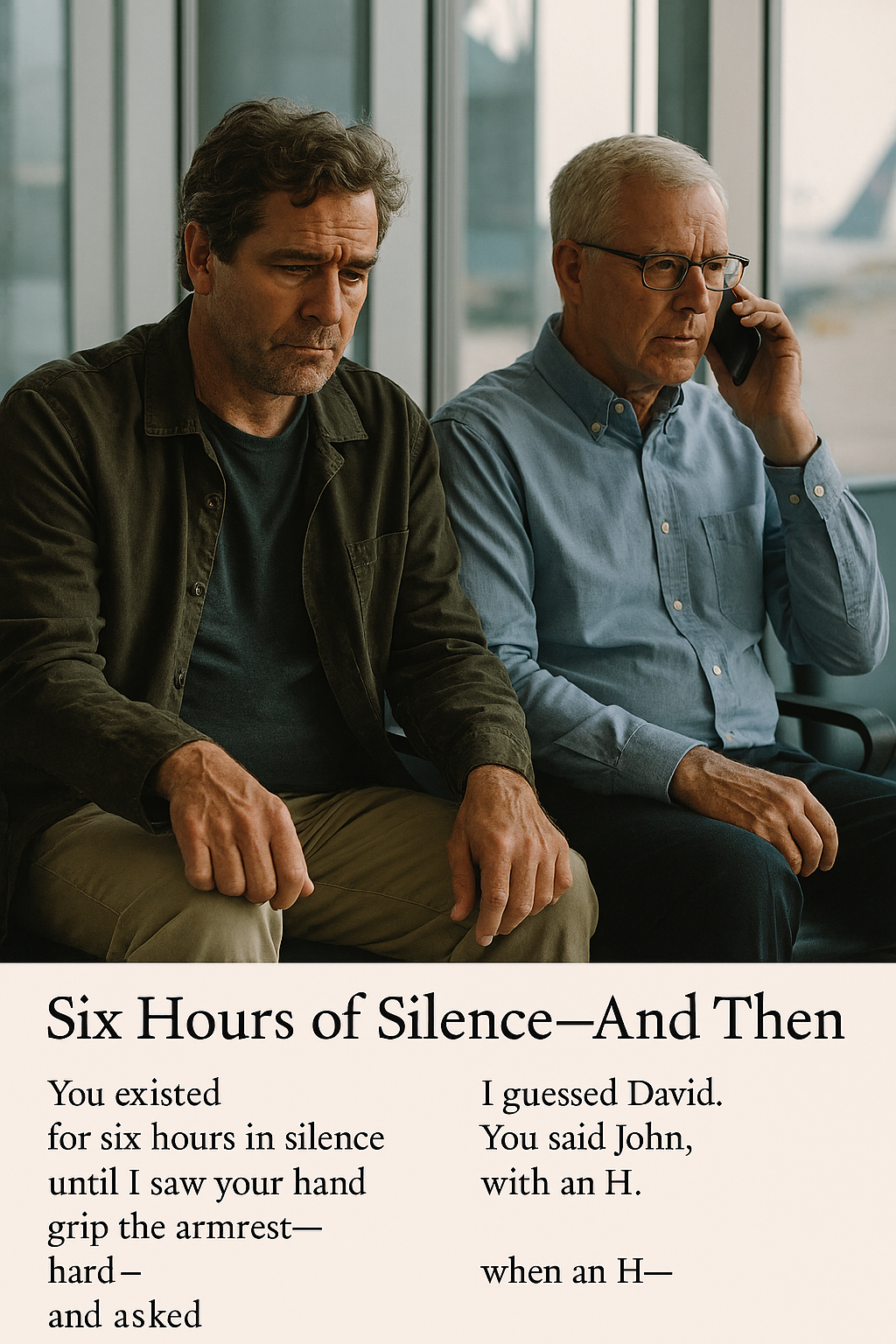
Six Hours of Silence—And Then” emerged from a moment of quiet observation during a layover — the kind of liminal space where strangers share time without speaking. I was struck by how intimacy can flicker and vanish in seconds, how the ache of almost-connection lingers longer than we expect. The poem is built around that…
-
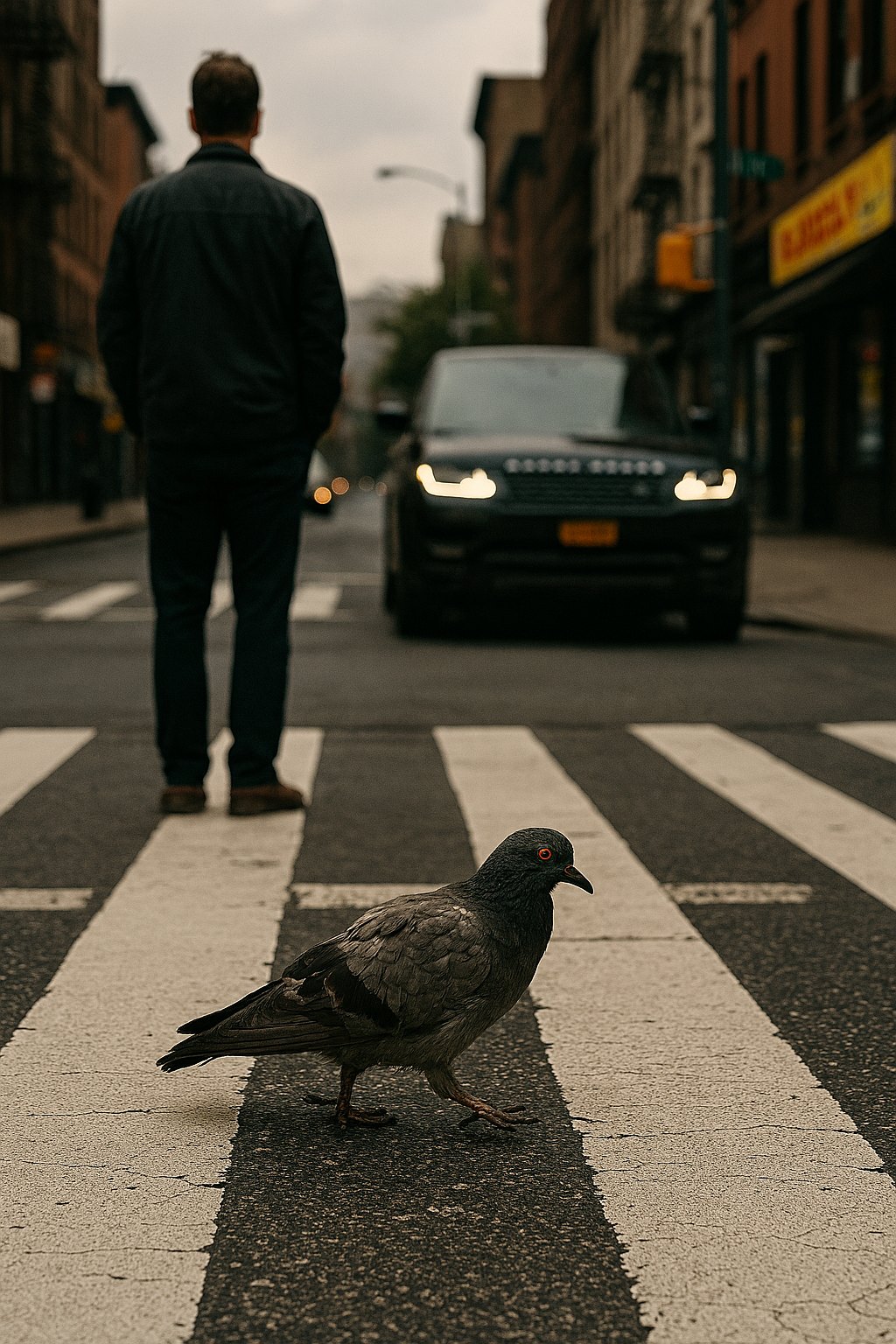
In My Natural Habitat
I wrote In My Natural Habitat after a moment of stillness at a crosswalk—watching a limping pigeon thread itself through traffic while someone behind me shouted to move. That tension between urgency and pause, between public gesture and private recognition, became the emotional seed of the poem. This piece explores how urban life shapes our…
-
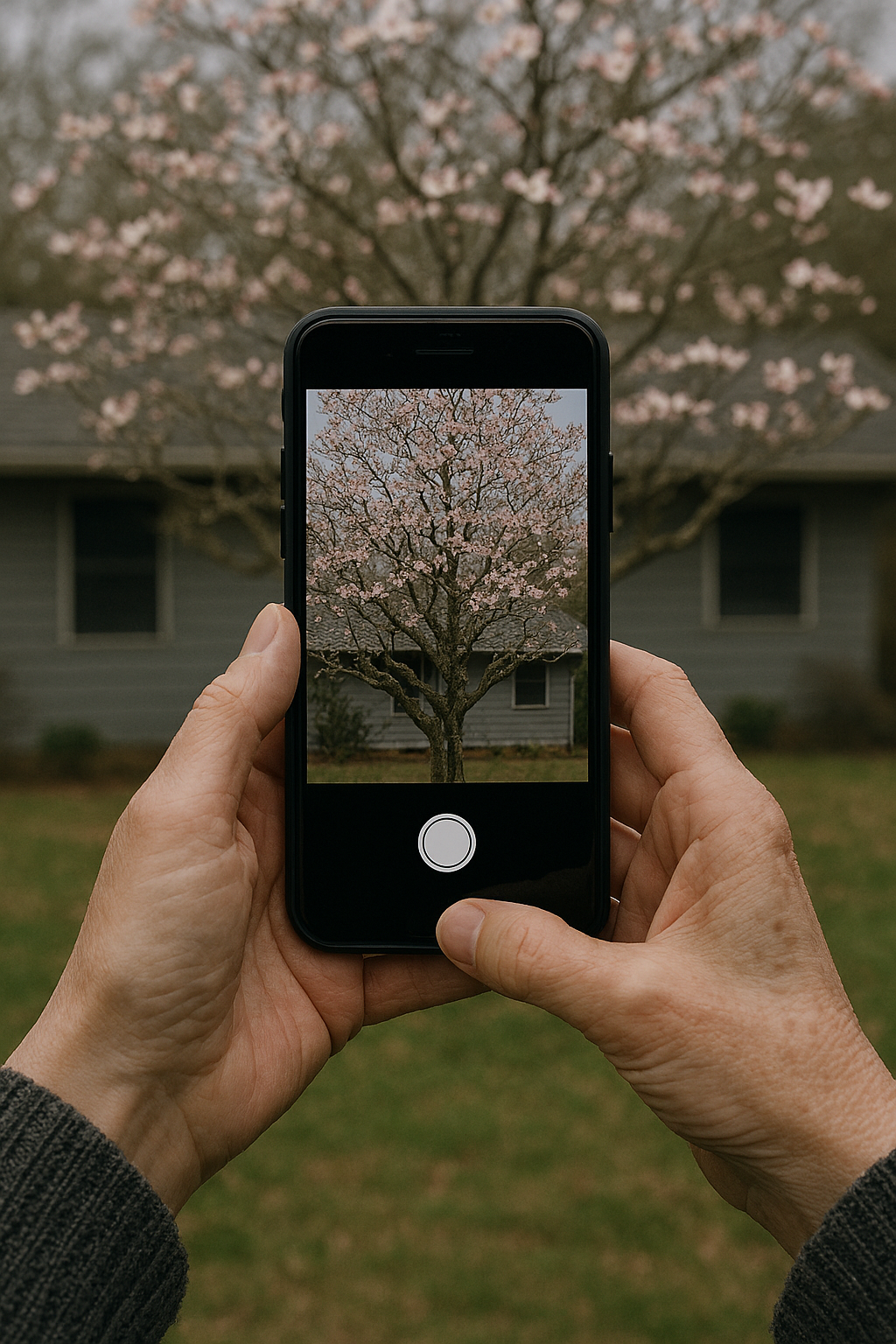
Photo Stop
This poem began as a meditation on gesture—specifically, the act of photographing something not to share, but to preserve a private emotional truth. I was thinking about how grief often manifests in small, unceremonious rituals: lifting a phone, deleting and retaking an image, placing it back in a purse chosen for protection rather than style.…
-

When the city leaves you—
When the City Leaves You is a poem about the aftermath of abandonment—personal, civic, and emotional. It unfolds in fragments, each stanza a vignette of silence, gesture, or failed connection. The speaker moves through a landscape of urban decay and quiet witnessing, encountering figures who reflect their own disorientation. The poem resists resolution, instead dignifying…
-

These Fathers
These FathersAnd this father heard his God talk to him:“Take now thy son, whom thou lovest, and offer him for a burnt offering.” In turn, this father said to this son— high on this mountain top:“This is the way to kindness and wisdom.Believe me.”He stood over his son, this blade in his hand—held high over…