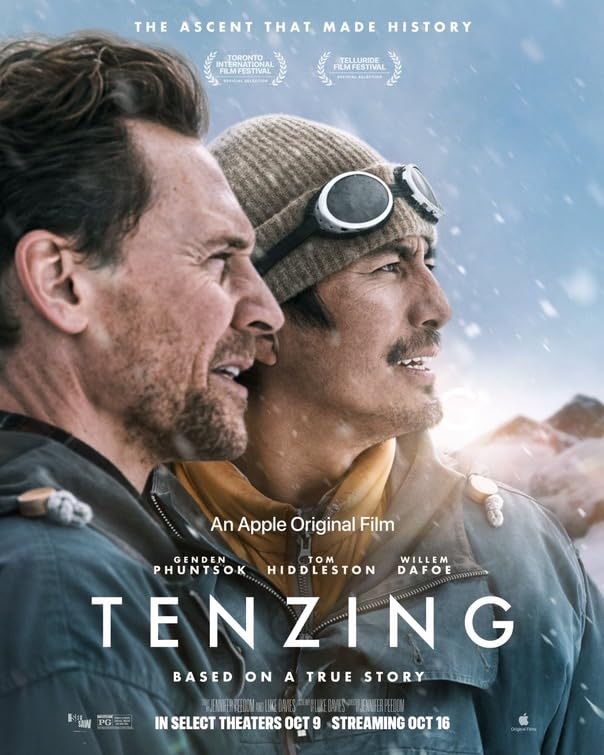


Jennifer Peedom’s Tenzing is infused with a heartfelt sense of purpose that shines through in nearly every frame. Stately and at times deeply moving, the film’s old-fashioned earnestness feels quietly reassuring. Rather than pursuing spectacle for its own sake, Peedom offers a compassionate portrait of a man whose yearning to reach Everest’s summit shaped the course of his life.

The film is neither a straightforward biopic nor a conventional adventure epic. Its quiet, measured tone offers a more tender perspective, portraying Tenzing’s story as a moving study of obsession, identity, and perseverance. It explores the emotional cost of giving oneself completely to a dream while living between worlds that never fully welcome you.

Genden Phuntsok gives a beautifully understated performance as Tenzing Norgay, bringing tenderness and humanity to the role. Rather than grandstanding, he portrays Tenzing with humility, warmth, and quiet determination. Even amid hardship, a gentle joy shines through, making the performance feel deeply sincere and carrying much of the film’s emotional weight. Phuntsok makes Tenzing’s ambitions feel personal and poignant while honoring the historical figure’s quiet dignity.

The story traces Tenzing’s journey from his youth through years of hardship and hard-won climbing experience to the celebrated 1953 British Everest expedition. It also offers a compassionate portrait of his life as a husband and father, his growth as a guide, and the obstacles he faced as he sought recognition beyond his role as hired support for Western climbers. The screenplay gives these often-overlooked parts of his life the attention they deserve, honoring accomplishments that history has too often left in the background.

By the time Tenzing becomes head Sherpa on Edmund Hillary’s expedition, the film portrays him in a difficult and often painful in-between place. Neither side fully accepts him. The British team views him through the constraints of hierarchy and colonial assumptions, while others may see him as distanced from traditional Sherpa identity. Peedom treats these tensions with care throughout the film. Questions of class, status, and racial prejudice are woven into the story without turning it into a lecture. The film reminds us that Everest was not only a physical challenge, but also a deeply human and social one.

Tom Hiddleston brings a gentle warmth and quiet credibility to Edmund Hillary. Rather than competing with Tenzing’s journey, he offers a thoughtful counterbalance that lets it shine. Willem Dafoe gives expedition leader John Hunt a reassuring sense of authority.

Visually, Tenzing is often breathtaking. Filmed in Nepal and New Zealand, the movie presents Everest with a quiet, wintry majesty that invites both awe and humility. Cinematographer Stefan Duscio frames the mountain not merely as a destination, but as a powerful presence deserving of reverence. Its vast landscapes reflect Tenzing’s deep conviction that Everest—known here through the spiritual lens of Chamolangma—means far more than conquest.

The film’s screenplay, written by Luke Davies, has a few weaknesses that may make it harder for viewers to stay immersed. Frequent flashbacks can disrupt the story’s momentum, especially as tension begins to build. The script also returns often to Tenzing’s spiritual bond with Everest, leaving less room for other characters to develop. As a result, several supporting figures—despite strong performances—feel somewhat underwritten.

Even when the narrative structure falters, the film’s emotional core remains intact. Peedom’s experience making mountain-climbing documentaries helps her portray both the practical challenges of expeditions and the deep respect Sherpas hold for the mountain. The film treats the inequalities Sherpa climbers face with care, never romanticizing them. These men and women understand the realities of their place within the expedition system and the power structures that shape their work.

What ultimately sets Tenzing apart is its compassionate perspective. For decades, popular retellings of the Everest story have focused largely on Edmund Hillary. Rather than diminish Hillary’s achievement, the film seeks a more balanced account, acknowledging both his accomplishments and a long-standing historical imbalance. With empathy and deep respect, Tenzing honors those who bore extraordinary burdens, faced enormous risks, and helped make the ascent possible.

Grade: B+. Apple TV +.


Leave a Reply