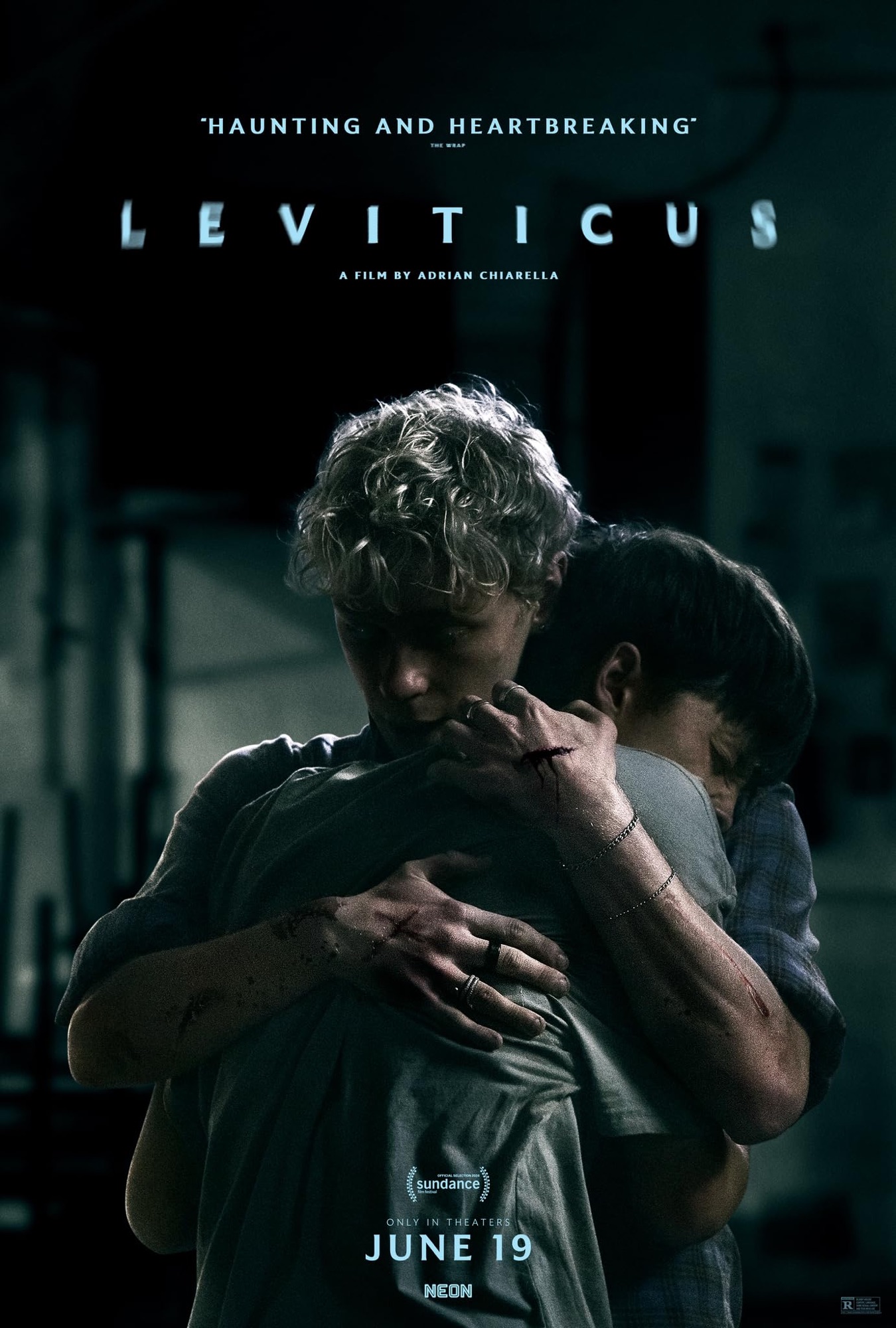


There was so much to be excited about in Leviticus. A horror film centered on religious trauma, homophobia, conversion practices, and the psychological harm inflicted on queer youth has enormous potential. Director Adrian Chiarella brings sincerity and conviction to the material, and the film clearly takes its message seriously. The challenge is that having something important to say and fully exploring it are two very different things.

After his father’s death, Naim Reid (Joe Bird) moves with his mother, Arlene (Mia Wasikowska), to a deeply evangelical community in rural Victoria. There, he begins a secret relationship with Ryan Whelan (Stacy Clausen), but jealousy soon shatters their fragile connection when Naim outed Ryan and the pastor’s son, Hunter (Jeremy Blewitt). The fallout turns both supernatural and deeply personal when a grotesque “deliverance” ritual summons an entity that preys on desire itself.

I was interested in seeing how the film would explore the deep and complex issues of religious trauma experienced by gay people. Unfortunately, the subject felt underdeveloped, and the handling felt clumsy. The characters and their relationships also lacked the depth that could have made the movie truly fascinating.

That sense of disappointment lingers through nearly every scene. Naim and Ryan are meant to be the emotional heart of the story, but their relationship isn’t developed enough to support the heavy emotional weight the screenplay places on it. Their bond often feels as though it exists mainly because the plot calls for it. There are moments of affection, yet genuine intimacy remains just out of reach. As a result, the characters can sometimes feel less like fully realized people and more like vehicles for the film’s themes.

Instead, the movie leans heavily on the trailer’s reveal, and that reliance can start to feel repetitive and oppressive. A supernatural entity takes the form of the person you desire most, using lust and longing to draw its victims in before attacking them. It’s a genuinely compelling premise. The challenge is that Leviticus relies on it to carry nearly the entire film.

Scene after scene returns to the same pattern: someone is alone, sees a face they desire, grows suspicious, and violence follows. The metaphor doesn’t develop, and the threat never takes on meaningful new dimensions. As the story circles its central idea, it starts to feel worn out well before the credits roll.

A few lines scattered throughout the film hint at its deeper message. Jessica’s explanation of the entity and Ryan’s heartbreaking confession—that he would rather the creature wear Naim’s face forever than become someone else—suggest that there’s something richer beneath the surface: the longing to be loved, the fear that desire can become inseparable from pain, and the way trauma can shape intimacy and turn attraction into punishment. These ideas are all there, though they could have been explored more fully.

Joe Bird does a wonderful job carrying the film’s emotional weight. Naim spends much of the story caught between guilt, desire, self-loathing, grief, and terror, and Bird brings those contradictions to life—even when the script leaves him with little support. His performance often feels richer and more moving than the material around it.

Stacy Clausen brings a moving vulnerability to Ryan, whose life grows increasingly hollow after the exorcism. The film is at its strongest when it explores the toll on Ryan’s spirit rather than focusing on the entity stalking him. These scenes capture the sorrow and rage the rest of the movie is striving to convey.

Mia Wasikowska also brings a welcome layer of complexity to the film. Arlene’s final admission—that she understood the ritual’s consequences but chose it anyway, out of a desperate belief that it was necessary to save her son—adds a much-needed moral ambiguity. It comes late, but it still makes a strong impact.

The horror elements are especially effective in several moments. Hunter’s fate, the invisible assaults, the roller-rink sequence, and the entity’s increasingly predatory presence all create a genuine sense of unease. Chiarella confidently builds dread and a lingering atmosphere of spiritual contamination. The violence never overwhelms the story, though it doesn’t quite elevate it either.

What lingers most is a sense of missed opportunity. The film hints at thoughtful insights into queer identity, religious conditioning, shame, and generational harm, but each path toward these ideas eventually leads back to another encounter with the monster. The allegory is clear from the opening act and stays much the same through the end.

The final image, with Naim and Ryan boarding a bus together while the entity remains outside, offers a welcome glimmer of hope. The trauma is still there, and the threat hasn’t vanished, but life goes on. It’s one of the film’s stronger ideas, though it comes after a journey that needed more substance to earn it fully.

I have little doubt that Leviticus will resonate with many viewers, especially those who recognize their own experiences in its themes of religious rejection and queer survival. Its Pride Month release feels entirely intentional. For me, though, it didn’t quite land. It wasn’t disastrous or empty, but it left me with a melancholy sense that the film keeps brushing against greatness while remaining confined to a single concept.

Leviticus explores the wounds left by faith used as a weapon, and its intentions are sincere. At times, though, it repeats its central metaphor instead of delving deeper into those wounds. The result is a well-acted horror film with a powerful message, even if it doesn’t quite reach the emotional or thematic depth it promises.

Grade: B. Hulu.


Leave a Reply