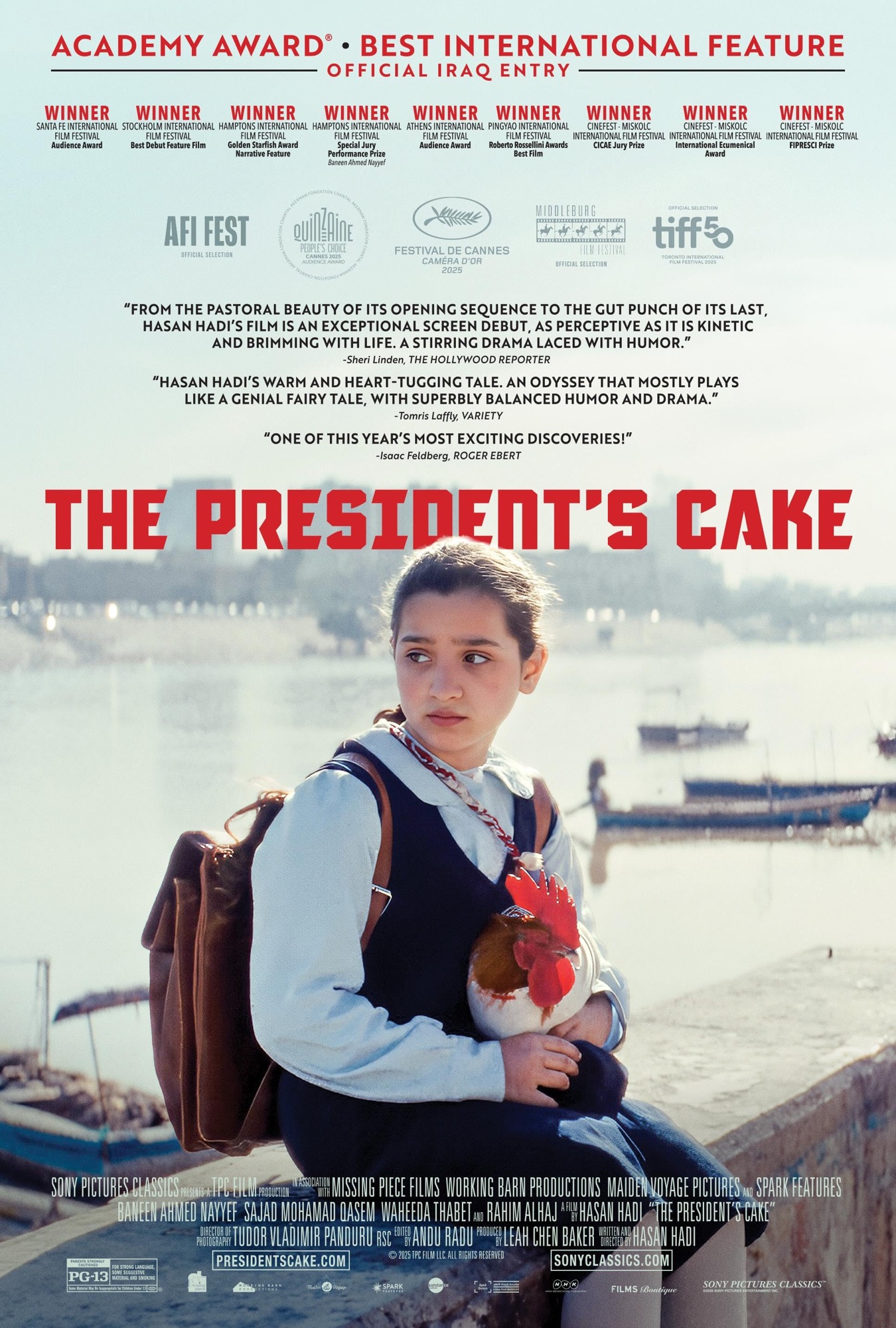


Hassan Hadi’s The President’s Cake is a beautiful, deeply moving film that finds hope, courage, and kindness amid oppression. Set in rural Iraq during Saddam Hussein’s rule, it follows young Lamia, portrayed by Baneen Ahmad Nayyef in a performance full of honesty and heart. Through Lamia’s eyes, we witness a country burdened by sanctions, poverty, and fear, while ordinary people strive to hold on to their dignity.

The film begins with a simple school assignment that soon grows into something much bigger. During Saddam Hussein’s rule in Iraq, his birthday was treated as a national holiday—or at least an occasion for compulsory celebration. Shot entirely in Iraq and set after the international sanctions imposed in 1990, The President’s Cake explores this ritual through the eyes of a nine-year-old girl. What starts as a classroom duty turns into a challenging journey, offering a glimpse of the pressures facing everyday families.

Lamia’s school experience is already shaped by Hussein’s cult of personality. The president’s image and authority touch every part of her life, even influencing the responsibilities given to children. When she is chosen to bake a cake for the celebration, the assignment means far more than a simple school project.

What makes the story so powerful is the enormous challenge of gathering the ingredients for the cake. Poverty and sanctions have made even finding flour, eggs, sugar, and baking powder a real hardship, while failing to bring a cake on April 28 could lead to severe punishment. The fear shared by Lamia, her grandmother Bibi, and the other villagers is felt throughout the film, reminding us that even everyday tasks can become frightening under authoritarian rule.

Their efforts are continually interrupted by setbacks, with each small success soon followed by another obstacle. They barter their possessions, run errands, encounter dishonest people, and face theft as they search for a way forward. These moments create tension while also giving the friendship between Lamia and Saeed room to shine. Their bond brings warmth and tenderness to the film.

Although the film may feel adventurous on the surface, it tells a much deeper story than one of youthful resilience. The hardships and darkness of the dictatorship are never far away. Iraq’s people face shortages and poverty while also being expected to show happiness and loyalty. This contrast between public celebration and private suffering becomes one of the film’s most powerful themes. Throughout, Hassan Hadi keeps the human cost of the system firmly in view.

Baneen Ahmad Nayyef carries the film with remarkable confidence, bringing warmth and sincerity to her portrayal of Lamia. She captures both childhood determination and vulnerability in a way that feels natural and moving. Sajad Mohamad Qasem offers wonderful support as Saeed, adding humor and companionship to the story. Waheed Thabet Khreibat is especially memorable as Bibi, whose love for Lamia gives the film much of its emotional heart. Rahim AlHaj also makes a strong impression as Jasim, the kind, caring mailman whose concern grows increasingly important as events unfold.

The final act is deeply moving and quietly powerful. As Lamia faces personal loss and returns to school for the president’s birthday celebration, the film thoughtfully brings together grief, fear, and resilience in a way that feels deeply authentic. The classroom scene, interrupted by air-raid sirens and explosions outside, offers a poignant glimpse into the fragile reality of childhood during wartime.

Although The President’s Cake was shot digitally, its grainy appearance beautifully evokes older film stock. This texture gives the story a warm, lived-in quality and deepens its sense of time and place. From the marshlands and villages to the city streets and bustling marketplaces, each setting feels vivid and real. The cinematography never pulls attention away from the story; instead, it quietly enriches every moment.

What makes *The President’s Cake* so special is its gentle, human perspective. Instead of focusing on political leaders or military events, the film follows a child who simply wants to complete her task and keep the people she loves safe. Through her small journey, we get a glimpse of an entire society living under immense pressure. The story feels both intimate and expansive, deeply personal and rich with history.

Final Grade: A-. Netflix.


Leave a Reply