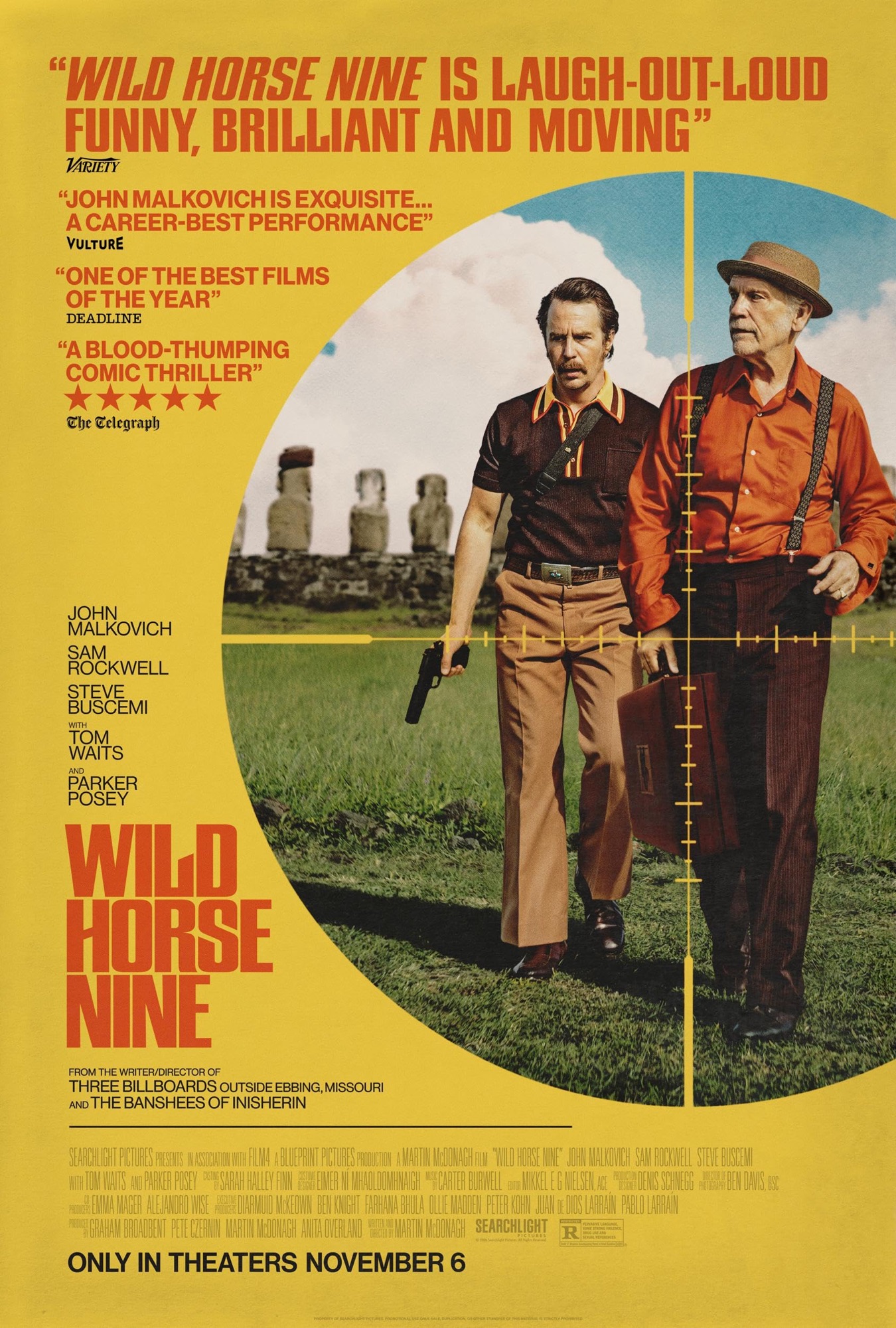


Martin McDonagh’s *Wild Horse Nine* feels like a classified dossier left out in the sun for too long, its pages steeped in paranoia, dark comedy, and the moral decay that seems to trail intelligence operatives wherever they go. Set amid the eerie isolation of Easter Island on the brink of political catastrophe, the film blends the tension of a spy thriller with McDonagh’s familiar interest in damaged men trying to navigate situations that keep slipping beyond their control.

Rather than presenting espionage as a glamorous exercise in tradecraft, Wild Horse Nine portrays it as a deeper institutional sickness. The CIA agents moving through the story are seasoned veterans of compromise. After spending so much time manipulating events, they can no longer tell strategy from self-destruction. McDonagh draws on this tension to create both suspense and sharp humor, making conversations feel like covert operations in their own right. Every exchange carries buried grievances, hidden motives, and the risk of sudden betrayal.

Sam Rockwell is one of the film’s greatest strengths as Lee Chesterfield. He brings out the character’s appeal by balancing competence with the threat of unraveling. His performance gives the film its cynical wit while keeping a thread of anxiety alive, so the stakes never fade. He moves through McDonagh’s razor-edged dialogue with ease, landing dark laughs while preserving the character’s growing sense of dread.

John Malkovich is as compelling as Chris Carlisle, bringing a lived-in fatalism to a man facing both geopolitical chaos and his own mortality. McDonagh makes the character more than an exposition device, using him to reflect on the fading mythology of American intelligence power. Malkovich gives the film a haunting emotional center, helping ground its more absurd moments in something deeply human.

What sets Wild Horse Nine apart from a conventional espionage picture is its embrace of satire while keeping the tension alive. McDonagh explores Cold War intrigue with the keen eye of a forensic investigator, revealing hypocrisy, vanity, and bureaucratic cruelty at every turn. The comedy feels especially effective because it grows naturally from institutional incompetence and moral blindness, rather than relying on easy punchlines.

The Easter Island setting feels like far more than exotic scenery. The towering moai statues stand as quiet witnesses to the arrogance of passing empires, turning the landscape into a striking reminder of the operatives’ games nearby. McDonagh and his cinematographer use the island’s isolation thoughtfully, creating an atmosphere where each horizon feels both beautiful and a little unsettling.

The film’s tonal balancing act recalls the best darkly comic spy stories, where danger and absurdity sit side by side. In that respect, *Wild Horse Nine* succeeds much like James Watkins‘ *Clayface* reportedly does in reimagining comic-book horror. Just as *Clayface* filters body horror through themes of revenge and transformation, *Wild Horse Nine* uses espionage to explore corruption, identity, and self-inflicted ruin. Both projects show how genre works best when its monsters reflect deeper human weaknesses. The difference is that McDonagh’s monsters wear government credentials rather than unstable flesh.

Although the film occasionally wanders into digressions and character quirks that threaten to slow its pace, the sharp writing and strong ensemble more than make up for it. Steve Buscemi, Tom Waits, and Parker Posey bring wonderfully offbeat performances that feel right at home in McDonagh’s universe, where every supporting player seems ready to offer either profound wisdom or spectacular chaos.

Ultimately, Wild Horse Nine is a clever, unsettling, and often hilarious spy thriller that offers a sharply satirical take on political intrigue. McDonagh turns a story of covert operations into a thoughtful look at power, guilt, and the stories nations tell themselves. The result is an entertaining thriller that stays with you, leaving behind something even more bitter and thought-provoking.

Grade: B+.


Leave a Reply