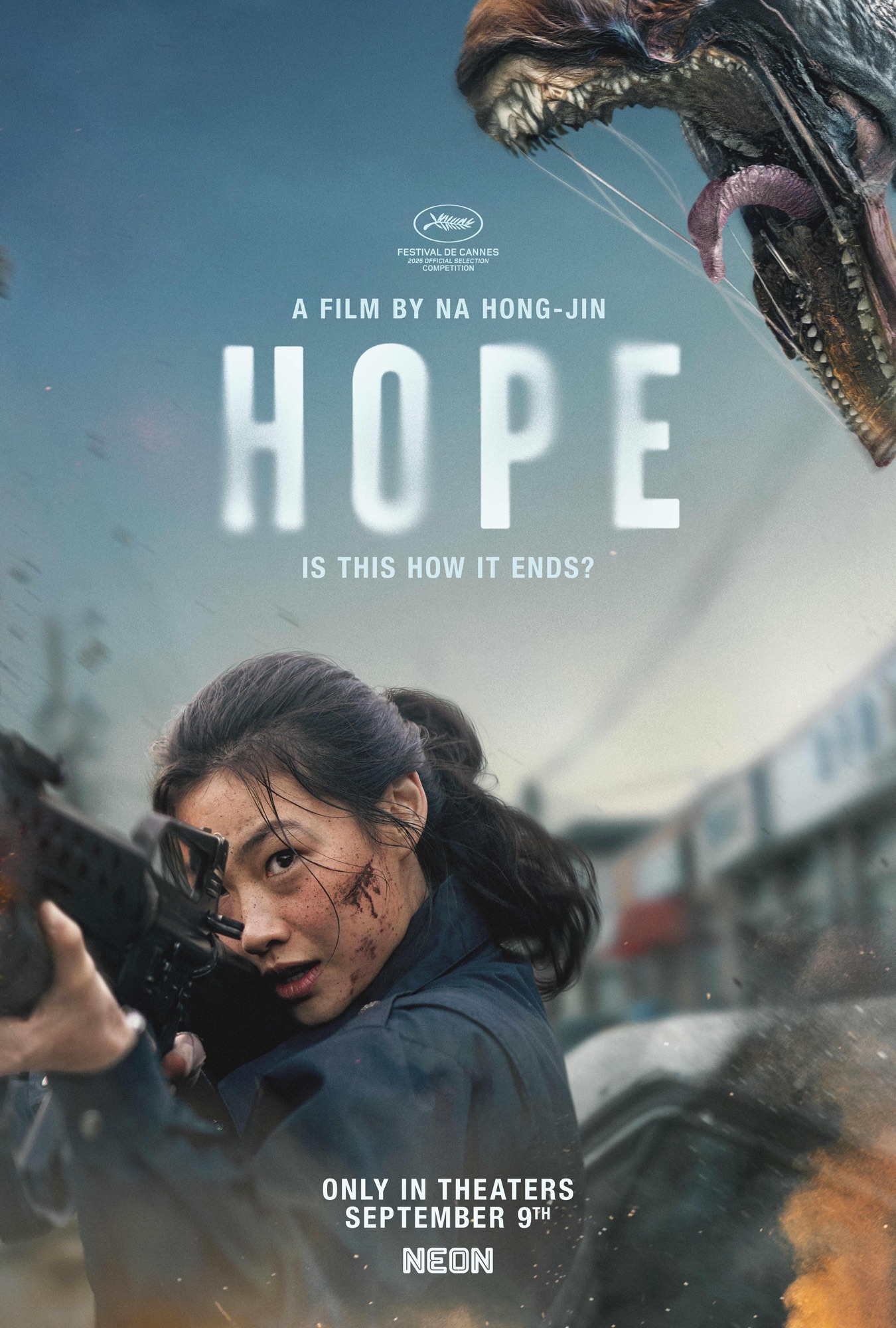


Na Hong-jin’s Hope begins with a haunting image of a mutilated cow, setting a tone of raw distress. The film then takes viewers on a turbulent journey of over two hours, weaving through intense and often overwhelming scenes. What starts as a rural monster hunt gradually transforms into a grand-scale alien invasion, a cautionary frontier tale, and a poignant reflection on who is unfairly branded as the monster. Though the experience can be draining and at times silly, it also offers moments of exhilaration and deep emotional impact. Na seems consciously aware of its length and intensity, yet continues to inject unexpected chaos, reflecting a restless creativity.

The first half stands out as the most intense segment. Hwang Jung-min portrays police chief Ko Bum-seok with a worn, yet commanding presence, illustrating a man who increasingly realizes that each situation is more dire than he originally thought, often just five minutes earlier. Na’s direction transforms the pursuit into an immersive spectacle. Cars, horses, gunfire, forests, and highways blend into a chaotic tableau that mirrors a collective panic. While many filmmakers can craft compelling action scenes, fewer manage to make those moments feel intertwined with a community desperately trying to hold together in real time. In these sequences, Hope moves with relentless energy and skill, capturing both the chaos and the resilience embedded within these critical moments.

The movie becomes somewhat less stable once its mysteries are unveiled. Na chooses to replace suspense with explanations, and this exchange doesn’t always serve the story well. The screenplay introduces a multitude of elements—aliens, spaceships, monster family dynamics, political subtext, and philosophical questions—yet sometimes struggles to give each enough space to develop fully. Several supporting characters mainly serve to move the plot forward, often feeling like mere tools rather than fully fleshed-out individuals. At times, the film’s structure seems like a director eager to showcase every interesting idea from his notebook, without filtering or refining them. While this approach reflects enthusiasm and a wealth of ideas, it can also suggest a lack of focus and discipline.

Hope remains compelling because its ambitions go beyond mere creature-feature thrills. Set near the DMZ, the film is infused with suspicion and tribal fears, reflecting a tendency to identify enemies before truly understanding them. The story consistently encourages both characters and viewers to rethink snap judgments about guilt, innocence, and violence. These themes lend deeper emotional weight to the chaos, making the film more memorable than a typical “humans versus monsters” tale. Na is more interested in exploring the reasoning behind the conflict than in the battle itself.

The weakest aspect of the film is the visual effects surrounding the alien creatures. With such an ambitious scope, some of the CGI falls short and can distract rather than intimidate. However, the film’s strength lies in its cinematography, daring action sequences, and Na’s vivid imagination, which help to offset these flaws. Hope’s efforts are bold and ambitious, even if they don’t always succeed. Yet, it’s admirable that it tries to push boundaries far beyond what most blockbuster genre films venture. Messy, overstuffed, provocative, and thrilling in equal parts, it’s a film that earns admiration but also tests viewers’ patience.

Grade: B+.


Leave a Reply