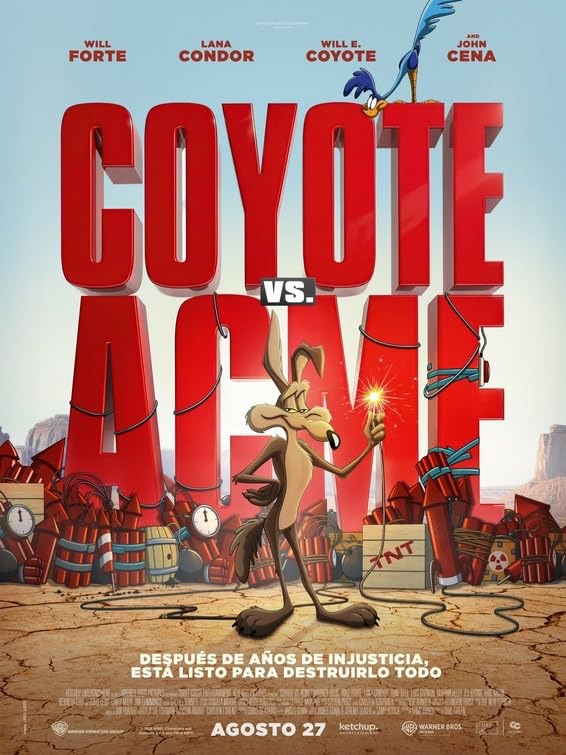


“Coyote vs. Acme,” Dave Green’s exuberantly chaotic blend of live-action and animation, arrives with the restless energy of a Rube Goldberg machine that keeps going despite missing parts. Will Forte grounds the chaos with a heartfelt performance that delicately balances earnestness and vulnerability, reflecting a film that views malfunction as a kind of spiritual journey. The result is a warmly chaotic yet undeniably joyful explosion of cartoon physics, corporate fears, and absurdist lyricism, often stumbling over its own cleverness in a way that feels unexpectedly genuine.

The film’s opening gently critiques Warner Bros., establishing a tone that is both playful and thoughtful: a studio overwhelmed by Acme, a corporation that seems to manufacture failure with a misguided confidence, as if it has never tested a product properly. The joke resonates, but what truly captivates is how the movie weaves this corporate satire into its slapstick humor. Each critique feels like a fragile attempt to shed light, with metaphors that sometimes miss the mark and themes that bounce back after setbacks. It’s a spirited effort to explore deeper issues through comedy, acknowledging the imperfections along the way.

Forte’s Kevin Avery, a weary billboard lawyer who carries the weight of exhaustion, becomes the film’s emotional core. His hesitation to take Wile E. Coyote’s case reflects a deep understanding of the complexities and struggles within the American legal system, which often seems to dismiss genuine justice in favor of settling into complacency. The movie gently critiques this reality, then humorously undercuts itself with a chaotic gag that feels like it was crafted by a mischievous team of gremlins. The analysis occasionally stumbles, but that’s precisely the point: the film suggests that justice is a flawed, mismatched machine, and the only way forward is to keep pushing through, even when the gears grate and threaten to halt progress.

The courtroom scenes showcase Green’s talented direction at its most impactful. They are staged with a controlled chaos that conveys the tension of a device meant to send a bowling ball into a judge’s chambers, yet they also evoke a surprising emotional resonance. The film’s satire of corporate secrecy—Project Sisyphus, whistleblowers, PR spin—strikes a chord that feels purposeful, reminding us that bureaucratic cruelty often hides beneath layers of paperwork and indifference. While the critique is pointed and sharp, the movie also grapples with heavy issues, creating a rhythm of seriousness and vulnerability that becomes its own poignant trademark.

The Looney Tunes cameos add more depth and nuance instead of simply serving as nostalgic references. Bugs Bunny’s whistleblower role, Tweety’s mercenary attitude, and Foghorn Leghorn’s corporate stubbornness all enhance the film’s underlying themes. These aren’t mere callbacks; they form part of a broader reflection on exploitation, labor struggles, and the often absurd nature of institutional power. The film’s darker themes—Cold War fears, corporate corruption—are woven into the comedy without overpowering it, subtly resonating beneath the humor as a gentle reminder of these complex issues.

Green’s team recognizes the profound significance of Wile E. Coyote’s endless chase. The film’s philosophical foundation—Camus, Sisyphus, finding meaning through repetition—flows through the story with gentle grace. Yet, each time the film delves into deeper truths, it subtly shifts with a humorous gag that gently nudges the serious moment aside. This isn’t an oversight; it’s intentional. The film softly suggests that meaning can be forged from chaos, that perseverance is a form of beauty, and that even collapse can be an act of devotion.

The congressional hearing scene is the emotional core of the film. Kevin’s heartfelt speech about perseverance and failure feels genuinely earned, and Wile E.’s presence adds a gentle note of hope. The Road Runner’s testimony turns decades of cartoon chaos into a touching story of friendship and compassion—an unexpected but effective twist. The film criticizes corporate indifference, and then playfully exposes Acme’s absurdity with a trap so elaborate it becomes a metaphor: justice is unpredictable, chaotic, and sometimes literally powered by rocket skates.

By the end, the movie’s thematic machinery gradually comes together, revealing a heartfelt coherence. The underdog story—both within the narrative and in the film’s real‑world journey—gives the final moments a quiet resonance that tends to sneak up on you. The filmmakers’ closing message, expressing gratitude to supporters, feels genuine and well-earned—a gentle reminder that art can survive through resilience and stubbornness. The movie turns into its own metaphor: a fragile yet determined contraption that shouldn’t work, yet somehow manages to, triumphantly crossing the finish line.

“Coyote vs. Acme” isn’t perfect. Some jokes miss their mark, metaphors sometimes falter, and certain sequences feel like they were crafted by a team of malfunctioning robots. Yet, the film’s spirit—its chaotic lyricism, its absurdist core, its embrace of failure as a path to transcendence—gives it a genuinely touching quality. It’s a tribute to perseverance, a gentle critique of corporate cruelty, and a heartfelt love letter to the resilience found in repeatedly getting back up.

Grade: B+.


Leave a Reply