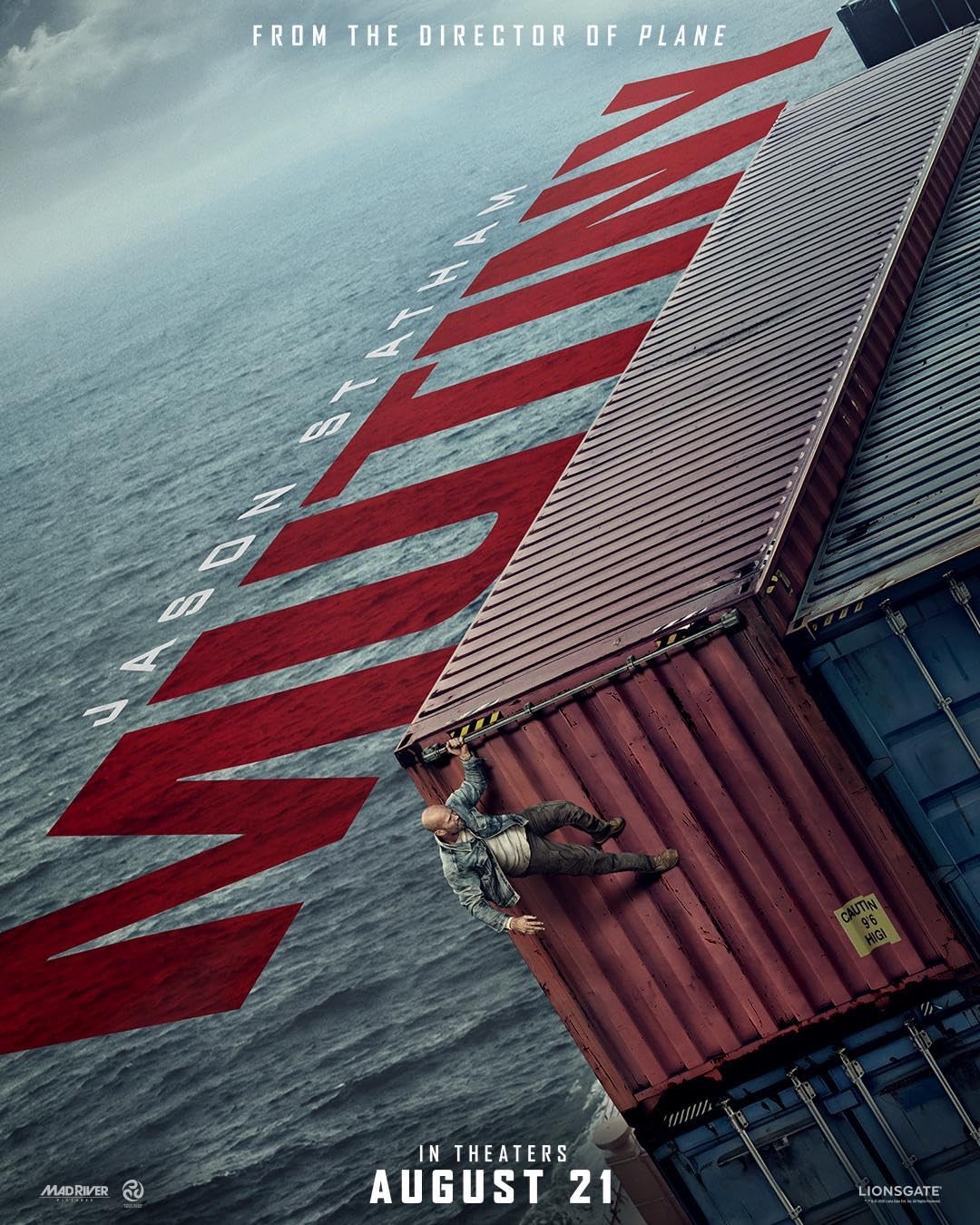


Jason Statham has spent years honing his ability to appear detached while taking down villains, and Mutiny offers him a new, gritty stage to practice this skill. Jean-François Richet transforms a cargo ship into a labyrinth of pipes, shadows, and strategically placed blunt objects, resulting in an action-packed film that is straightforward in its intent. The movie doesn’t try to be profound; instead, it aims to be loud, tough, and efficient. It accomplishes this with a grin that sometimes feels almost self-aware, adding a touch of humor to an otherwise intense experience.

The Bangkok prologue introduces us to a setting of marble floors and corporate intrigue, with a mentor’s death that feels almost inevitable, as if the script has already foreseen it. Despite this, the sequence resonates because Richet captures it with a confident pace, and Statham portrays Cole Reed with a subtle irritation that hints at his weariness and disillusionment with the conspiracy, even before it fully unfolds. The film doesn’t dwell on the betrayal; instead, it uses it as a stepping stone to lead Cole onto the Artemis, where the real story begins with anticipation and hope.

Once aboard, Mutiny transforms into a chaotic ordeal of bodies, corridors, and improvised weaponry. Statham’s kills are swift and matter-of-fact, emphasizing the raw intensity of the moment. The film subtly blends humor into his relentless momentum, dispatching enemies with a rhythm akin to dismissing phone notifications. The grotesque lock hook moment is unsettling, yet Richet captures it with such blunt timing that the audience can’t help but respond with a mix of laughter and discomfort. This is where the movie defines itself: combining brutality with a wink, avoiding preachiness, and instead highlighting the scene’s visceral reality.

The discovery of trafficked children in a shipping container serves as a heartbreaking reminder of the evil that exists, and Richet handles this difficult moment with sensitivity. The revelation deepens Cole’s sense of purpose without resorting to moral outrage, adding emotional weight without overwhelming the tone. Statham portrays this shift with a controlled anger that reflects his character’s quiet pain and resolve. The film acknowledges the world’s darkness but focuses on Cole’s personal fight, emphasizing his compassion and determination to bring justice.

Annabelle Wallis’s Angie Ellis offers a comforting presence, serving as a breathing space amid the chaos, even though the script mainly depicts her as a helpful ally rather than a fully fleshed-out character with her own agency. Her presence, however, helps prevent the film from spiraling into pure brutality. Roland Møller’s Captain Marko, on the other hand, is portrayed as a somewhat comically exaggerated villain. His beard, tattoos, and vaguely pan-European menace make him feel like a villain pieced together from remnants of more sinister characters. While he may not be as memorable as Alan Rickman’s villains, he still presents a tangible obstacle in the story.

Richet’s direction reveals a deep understanding of the film’s emotional core. He treats the ship as a fragile, living entity, with valves, ladders, and catwalks mirroring Cole’s intense rage. The action remains clear and grounded, avoiding digital clutter that could distract from the story’s urgency. When Cole seizes a harpoon gun, viewers can sense his desperation and determination—understanding exactly his position, his targets, and the satisfaction he seeks. The violence is not intended to shock but to convey a visceral rhythm; Statham hits each beat with purpose, respecting the stakes and the human tension involved.

The film’s humor springs from its exaggerated style. Each kill is performed with a deadpan seriousness, which heightens the absurdity in a way that’s both humorous and unsettling. The audience responds not simply because the film directs them to laugh, but because the precise choreography highlights the cruel efficiency behind the violence, making it strikingly impactful. Statham has always been an actor who expresses emotion through movement, and Mutiny allows him to convey raw, visceral energy.

The film struggles a bit when it tries to expand its conspiracy, and the Bangkok intrigue feels somewhat superficial. The hints of corporate decay are subtle and don’t develop beyond a background detail. While the script hints at complexity, it often reverts to familiar corridor combat scenes. It’s not a major flaw, but this tendency prevents Mutiny from reaching the sharp narrative focus seen in the best “Die Hard on a Boat” films.

Nevertheless, the film succeeds because it recognizes its own boundaries. It doesn’t aim to reinvent the wheel; instead, it delivers competence, pace, and moments of dark humor. Statham endears himself with a worn but genuine charisma that makes each action scene feel like a task he’s committed to completing. Richet keeps the camera straightforward, and the ship’s narrow corridors reinforce the intense atmosphere. The result is a truthful, sharp action thriller that offers a sincere and entertaining experience without pretending to be anything more.

Letter Grade: B+.


Leave a Reply