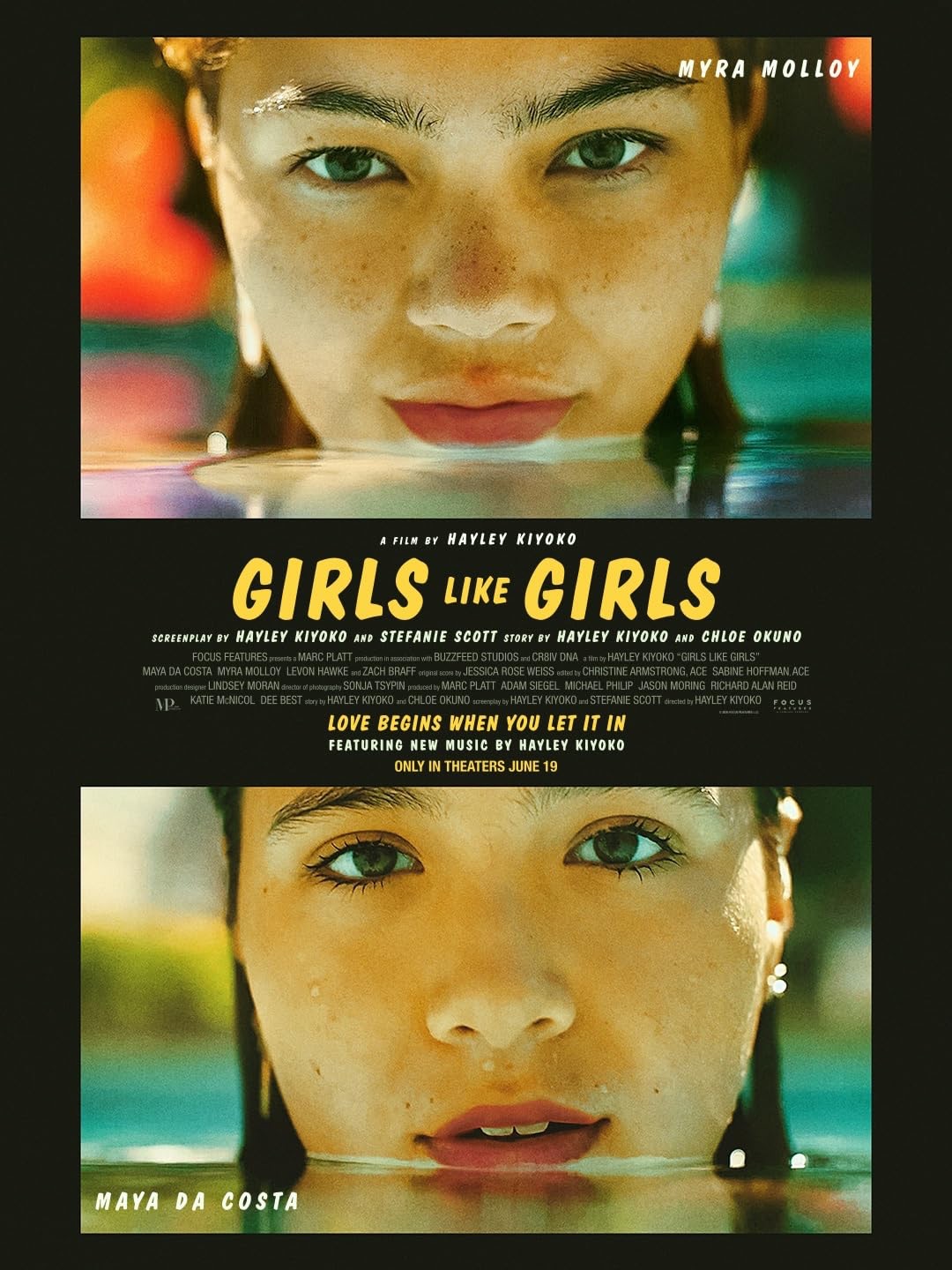


Hayley Kiyoko’s feature debut warmly arrives with a nostalgic and heartfelt touch, eager to share a meaningful queer coming-of-age story. While Girls Like Girls aims to draw viewers into a passionate and emotional journey, at times it struggles to maintain momentum, occasionally weighed down by heavy-handed moments and an overly dramatic sense of importance.

The opening gesture — the yellow Schwinn, a nod to Kiyoko’s music video — warmly sets the tone for a project full of self‑reference. It’s a romantic touch designed to excite fans, but it also hints at the film’s tendency to rely on familiar imagery rather than creating fresh cinematic sparks. The gesture is charming, yet it reminds us that the film is trying to recapture a feeling it once expressed more vividly.

Myra Molloy’s Sonya brings a lively, eager energy to the screen. However, the film tends to emphasize her importance through staging, rather than allowing her natural presence to shine. Every entrance, glance, and charged moment feels exaggerated, which can make the romance seem forced rather than genuine. While the melodramatic style is intentional, the heavy-handed execution turns emotional moments into a kind of decorative haze, diluting their impact.

Maya da Costa’s Coley beautifully embodies the film’s deep feelings of grief and longing, with her performance capturing moments of real vulnerability. However, the script sometimes pushes her toward exaggerated displays of vulnerability. While the film aims for her pain to feel grand and expressive, this constant emphasis can make it feel less impactful. The emotional moments become a bit predictable, and the romantic swoons can come across as overly sweet. Overall, the film struggles to fully earn its emotional peaks, often hinting at them before they truly arrive.

Kiyoko’s direction clearly shows her love for her characters, which is heartwarming. However, that love sometimes turns into overprotectiveness. Scenes that should be full of danger or uncertainty end up feeling cozy and soft. Even moments of betrayal or confusion seem unnecessarily padded. The fake‑comic tone — with its witty banter and exaggerated teenage chaos — attempts to lighten the heavy melodrama, but these two styles never quite come together. Instead, they clash, causing the film to feel unsteady in tone.

The supporting cast, like Levon Hawke and Alozie Larose, adds depth to the story, though the film doesn’t often allow them to challenge the main romance. Trenton’s possessiveness and Alex’s kindness are shown more as story devices rather than real, complex relationships. The melodramatic tone tends to reduce them to simple roles, and the dreamy romantic vibe keeps directing focus back to Coley and Sonya, even when it might benefit from clearer, more distinct characters in the background.

Production design and costuming beautifully capture a nostalgic teenage summer — with frayed denim, humid afternoons, and the sweet ache of unstructured time. These details invite us into a vivid world, though sometimes they can feel a bit curated rather than truly lived. While the film aims for a dreamy vibe, it can come across as a tad controlled, which makes it harder to fully immerse in the magic. The playful comic touches — like chaotic parties and impulsive mischief — add fun, but at times seem staged rather than spontaneously real, which can lessen the emotional impact.

The film strives to beautifully turn a beloved music video and popular novel into a complete cinematic experience. While this goal is truly commendable, the adaptation softens some of its sharper, more exciting moments. The personal, intimate feel of the book and the energetic vibe of the video become more gentle and broad in their expression. The outcome is sweet and heartfelt, but also a bit subtle and less distinct, with a romantic tone that feels a little unfocused.

By the time the film reaches its final gestures of deliverance, the swoon has lost some of its magic. The romance is there, but it feels gentle, missing the strong impact the film hints at. Girls Like Girls aims to be an inspiring queer teen story filled with yearning and freedom. Instead, it offers a soft, sometimes charming, but often too busy melodrama that doesn’t fully believe in its own emotional depth.

Letter Grade: B. Peacock.


Leave a Reply