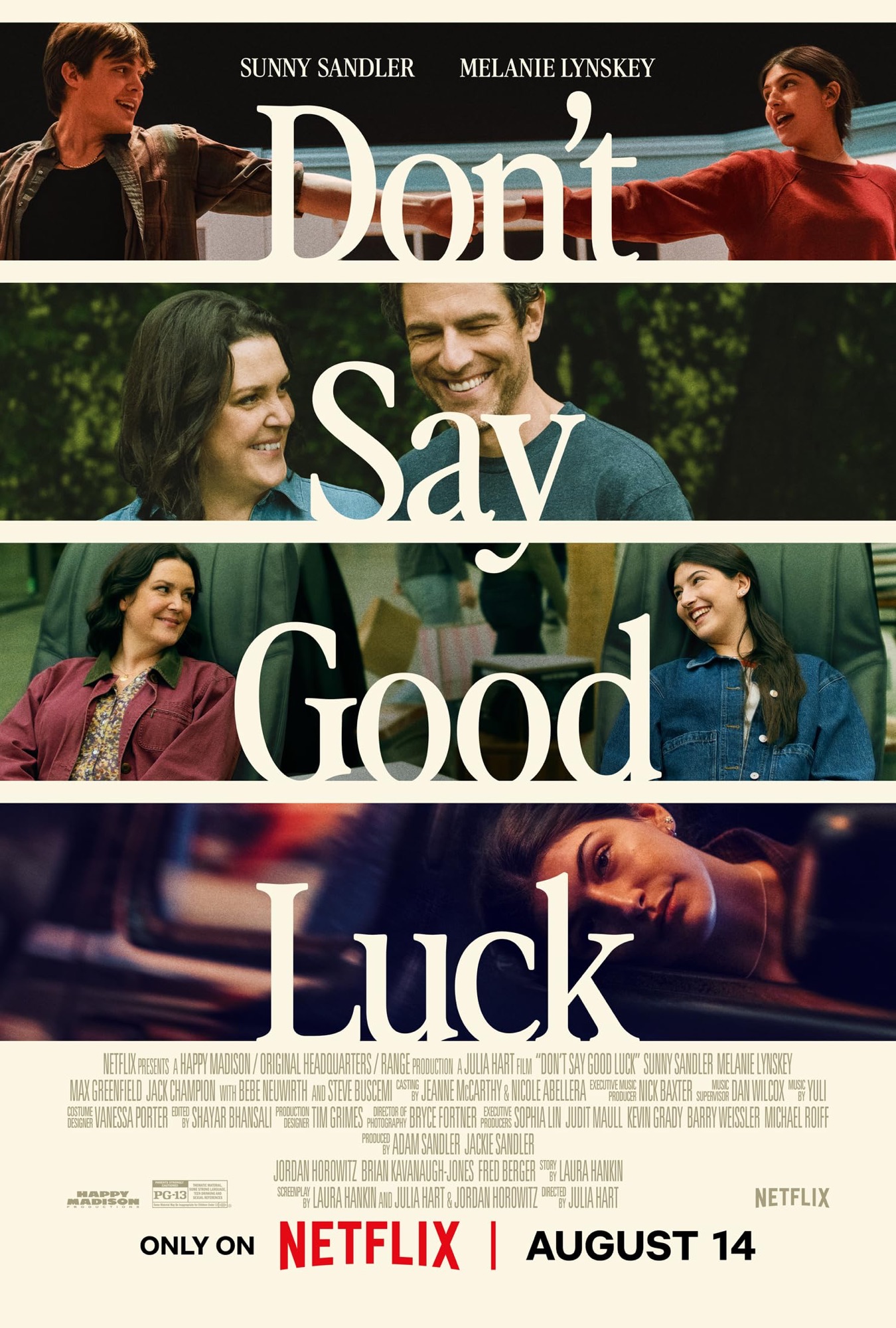


The opening scene of Don’t Say Good Luck has a lingering undertone that never quite settles. Julia Hart crafts the film around the impact of two powerful announcements—one full of hope, the other heartbreaking—and the story compassionately explores the emotional collision rather than avoiding it. Sunny Sandler’s Sophie approaches her audition with delicate confidence, and the film gently lets that vulnerability be felt. The callback becomes a poignant moment of recognition, not because Sophie changes, but because someone finally glimpses the depth she’s been striving to hide.

Sandler’s performance brings a gentle anchoring to the film. She imbues Sophie with a quiet resilience, moving through hallways and rehearsal rooms as if she’s gradually learning to carry more than she thought possible. Hart’s direction thoughtfully captures this vulnerability, allowing Sophie’s musical triumph to resonate alongside the private grief she struggles to hide. The film’s tone emerges from this delicate balance, a lyrical sadness that remains tender and hope-filled rather than collapsing into despair.

Melanie Lynskey’s portrayal of Elizabeth touches on a quiet, aching vulnerability. Her delivery of the line — “It’s come back” — carries a weary resolve that resonates deeply, shaping the emotional tone of every scene that follows. Hart thoughtfully uses Elizabeth’s exhaustion to explore the harsh limits of endurance, and Lynskey’s performance avoids melodrama, instead conveying a sincere sense of struggle. Her presence adds profound depth to the film’s emotional landscape, grounding Sophie’s journey in the heartbreaking reality of a mother gently running out of strength.

Max Greenfield’s Ted brings a tender depth to the film’s portrayal of a family under immense pressure. His sorrow feels genuine and relatable, a heartfelt struggle between hope and resignation. Hart’s subtle moments expose the pain of loving someone through a slow loss, and Greenfield’s heartfelt performance heightens the film’s emotional resonance. His scenes are not superficial; they deepen the audience’s understanding of grief with compassion.

Stephanie Beatriz’s Mrs. Parker emerges as a compassionate adult who recognizes Sophie’s vulnerability without exploiting it. Her faith in Sophie’s potential offers the film a much-needed counterbalance to the family’s unraveling. The supporting roles played by Bebe Neuwirth and Steve Buscemi introduce intergenerational tension, though the script leans more on creating pressure than providing insight. Their presence broadens the film’s emotional landscape, even if it doesn’t fully delve into it.

The film’s most poignant moment occurs in the montage that shows Sophie’s growing confidence alongside Elizabeth’s fading energy. Sara Bareilles’s “Bad Idea” is gently woven through the scene, adding a tender touch, as Hart captures images that reflect how joy and sorrow are deeply intertwined. The montage suggests that a family’s life is not made up of isolated chapters, but a continuous, ever-changing journey marked by both happiness and pain.

Hart’s use of the Waitress musical gently avoids simplistic metaphors. The rehearsals and performances become a safe space where Sophie begins to find her own voice, even as her home life feels increasingly burdensome. The film portrays art as a temporary refuge, not a solution, and this subtle restraint lends the theatrical scenes a quiet, poignant power. They show how creativity can offer someone comfort and stability without necessarily providing a cure.

The film’s sense of sadness is gentle yet persistent, never overwhelming. Hart maintains a lyrical tone, letting the story unfold with a tender melancholy that honors the characters’ emotional depths. The film approaches Sophie’s breakthrough and Elizabeth’s decline with sensitivity, and its final moments offer a heartfelt recognition of the resilience families demonstrate through shared struggle. The film’s gentle approach becomes its greatest strength.

Ultimately, Don’t Say Good Luck paints a poignant portrait of a household caught between hope and grief. Hart’s direction thoughtfully gives each character space to express their inner struggles, and the film’s emotional shifts feel genuine and earned. It’s a story about the delicate, transient beauty of a moment when everything changes unexpectedly, and the performances—especially Sandler and Lynskey—embody that vulnerability and quiet resilience with heartfelt sincerity.

Letter Grade: B+. Netflix.


Leave a Reply