
Crosswalk / LD Entertainment

Crosswalk / LD Entertainment
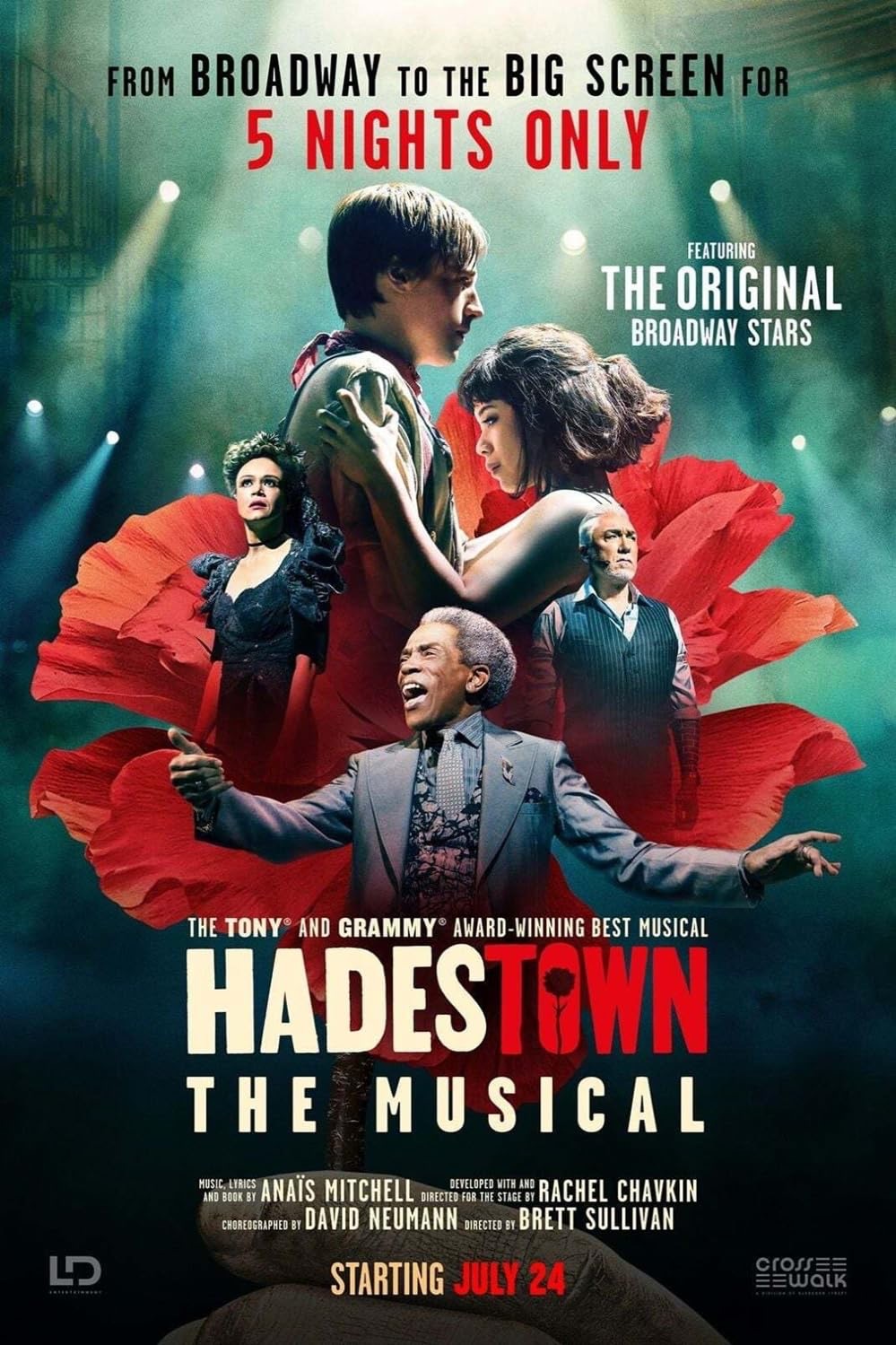
The filmed staging of Hadestown: The Musical directed by Brett Sullivan and led by Reeve Carney’s wounded, incandescent Orpheus, arrives with the reverence of a myth brought to life through smoke, brass, and the deep ache of labor. It carries a sorrow that gently persists without collapsing into despair, a glow that softly endures without offering false comfort. Sullivan’s camera enters the turntable’s center, revealing a world built on turning gears and turning hearts—a world where every revolution feels truly earned and heartfelt.

Crosswalk / LD Entertainment
The production’s greatest triumph is its refusal to reduce the stage to mere documentation. Sullivan treats the film as a living, breathing entity, allowing the camera to gently flow through Anaïs Mitchell’s score with a tenderness that deepens its emotional resonance. The close-ups become small acts of mercy, offering viewers glimpses of faces that hold entire histories in a single downward glance. The sadness in Carney’s voice gathers in the corners of the frame, and the film respectfully honours this without embellishment.

Crosswalk / LD Entertainment
Carney’s performance truly anchors the experience. His Orpheus is delicate yet resilient—a figure whose hope seems hewn from the very stone that surrounds Hadestown’s workers. His voice wavers with heartfelt conviction, and Sullivan’s direction gently intensifies that tremor until it becomes a heartfelt pulse that resonates throughout the entire production. The film recognizes that Orpheus’s optimism is not naive; it is a vital act of labor, and Carney performs this labor with a quiet, fierce determination.

Eva Noblezada’s Eurydice is imbued with a deeper sense of vulnerability through the camera’s intimate perspective. Her desperation feels genuine, a lived experience rather than mere narrative, enhanced by the film’s delicate attention to her breath, sweat, and the tremor of her hunger. When she sings, the sound conveys the heavy toll life has already taken from her. Sullivan’s framing gently highlights her struggles, transforming her choices into a quiet critique of the oppressive systems that confine her. The film becomes a heartfelt meditation on survival and resilience, rather than just a retelling of myth.

Crosswalk / LD Entertainment
Patrick Page’s Hades carries a weight that feels deeply rooted in gravity and sadness. His voice echoes like a subterranean lament, and the film captures its mournful resonance in a way that stage distance cannot convey. Page’s presence hints at the allure of power, revealing its seductive pull without glorifying it. His dominion appears industrial and metallic, yet beneath that surface, there’s an undercurrent of suffocation and pain. Sullivan’s camera lingers on the machinery of Hadestown, inviting the audience to feel its oppressive pressure and the suffering it signifies.

Crosswalk / LD Entertainment
Amber Gray’s portrayal of Persephone exudes a tenderness that the film captures with delicate care. Her moments of joy and sorrow flicker quickly, and the camera gently observes each emotional shift. Gray’s performance becomes a poignant reflection on seasonal grief, a reminder that even divine beings experience cycles of separation and longing. The close-ups reveal the weariness beneath her outward exuberance, transforming her scenes into elegies for a fleeting freedom she can only hold temporarily.

Crosswalk / LD Entertainment
André De Shields, portraying Hermes, continues to serve as the heartfelt heartbeat of the production. His presence feels like a blessing, a gentle reminder that storytelling is a powerful act of resistance. Sullivan’s close-up of Hermes’ shoes near the end becomes a poignant statement: cinema can honor theater by revealing what theater cannot. De Shields narrates the tragedy with a tender, weary grace that transforms the familiar ending into a profoundly moving and devastating conclusion.

Crosswalk / LD Entertainment
The workers and Fates are portrayed with gentler clarity through the film’s choreography of bodies and shadows. Their movements gently critique the machinery of capitalism without leaning on didacticism. Sullivan’s direction elevates their labor into a visual lament, a poignant reminder that myth endures because exploitation continues. The sadness in their songs becomes a profound, structural part of Hadestown’s very architecture.

Crosswalk / LD Entertainment
The film’s greatest achievement is its ability to retain the musical’s political edge while deepening its emotional resonance. Sullivan does not merely record a performance; he sincerely shows the toll of the world it portrays. The camera becomes a compassionate witness, not just an observer, and the result is a work that mourns with tenderness even as it celebrates. The tragedy hits with greater poignancy, and the closing reset of the myth feels heavier, more inevitable, and profoundly human.

Crosswalk / LD Entertainment
Ultimately, Hadestown: The Musical emerges as a heartfelt tribute to the power of filmed theater to embrace and portray its inherent complexity. It is a proud achievement in direction, performance, and musical storytelling, gently carrying its sadness with grace and its hope with cautious tenderness. It leaves viewers with a poignant longing, a bittersweet reminder that even the most uplifting song cannot entirely banish the darkness it seeks to illuminate.

Crosswalk / LD Entertainment
Letter Grade: A.

Crosswalk / LD Entertainment


Leave a Reply