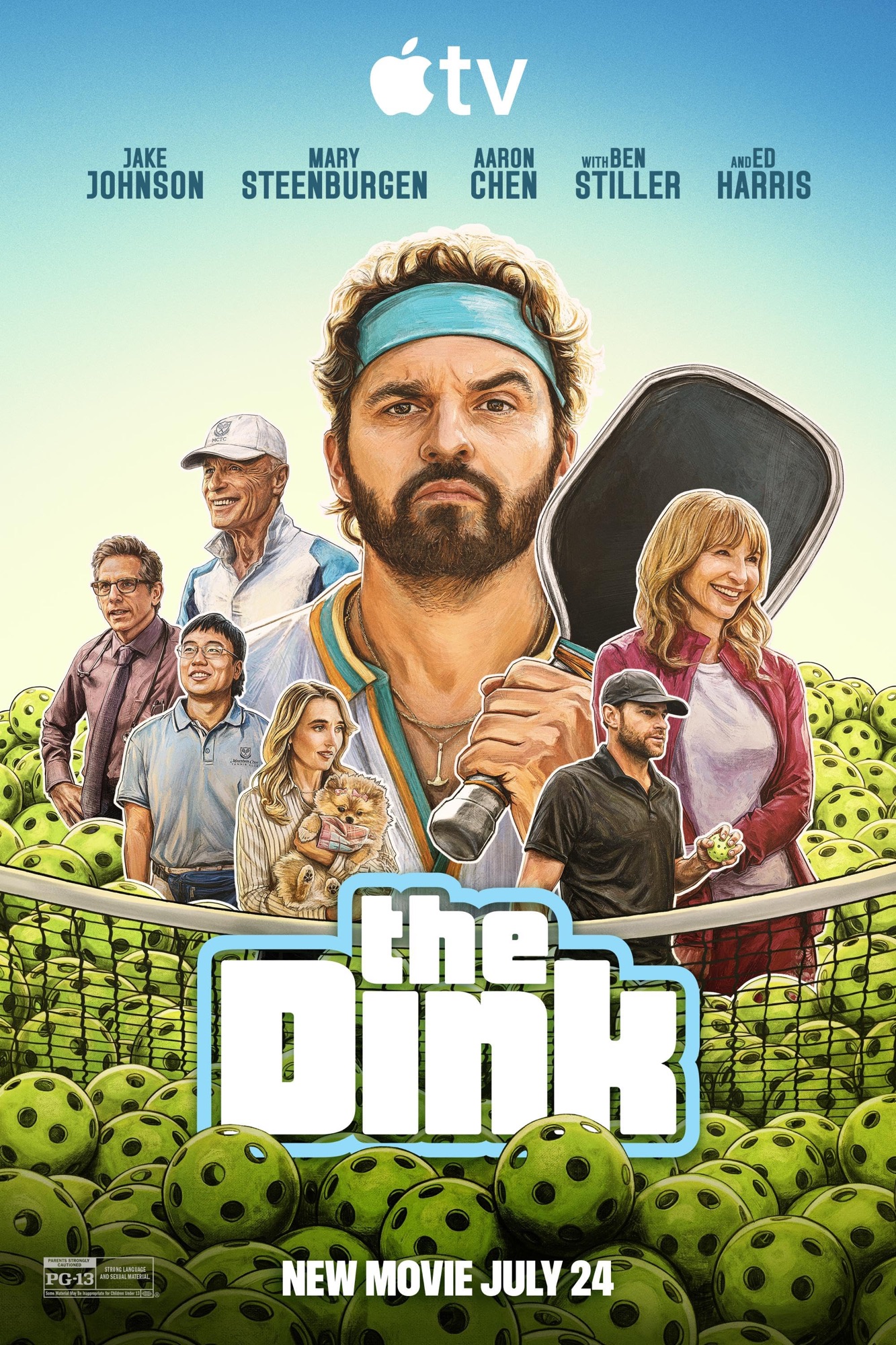


The first thing that lingers in The Dink is its ache. Josh Greenbaum gently explores a tender melancholy beneath the humor, a reminder that the golden age of studio comedy has become a distant memory. Jake Johnson bears that ache in his shoulders, while Dusty Boyd moves through Mountain Crest with a faded glow that never quite disappears. The film hopes to rekindle the communal spirit of theatrical comedy, even as it acknowledges a world where laughter is often experienced alone. That quiet tension becomes its heartfelt rhythm.

Greenbaum’s direction strives for the lightness found in Barb and Star Go to Vista Del Mar, but here, the atmosphere feels heavier. The humor comes in gentle, subdued bursts, never fully bursting into loud laughter, and the film’s tonal oscillation adds to its character. The jokes, pratfalls, and absurdities are all present, but everything seems a bit tender and bruised. This bruising isn’t a flaw; it’s part of its texture. It gives the film a delicate charm that prevents it from slipping into mere formulaic repetition.

Dusty’s stalled adulthood is portrayed with a sense of empathy, highlighting not only his personal struggles but also reflecting a broader sense of a world struggling to find its way with its once-bright talents. The film hints at growth but avoids forcing a resolution, instead capturing the uncertainty that many feel today. This ambiguity serves as a reflection on the modern comedy protagonist, who often navigates the delicate line between self-awareness and self-deception. Johnson embodies this delicate trap with a gentle, weary kindness, and some of the film’s most touching moments arise from his quiet acceptance of his own limitations.

Mary Steenburgen’s Candace enters the story as a gentle counterbalance, a presence shaped by both loss and the courage to reinvent herself. Although her subplot feels somewhat underdeveloped, her emotionally rich performance brings a profound depth to the film. When she and Dusty share the court, the film finds a heartfelt rhythm that feels authentic and lived-in. Their partnership isn’t rooted in romantic tension but in a recognition of two souls who have drifted away from their own stories and are softly seeking to find their way back. While the film doesn’t fully explore this delicate dynamic, its quiet shadow lingers with a tender resonance.

The supporting cast—Ben Stiller, Patton Oswalt, Chloe Fineman, Chris Parnell—bring charming eccentricity that enlivens the film, preventing it from becoming overwhelmed by its own sentimentality. Their presence serves as a reminder of what studio comedies once offered: a delightful ensemble of oddballs surrounding a flawed but relatable hero. However, these moments also expose the film’s loose structure. Scenes arrive, entertain, and fade away, without fully exploring deeper stakes. The comedy feels more like fleeting sparks than a sustained, warm blaze.

Still, The Dink remains oddly charming. Its imperfections reflect genuine humanity, its jokes feel lovingly handcrafted, and its sadness feels truthful. The film may not reach the wild energy of the best studio comedies, but it approaches that spirit with genuine affection. It longs to be part of a tradition that has faded, and that longing makes it poignantly relatable. The visible gaps are part of its charm, and the warmth behind its efforts keeps the film heartfelt and moving.

The film’s final moments evoke genuine sentiment, yet Greenbaum skillfully avoids exaggerated emotion. The ending arrives gently, without fanfare. Dusty’s growth feels quietly significant, Candace’s journey remains open-ended, and Mountain Crest’s outcome seems less important. What truly resonates is the subtle shift in Dusty’s posture, the delicate acknowledgment that adulthood is a gradual process of making choices. The film’s underlying sadness deepens here, lending the comedy a tender afterglow.

Ultimately, The Dink is a heartfelt attempt, sincere in its effort. It may not come together perfectly, but it never loses its warmth. It offers a handful of memorable moments, some sharp jokes, and a gentle emotional undercurrent that lingers beyond the credits. As a studio comedy created in an era that struggles to embrace this genre, its quiet, enduring charm is a tender reminder of its hope and resilience.

Letter Grade: B+ On Apple TV Plus.


Leave a Reply