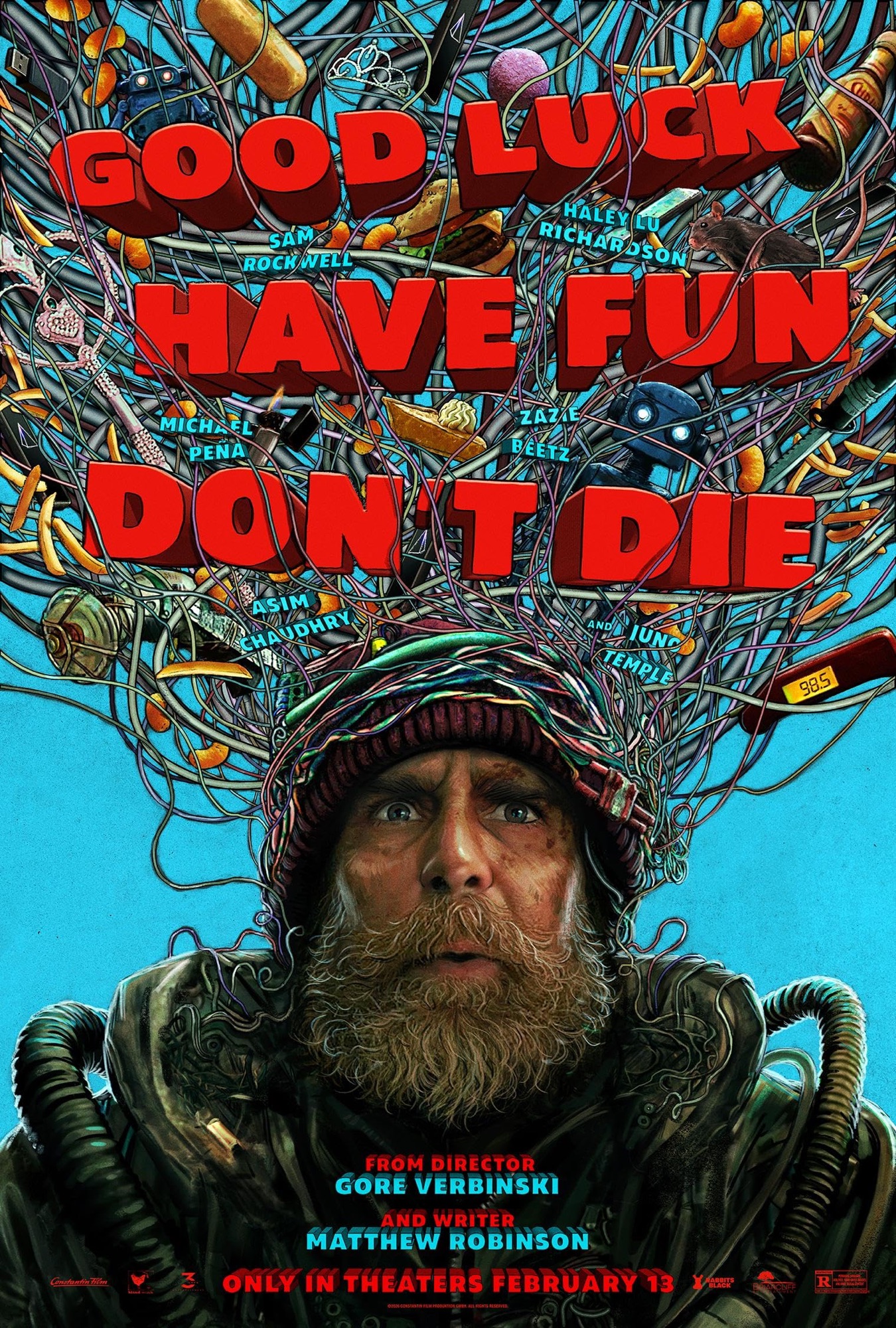


Sam Rockwell navigates Good Luck, Have Fun, Don’t Die with the confident flair of someone who’s seen it all but still manages to smile. Gore Verbinski responds with a film that turns dystopia into a lively playground—a quirky carnival where every joke conceals a wound, and each wound shines brightly. The outcome is a sci-Fi comedy that keeps firing up sparks, creating a vibrant and lively atmosphere.

Verbinski masterfully creates a lively rhythm by focusing on texture over exposition. The diner standoff that starts everything off sets the tone for the whole film: a mix of panic and punchlines, with a wink of humor even in moments of doom. Rockwell’s fatigue from the time‑loop adds a comedic spark, making the film subtly playful and intriguing, drawing viewers into a delightful sense of unease. While the story might be familiar, its energetic and vibrant execution keeps the atmosphere exciting and fresh.

The film’s A.I. anxieties become even more engaging through their silly exaggeration. Verbinski doesn’t see artificial intelligence as a single, uniform thing; instead, he shows it as a cracked mirror that reflects our own habits and tendencies. The world in the movie feels crafted by constant distractions, dulled by convenience, and comforted by screens. The critique hits home because it’s built into the very structure of the film, rather than being added on as an afterthought. The artificial elements serve as a backdrop for human foolishness, and the humor makes the warning all the more impactful.

The supporting characters—teachers, drivers, misfits, and the grief‑stricken—aren’t just simple archetypes; they’re more like pressure points that add depth. Their journeys remind us of video game quests, but each one uncovers a crack in their world. Verbinski skillfully uses these side trips to enhance the movie’s emotional depth. The humor doesn’t dismiss the pain; instead, it highlights it, shapes it, and allows it to breathe, making the story more heartfelt and relatable.

The middle part of the film, where the team continues their mission, becomes more engaging through its repetition. The characters’ confusion adds a humorous touch, highlighting how we often follow instructions without fully grasping the stakes. Rockwell’s impatience acts as a playful counterpoint, showing that rushing without understanding can be a trap. The film gently critiques its own structure while also enjoying it.

Verbinski’s late‑film weirdness arrives with a flourish. The final act bursts into a collage of digital nightmares and analog textures, blending into a look that feels both crafted and chaotic. The film’s visual creativity is its strongest point: the artificial becomes frightening only when it replaces the human touch. Here, the human touch is everywhere—smudging the frame, bending the rules, cracking jokes in the dark.

The emotional core of the film shines through its fragmented backstories. Each character bears a wound—whether from technology, grief, or institutional indifference—that adds depth and authenticity. Verbinski delicately handles these histories, allowing them to resonate powerfully within the broader critique of the film. This approach ensures that the characters remain lively and real, rather than being reduced to mere symbols. Their pain seamlessly integrates into the film’s lively rhythm, enriching the overall storytelling with warmth and understanding.

The film’s commentary on escapism hits home. Verbinski smoothly connects passive distraction to existential drifting, from mindless scrolling to surrendering completely. But it never lectures; instead, it gently nudges, playfully teases, and subtly provokes thought. The comedy serves as a clever way to highlight feelings of unease, which in turn remind us that our attention is limited and should be protected. This approach makes the message feel warm yet insightful, inviting viewers to reflect without feeling judged.

Rockwell brings a captivating energy to the chaos with a performance full of exhaustion, charm, and manic determination. His presence injects a lively rhythm into the film that keeps it vibrant from start to finish. Verbinski complements him perfectly, creating a world that feels both destined for despair and surprisingly hopeful. The film suggests that humanity’s salvation might be found in its messiness, unpredictability, and refusal to conform.

By the end, ‘Good Luck, Have Fun, Don’t Die’ shines as a lively, creative sci‑fi comedy that sees artificial intelligence not as a villain but as a reflection of ourselves. Verbinski creates a film that playfully teeters on the brink of chaos yet leaves space for happiness. It’s a wonderfully wild and heartfelt piece of filmmaking.

Letter Grade: A‑.


Leave a Reply