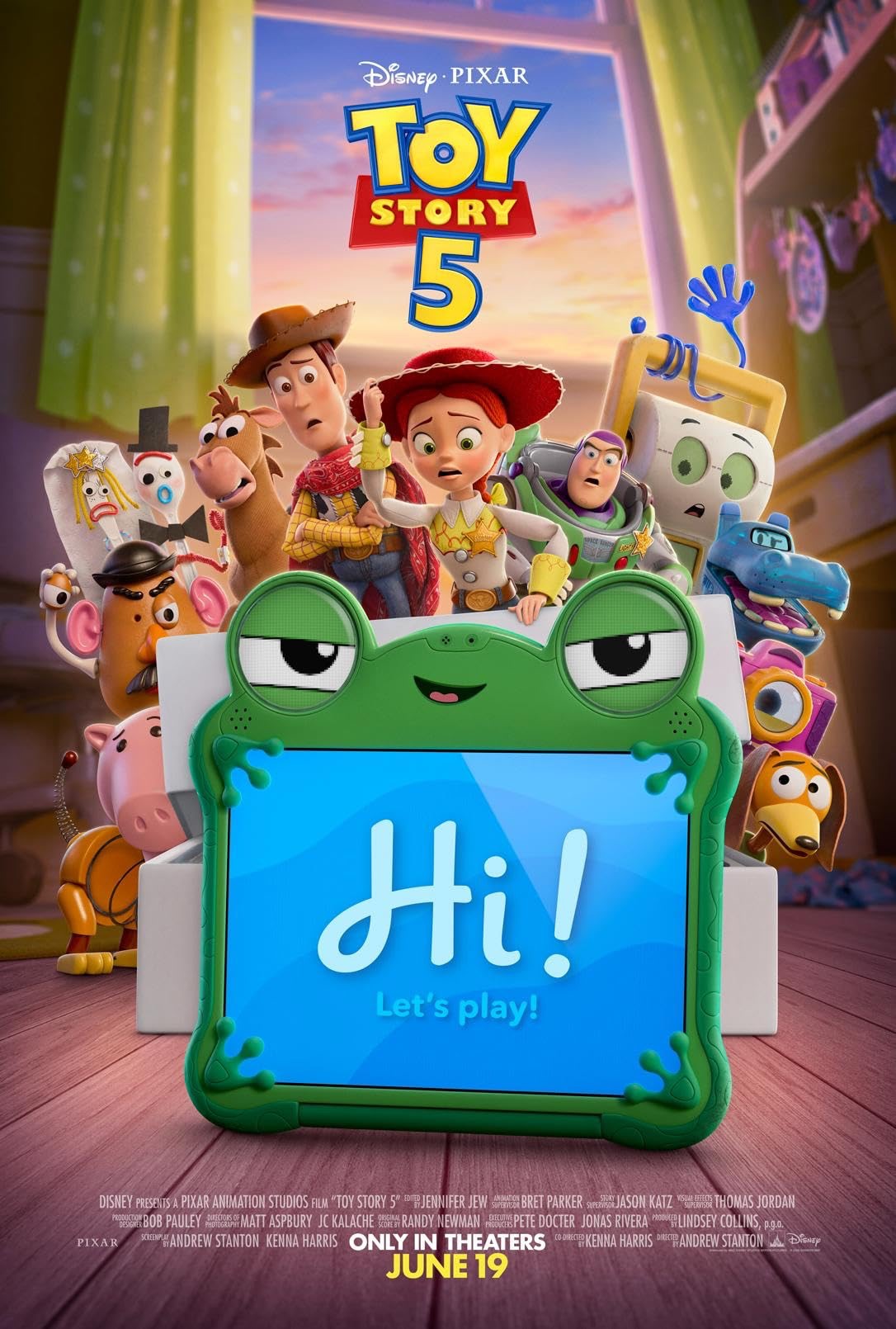


Toy Story 5 begins with a playful wobble, a mischievous grin, and a subtle rattle in its joints. It boldly carries the legacy of its predecessors, yet it refuses to be weighed down by it. Andrew Stanton guides the film into a curious new territory where echoes of nostalgia softly murmur and modern anxieties resonate through every scene. The result is a somewhat unpredictable yet ultimately heartfelt experience—a film that may never find perfect balance but constantly strives to capture something vibrant and alive.

Tom Hanks returns as Woody, his voice textured with a weathered depth that animation simply can’t mimic. That subtle tension becomes the heartbeat of the film. The toys shine in pristine condition, yet their voices quiver with the weight of years. This unexpected dissonance weaves a poetic layer into the story, a poignant reminder that time affects everything—except what we choose to ignore. Stanton embraces this friction, though he never allows it to fully unripen, leaving a delicate, lingering echo.

The film’s central idea — Bonnie’s obsession with a frog-faced tablet called Lilypad — sets a bizarre stage for the toys’ crisis. The glowing screen becomes a tyrant, a ruler of attention that shifts the household’s emotional balance. While the movie hints at the many way devices dominate childhood and evoke technocapitalist fears, its script often avoids exploring these sharpest ideas. Yet, the absurdity has a playful charm. The tablet’s cheerful authoritarianism injects a surreal edge that the film desperately needs.

Jessie’s journey injects the film with its emotional core. Her sense of displacement, the accidental exile she endures, and her discovery of forgotten devices in Emily’s farmhouse—all these moments spark rare flashes of depth. The abandoned gadget shed transforms into a mausoleum of obsolescence, quietly humming with the faint electricity of discarded purpose. When Jessie uncovers Emily’s hidden lunchbox of memories, the film finally sheds its restlessness and takes a breath, resonating more deeply.

Woody’s reentry into Bonnie’s world stirs a fresh, unpredictable tension. His presence disrupts more than it heals, and the film subtly captures this without over-explaining. His stubborn heroism feels at odds with the surrounding world, a contrast the movie seems aware of even as it indulges his character. The hilarious, absurd rivalry with Buzz over Jessie’s attention adds a quirky humor that unexpectedly resonates.

Meanwhile, Buzz Lightyear embarks on a whirlwind subplot involving malfunctioning clones of himself. The chaos they unleash crackles with energy, transforming what could be mere spectacle into a vivid showcase of chaos and confusion. Their presence subtly hints at themes of mass production, identity loss, and the fading sense of individuality—yet the film deliberately leaves these ideas hanging, unresolved. Despite this, the scenes buzz with a manic energy that keeps the middle act lively and engaging, preventing it from losing momentum.

Blaze, the energetic newcomer, instantly invigorates the film every time she steps into the scene. Her presence broadens the emotional landscape of the story, serving as a vibrant bridge between the nostalgic world of toys and the sleek realm of digital devices. Her bond with Bonnie develops naturally through shared imagination rather than moral lessons. Some of the film’s most captivating late-stage moments stem from this deep connection, especially when the toys cleverly orchestrate the girls’ reunion.

The climax aboard the moving truck erupts into the film’s most absurd yet profoundly heartfelt moment. Toys and devices clash in a wild, chaotic dance of purpose and guilt. Lily’s remorse becomes the pivotal point that shifts the story’s direction. At last, the film fully embraces its quirky nature, allowing the absurdity to grow until it transforms into genuine sincerity. The scene where Bonnie and Blaze connect over toys feels authentic, not forced.

The ending unfolds with a gentle melancholy that lingers. Woody and Bo Peep set off once again on their heartfelt mission to rescue lost toys. Jessie finds her worth not in ownership but through cherished memories. Bonnie steps confidently into a new friendship, fueled by imagination instead of screens. The film concludes on a note both hopeful and bittersweet, a poignant reminder that childhood quietly transforms even as we hold tight to its remnants.

Toy Story 5 is a wild ride—uneven and hesitate at times, yet bursting with moments of surprising depth and humor. It may not scale the heights of its past entries, but it refuses to be forgettable. It pulses with vibrant life, like stubborn old plastic refusing to fade away in a delicate world of glass.

Grade: B+ .


Leave a Reply