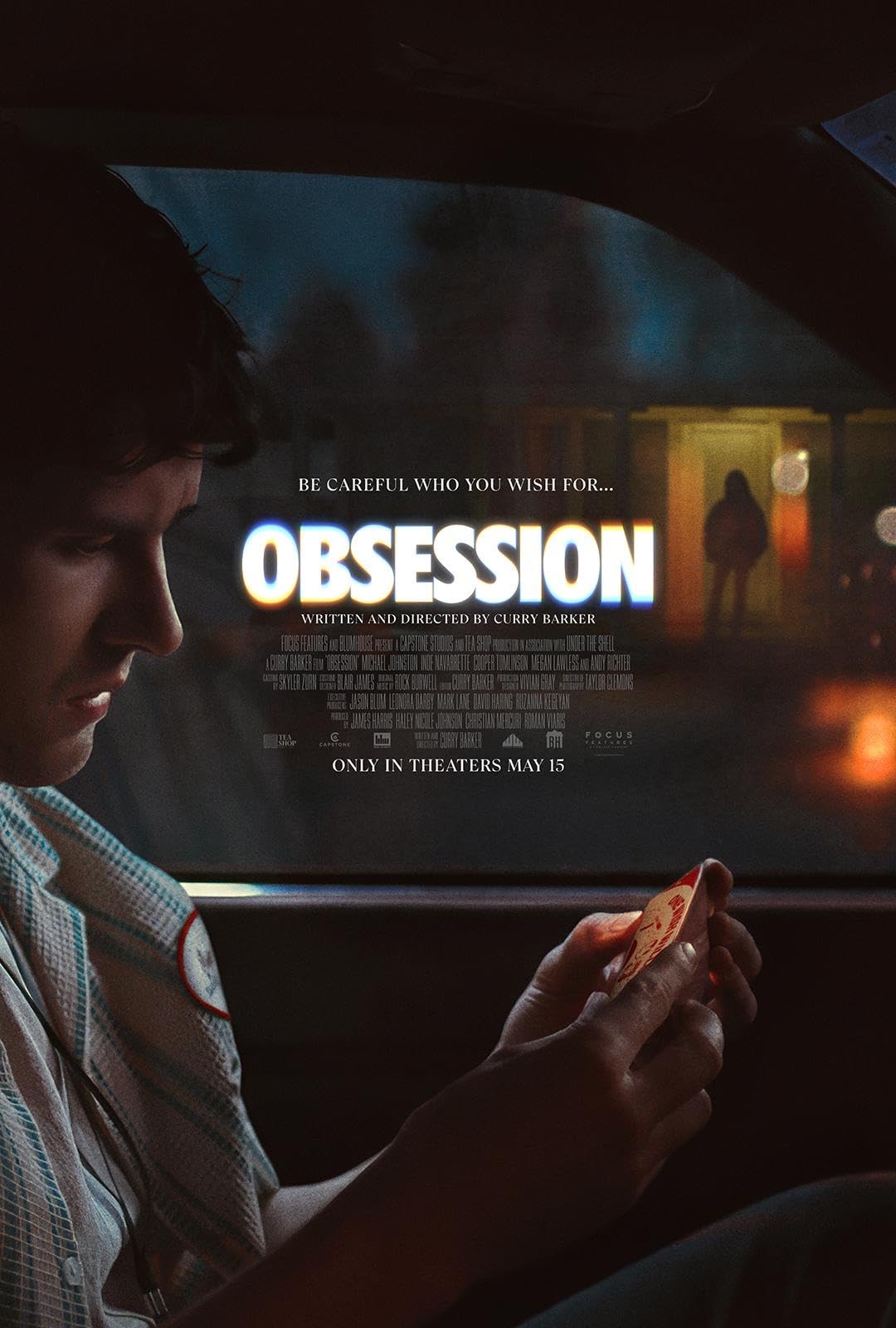


Curry Barker’s Obsession opens with a curse disguised as a toy and ends with a love story embalmed in its own rot. The film’s premise—romantic yearning turned supernatural contagion—feels engineered for Barker’s brand of prank‑horror, but what surprises is how earnestly he treats the infection. Beneath the camp, there’s a genuine ache for connection, even if that ache drips blood.

The One Wish Willow is Barker’s most inspired invention: a consumer trinket that literalizes the delusion of control. When Bear (Michael Johnston) snaps it, he doesn’t summon love; he manufactures servitude. Barker’s camera lingers on the aftermath, not the magic, turning the wish into a slow‑motion autopsy of desire. Johnston’s fragility becomes the film’s pulse—his face a study in the terror of getting exactly what one asked for.

Inde Navarrette’s Nikki is the film’s engine and its wound. Barker lets her oscillate between tenderness and mania until the distinction collapses. Her performance is fearless, grotesque, and occasionally hilarious, especially when she weaponizes affection into ritual. The duct‑taped door, the cat‑meat sandwich, the Hansel‑and‑Gretel monologue—each gesture mocks the sentimental grammar of romance. Barker’s direction turns these acts into choreography, a danse macabre of domesticity.

The supporting cast—Cooper Tomlinson’s bemused Ian, Megan Lawless’s doomed Sarah, Andy Richter’s oblivious store boss—serve as the chorus of disbelief. Their reactions ground the absurdity, reminding us that horror often blooms in the ordinary. Barker’s editing keeps their scenes brisk, punctuating the escalating madness with deadpan humor. The tonal whiplash is deliberate; laughter becomes a defense mechanism against the film’s cruelty.

Barker’s script toys with moral symmetry. Bear’s wish enslaves Nikki, but her counter‑wish annihilates him. The symmetry isn’t neat—it’s nauseating. The film’s final act, drenched in oxycodone and devotion, refuses catharsis. Barker’s message isn’t “be careful what you wish for”; it’s “you already wished, and now you must live inside the consequence.” The horror isn’t supernatural—it’s contractual.

Visually, Barker favors neon decay. The mystic shop glows with consumer mysticism, while Bear’s bedroom curdles into a shrine of regret. The cinematography by Tomlinson (doubling as DP) captures the film’s tonal schizophrenia: every frame oscillates between romance and rot. Barker’s instincts about when to plunge the knife remain scalpel‑sharp, even when the sexual politics wobble.

The film’s humor is its saving grace. Barker’s prankster roots surface in moments of absurdity—the raining money, the customer‑service call from hell, the self‑help horror of wish fulfillment. These gags puncture the film’s self‑seriousness, turning tragedy into farce without erasing its sting. The laughter feels earned, a gasp of relief in a suffocating love story.

Yet Obsession falters when it tries to moralize. Barker’s cautionary tone toward male fragility feels undercooked, more meme than meditation. The film gestures toward critique but settles for spectacle. Still, the spectacle is potent: a romantic comedy flayed open to reveal its viscera. Barker may not solve the riddle of possession, but he stages it with conviction.

In the end, Obsession is a horror of empathy—a film that asks whether love can survive exposure to its own pathology. Barker doesn’t answer; he just keeps the camera rolling as the lovers rot. The result is messy, funny, and disturbingly tender. It’s a debut that promises sharper horrors ahead.

Letter Grade: B+.


Leave a Reply