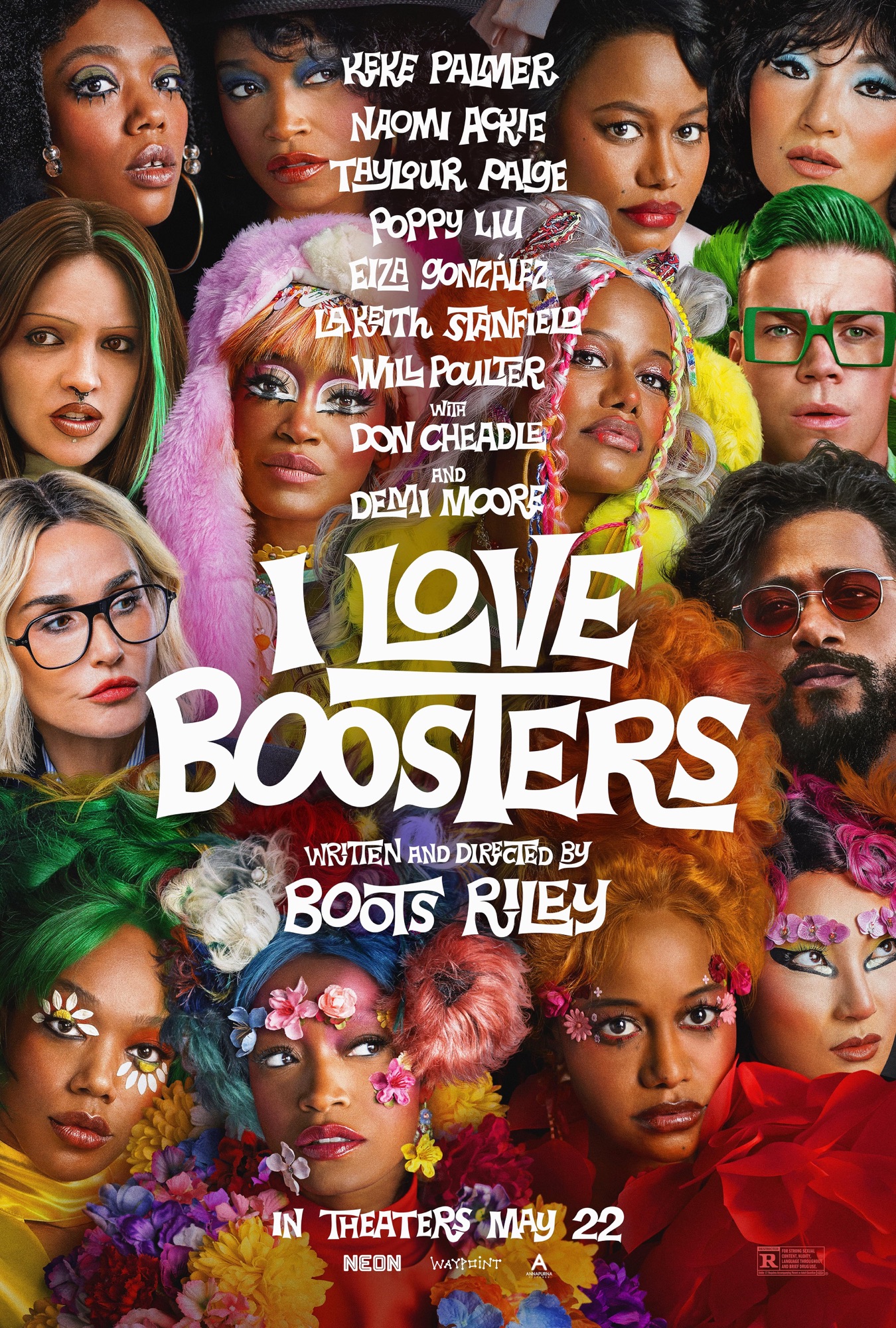


Boots Riley’s I Love Boosters kicks off with an energetic sparkle, drawing you into a vibrant world full of spectacle and stirring agitation, where every scene weaves politics seamlessly into the story. Keke Palmer’s Corvette glides through this lively setting with a strength that’s impossible to ignore, serving as the heart of the film even when the story explores many different directions. Right from the start, the movie makes it clear: fashion is a powerful tool, labor is a fierce battleground, and the Velvet Gang faces these challenges with hunger, sharp wit, and a longing for justice that’s a little cracked but real.

Riley’s vivid imagination truly shines. The black-and-white Metro Designer stores, the leaning tower where Christie Smith rules, and the streets bursting with color—all come alive as settings for the film’s clever critique of beauty based on exploitation. The sensory overload adds to the satire, especially when Riley keeps his focus sharp, transforming the Velvet Gang’s thefts into small acts of sharing that highlight the ridiculousness of luxury built on underpaid workers. The film’s style isn’t just for looks; it’s a powerful statement.

Palmer’s performance really enhances that argument. Corvette’s ambition, resentment, and bittersweet admiration for Christie bring a lot of emotional depth to the film. Her scenes at the Metro Designer store, where she faces the theft of her own designs, highlight the film’s main message: the strong often take from the weak and call it progress. Palmer’s presence and expressiveness help keep the story grounded, even as the plot starts to become a little unraveled.

The introduction of Jianhu and the teleportation device broadens the film’s perspective, bringing in the wider world of labor politics. Jianhu’s journey through factory life, dealing with loss and standing up for resistance, adds a heartfelt layer that deepens its critique of the supply chains supporting Christie’s empire. The device’s unique “deconstruction” setting becomes a powerful symbol, symbolically returning the stolen value to the workers who made it. During these moments, Riley’s vision shines through, and the film’s poetic quality becomes even more evident.

While the film’s ambition is admirable, it also challenges its structure a bit. Riley introduces a mix of conspiracies, sci-fi elements, and political themes that sometimes feel a bit crowded, which can make the story harder to follow. Moments like the skin-suit reveal, the demon lover, and the stop-motion chase are all exciting and full of energy, but when brought together, they can lessen each one’s impact. The satire feels a bit scattered, and the film’s important political message gets a little softer as it tries to juggle so many creative ideas.

The supporting cast feels the impact of this sprawling story the most. Naomi Ackie’s Sade and Taylour Paige’s Mariah smoothly navigate the chaos, but there’s less room for their characters to grow emotionally. LaKeith Stanfield’s Pinky Ring Guy is intriguing but leaves us wanting more. Demi Moore’s Christie, on the other hand, truly stands out—her performance adds a powerful punch to the film’s critique of how the elite create their own myths. Her towering, slanted structure symbolizes delusion, and Moore delivers her role with a sharp, clear intensity.


Riley’s tonal shifts—his signature—bring a lively and dynamic presence to the film. Sometimes they hit perfectly, capturing the humor and fury just right, like the scene with the unpaid bills in Oakland, the busy retail workers, or the fashion-show meltdown. These moments add a lot of energy and emotion, making the film engaging. However, the variety of styles can also make the overall impact feel a bit scattered at times, which slightly weakens the sharp edge that made Sorry to Bother You so memorable. Overall, the film’s richness is both its strength and the source of some of its uneven moments.

The final act picks up momentum with renewed energy. The growing protests, the strikes spreading across borders, and the Velvet Gang’s bonds mending themselves—all remind us that collective action is the most powerful force to change an unfair world. Riley’s poetic words come alive again, fueled by moving bodies and voices that refuse to be silenced.

The ending leaves us with a gentle sense of hope. Jianhu’s mother has recovered, the workers are rising up, and although the Velvet Gang is bruised, they remain unbroken—ending the film on a note of potential healing without suggesting the battle is fully over. I Love Boosters is a vibrant mix—messy, bold, uneven, yet undeniably alive. Its imperfections are part of its charm, never dampening its energy. Riley’s ambition reaches beyond the limit, but that very strive adds to the film’s compelling spirit.

Grade; B.


Leave a Reply