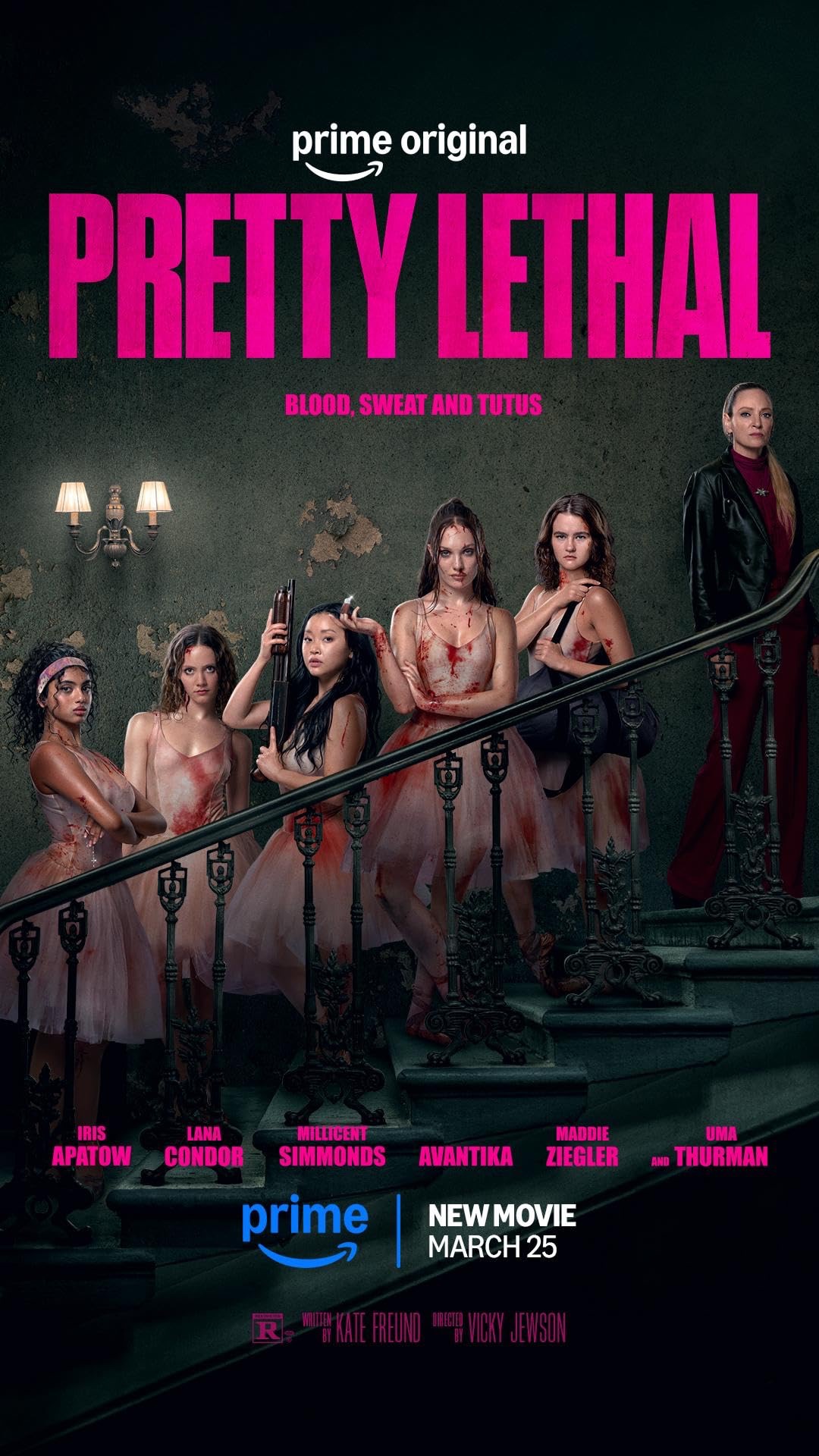


Pretty Lethal kicks off with a scene that perfectly captures the film’s core message: beauty intertwined with brutality, elegance pressed against a hard surface until it inevitably breaks. The rest of the movie beautifully maintains that tension with a confidence that feels genuine. Vicky Jenson skillfully highlights the contrast between grace and violence, creating a thriller that moves with the precision of a dancer, even when the storytelling occasionally falters.

The film doesn’t focus much on the plot, and that relaxed approach actually works really well for it. It’s pretty straightforward: five LA dancers—Bones, Princess, Zoe, Chloe, and Grace—find themselves in rural Hungary for a competition, only to get trapped inside the Teremok Inn, a terrifying performance‑art nightmare run by Devora Kasimer. The real excitement comes from the girls’ fight to survive, rather than how they ended up there. When Pretty Lethal takes a moment to explain Devora’s past or the Marcovic family’s illegal activities, the energy slows down. Instead, the film shines when it’s all about movement and action, not heavy explanations.

David Leitch’s role as co‑producer really shines through. You can feel the DNA of John Wick, Nobody, and Bullet Train in the way the violence is choreographed. The dancers often find themselves in confined spaces like tight rooms, stairwells, and storage areas, where they have to turn whatever’s nearby into a weapon. Whether it’s bones cracking a mop handle, Princess using a costume rack as a shield, or Zoe channeling her panic into sharp, precise moves—these moments truly define the film’s unique style. The ballet-inspired training isn’t just for show; it’s a vital part of their survival language.

Jenson arranges these sequences with a clear sense of rhythm, creating a good flow, but the film’s look sometimes doesn’t quite match the sharpness of its action scenes. The lighting makes scenes appear flatter, even when they should feel more intense and suffocating. The production design has a theatrical feel that can seem a bit excessive, and it lacks the texture that would make the hotel feel truly lived-in. The visual palette aims to be both lush and dangerous, but at times it settles into a more practical, less striking appearance. The film’s moments of brutality could be showcased with more powerful, impactful framing to match their intensity.

The cast really keeps the film engaging and vibrant. Maddie Ziegler’s Bones provides a steady, confident presence that helps guide the story through its more challenging moments. Lana Condor’s Princess exhibits a sharp, privileged impatience, which naturally softens into something more sincere as the violence approaches. Iris Apatow’s Zoe displays a mix of panic and resolve, making the stakes feel truly intense. Millicent Simmonds’ Chloe offers a powerful inner strength that adds emotional depth to the film. Avantika’s Grace, despite being drugged and in danger, becomes a quietly persistent force of determination. Uma Thurman’s Devora stands tall, embodying a blend of tragedy and menace that leaves a lasting impression.

Pretty Lethal truly shines when it embraces raw emotion — blood, sweat, and instinct. The girls battling through hallways, kitchens, and rehearsal rooms generate a natural momentum that doesn’t require extra storytelling. The moments that feel less engaging are when the film attempts to explain itself. Devora’s backstory, the Marcovic family relationships, and the details about debts and legacies tend to slow things down instead of adding depth.

The final act, where Devora sets the hotel with explosives and the girls fight their way back to each other, really brings the film’s energy back. The heartfelt moment between Bones and Devora, dancer to dancer, adds a meaningful touch to the climax. Devora’s final choice feels especially clear and impactful, surpassing earlier parts of the story. Their escape into Budapest and their final performance beautifully wrap up the film, leaving a sense of resilient hope that feels well-earned.

Pretty Lethal might look delicate with its beauty and grace, but underneath, it’s tough and intense. It sometimes doubts itself, but when it trusts its strengths, it turns into a powerful, energetic story about survival through movement. While the film has some flaws, they don’t diminish its impact; instead, they serve as a gentle reminder that even the most precise choreography can have its stumbles.

Letter Grade: B+. On Amazon Prime Video.


Leave a Reply