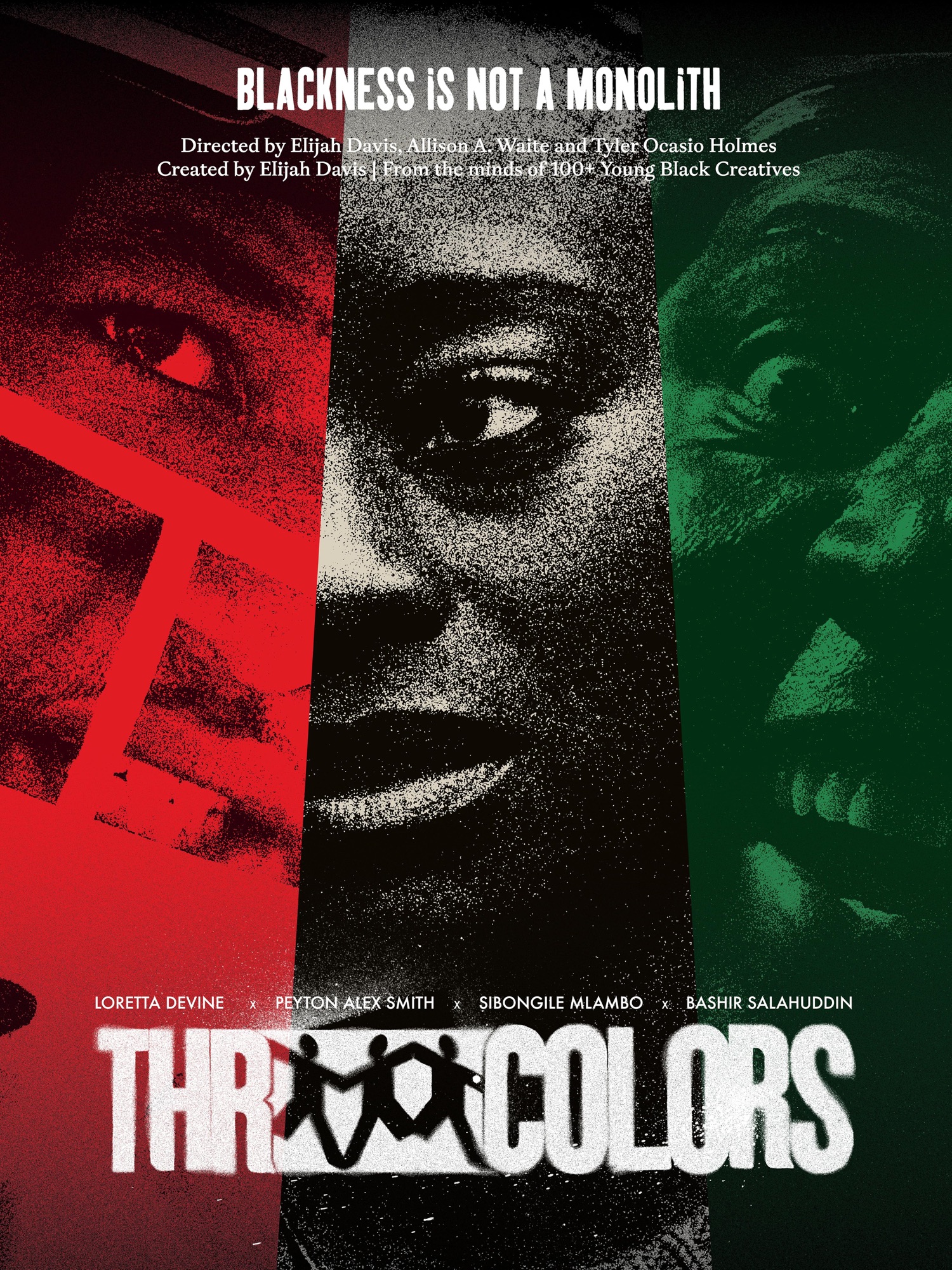


Three Colors: Pan-African moves with a steady pulse, a film that carries its lineage openly while shaping its own path. It bows toward Kieslowski’s trilogy yet refuses to be bound by it, trading European melancholy for a Pan-African horizon where liberation, unity, and prosperity become living textures rather than abstract ideals. The film’s mixed strengths gather into something quietly luminous, a work that reaches for a collective portrait through three distinct tonal chambers.

The homage is unmistakable: the color-coded structure, the moral weight placed on ordinary gestures, the sense of fate brushing against daily life. But the diversion is equally clear. Where Kieslowski’s films drift through solitude, this anthology leans toward community, toward the shared weight of history and the shared labor of becoming. The directors treat the Pan-African flag as a compass, letting each color open a different emotional corridor.
RED: Black Men Don’t Cry, directed by Elijah Davis, is the film’s most urgent segment. Peyton Smith’s Ahmari carries the expectations placed on Black men with a kind of contained fire, a body shaped by the dream of athletic ascent and the pressure to turn talent into deliverance. The segment’s power comes from its refusal to flatten that dream into triumph or tragedy; instead, it shows the cost of being seen as a vessel for aspiration. The American dream glimmers, but the glow is edged with strain, and the film lets that tension breathe.

Stephen Bishop’s Uncle Steve becomes a counterweight, a figure who embodies the generational push toward achievement. The segment’s lyricism comes from its attention to physical detail: the weight of a duffel bag, the echo of a gym, the stillness before a leap. These moments give the story its emotional architecture, a sense that liberation is both a promise and a burden carried in the body.
BLACK: Breadman, directed by Allison A. Waite, shifts the film into a quieter register. Sibongile Mlambo’s Joana Mensa anchors a portrait of the African immigrant community that feels lived-in, textured by small rituals and shared resilience. The segment reaches toward despair but refuses to settle there; instead, it builds a vision of unity through the gestures of neighbors, the rhythms of work, the fragile but persistent bonds that form under pressure. The film’s homage to Kieslowski is clearest here in its attention to faces, to silence, to the way a single act of kindness can tilt a life.
The segment’s strength lies in its layering: the weight of displacement, the ache of distance, the stubborn hope that community can be rebuilt from fragments. It becomes a study of unity as a daily practice, not a slogan, and the film’s middle movement gains its emotional depth from that grounded approach.
GREEN: Meet the Greens, directed by Tyler Ocasio Holmes, brings the anthology to a more satirical, sharply observed close. Bashir Salahuddin’s dual presence as Jontavious Rodgers and Shawn Green gives the segment a playful edge, but beneath the humor lies a pointed examination of stereotypes, wealth, and the compromises demanded by success. The segment’s prosperity is complicated, a prosperity that asks for performance, for negotiation, for the careful balancing of identity and ambition.

The film’s lyric tone emerges here in the contrast between surface polish and inner truth. The Greens’ world is bright, curated, and aspirational, yet the story keeps returning to the question of what must be preserved beneath the shine. Prosperity becomes a test of character, a mirror held up to the self.
Across all three segments, the anthology’s greatest strength is its willingness to let each color speak in its own register. The directors honor Kieslowski’s structure while expanding its emotional vocabulary, turning the Pan-African flag into a map of contemporary Black life. The result is mixed in execution but rich in intention, a film that reaches for something expansive and often finds it.
Grade: B+.


Leave a Reply