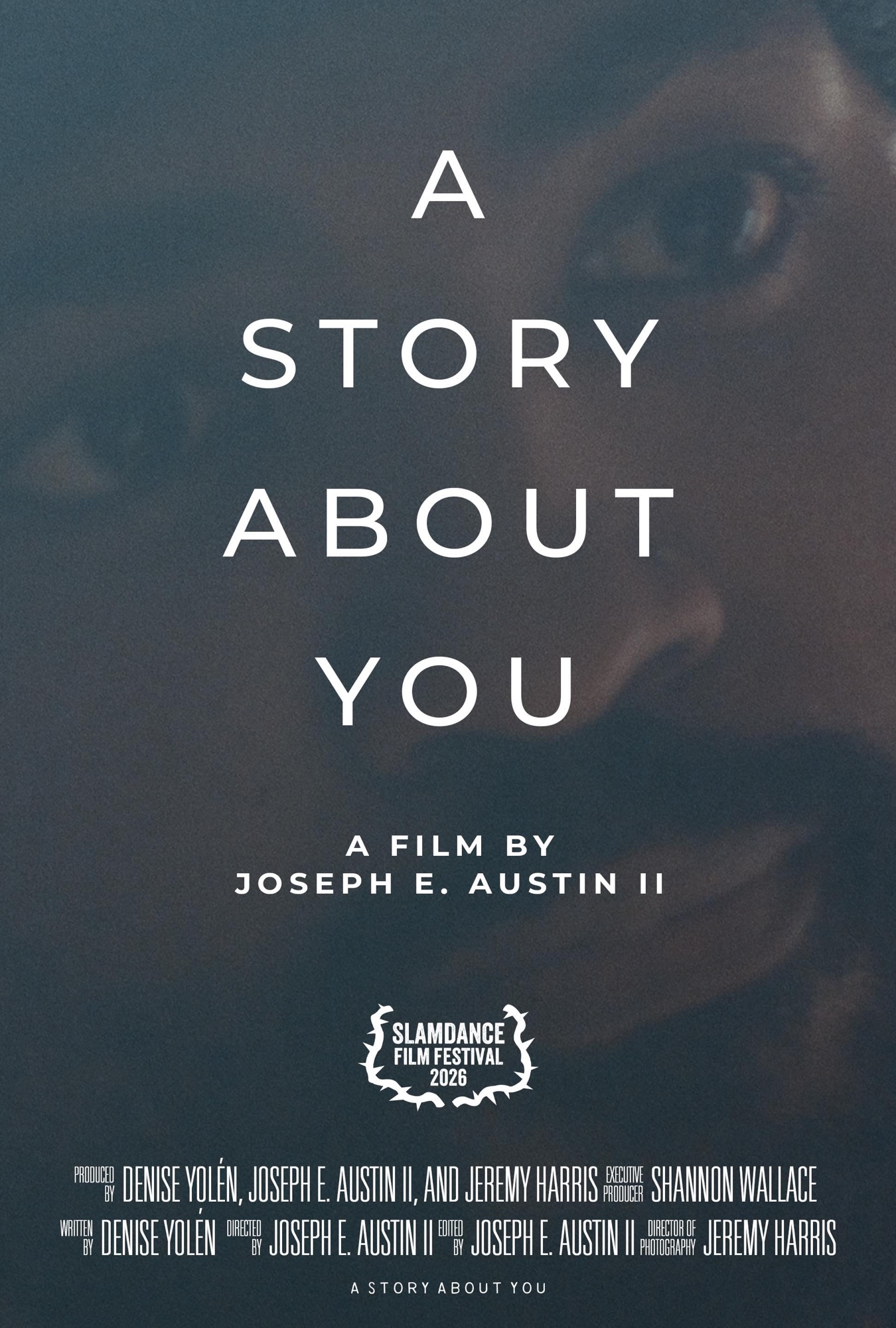


A Story About You opens like a taped confession someone forgot to label—Pernell Walker sitting across from an unseen interviewer, the frame tight, the air thick with the sense that he’s already said too much. Joseph E. Austin II directs with a patient, observational touch, letting the film drift between narrative scenes and faux‑documentary debriefs. The result is a mixed but intriguing portrait of a man trying to understand why every woman in his orbit seems to be reading a different version of him.
The plot follows Wilde, an enigmatic lover who wants to learn how to love “properly,” though the film keeps showing how slippery that word becomes when spoken by different mouths. Each woman he encounters offers her own definition—tender, suspicious, hopeful, exhausted—and the film uses these contradictions as its emotional engine. Walker plays Wilde with a searching stillness, a man who listens hard but rarely knows what to do with what he hears.
The faux‑documentary interviews are the film’s most distinctive device. They function like emotional autopsies, each woman performing her own girl‑talk analysis of Wilde: what he meant, what he didn’t mean, what he should have known, what he never could have known. These scenes have a raw, unfiltered charge, as if the camera has been invited into the aftermath rather than the moment itself.
Austin leans into the tension of debriefing—how people talk differently once the moment has passed, how clarity arrives only after the damage is done. The women speak with the confidence of hindsight; Wilde, by contrast, is caught mid‑lesson, still fumbling toward the truth he claims to want. The film becomes a call‑and‑response between what happened and what it meant, between action and interpretation.
One of the film’s sharpest contrasts arrives in Wilde’s brief phone call with his mother. It’s a small scene, almost incidental, but it reframes everything. Where the women speak in long, spiraling explanations, the call with his mother is clipped, functional, nearly barren. It’s a conversation built from absence—what neither of them says, what both of them have learned to avoid. The film quietly suggests that Wilde’s emotional vocabulary was shaped in these short, practical exchanges.

The comparison is devastating in its simplicity. The women’s interviews are full of nuance and emotional labor; the mother’s call is a blueprint of emotional minimalism. Wilde becomes both typical and atypical: typical in his confusion, atypical in his willingness to admit he’s confused. The film never excuses him, but it does allow him to be porous, a young man trying to rewrite a script he barely learned.
Still, the film’s structure—its constant exposition, its reliance on interrogation—can weaken its momentum. Every time the narrative begins to breathe, another interview interrupts, another explanation arrives, another emotional debrief resets the scene. The technique is thematically coherent but dramatically repetitive, as if the film doesn’t fully trust the audience to read the subtext without someone spelling it out.
Yet within that repetition lies a kind of lyric insistence. Austin seems to argue that young relationships are built on endless rehashing, endless retelling, endless attempts to understand what just happened. The film becomes a portrait of emotional archaeology: everyone digging, everyone interpreting, everyone hoping the next conversation will finally reveal the truth.
Walker anchors the film with a performance that feels lived‑in and alert, his presence steady even when the structure wobbles. The ensemble—Shannon Wallace, Denise Yolén, Monique Lindsey, Adwoa Duncan‑Williams, Shiree Nicholas Christopher—forms a shifting constellation of perspectives, each woman adding a new facet to Wilde’s self‑mythology. Jeremy Harris’s cinematography gives the interviews a soft, unforced intimacy, while the narrative scenes move with a looser, more searching energy.
A Story About You is mixed but resonant, a film that sometimes talks too much but rarely says something untrue. Its lyricism comes from its willingness to sit inside discomfort, to let its characters contradict themselves, to admit that understanding another person is a lifelong apprenticeship. Austin’s film may over‑explain, but it also listens—carefully, generously, and with a kind of bruised hope.
Grade: B.


Leave a Reply