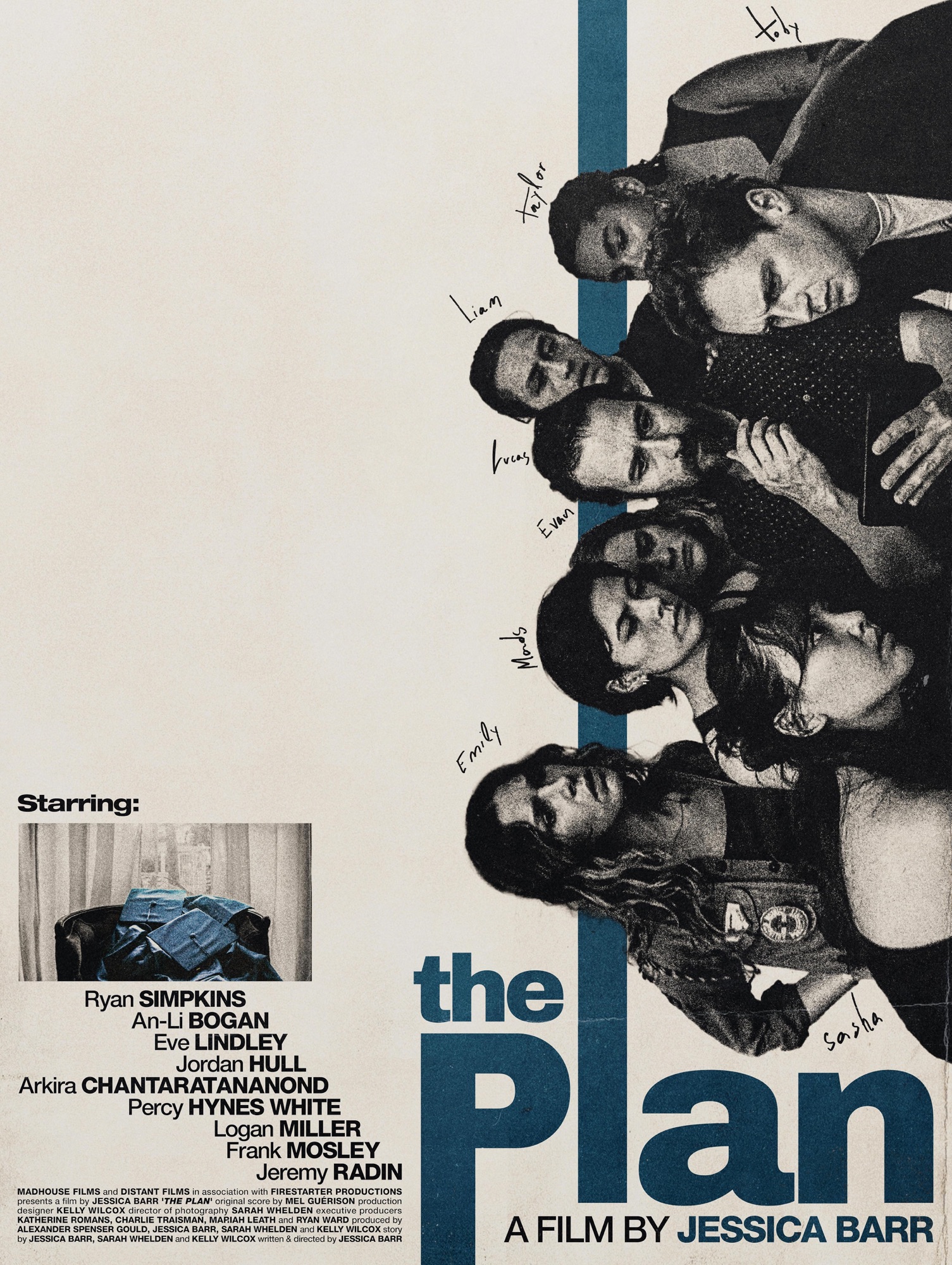


Jessica Barr’s The Plan unfolds in a single, breath-held sweep, a thriller that moves with the pulse of a room filling with conviction, fear, and the fragile bonds that hold a group together when the world outside feels distant. The film’s one-take structure becomes its signature gesture, a continuous drift through a night where every breath carries menace and every whispered promise carries the weight of a future already chosen.
Ryan Simpkins anchors the ensemble as Evan, a young believer whose certainty radiates through the group. Around Evan, Mads (An‑Li Bogan), Emily (Eve Lindley), Taylor (Jordan Hull), Sasha (Arkira Chantaratananond), Liam (Percy Hynes White), Toby (Logan Miller), and Lucas (Frank Mosley) gather in a cramped space that feels charged with purpose. Their shared mission—an irreversible act they believe will reshape the world—gives the film its relentless forward motion.
Barr’s one-take design heightens the sense of division and fracture. The camera glides through shifting alliances, overheard arguments, and sudden bursts of tenderness. The structure amplifies the paranoia that threads through the group, the doubts that flicker across faces, the small betrayals that bloom in silence. At the same time, the unbroken form compresses the film’s emotional range, creating moments where the tension swells without release.
The film’s conspiracy-thriller frame carries a steady hum of danger. Yet Barr steers clear of overt political messaging, allowing the story to focus on the emotional architecture of belief. The group’s plan becomes a vessel for exploring the way conspiracy theory feeds on longing, fear, and the desire for belonging. The menace comes from within the circle, from the way love and hate intertwine when a shared mission becomes the only language left.

Simpkins gives Evan a fierce devotion that draws others in. Bogan’s Mads carries a quiet storm of doubt, her glances toward the door revealing a heart caught between loyalty and escape. Lindley’s Emily brings a tenderness that softens the room, while Hull’s Taylor radiates a restless energy that pushes the group toward action. Each performance adds a new layer to the film’s portrait of a cult-like bond forged through shared desperation.
The one-take approach deepens the sense of immersion. Every shift in tone, every whispered confession, every tremor of fear arrives without interruption. The camera becomes a witness to the group’s unraveling, drifting through their preparations with a steady, unblinking gaze. This continuity strengthens the film’s atmosphere of dread, giving the audience the feeling of being trapped inside the circle with them.
At the same time, the structure limits the film’s ability to expand its world. The story remains bound to the room, to the faces and voices of the group, to the rising tide of their conviction. This creates a powerful sense of intimacy, yet it also narrows the film’s thematic reach, keeping its ideas contained within the emotional storm of the ensemble.
Barr’s script, shaped with contributions from Sarah Whelden, Kelly Wilcox, and Barr herself, explores the fragile threads of friendship under pressure. The film reveals how affection becomes a tool, how trust becomes a currency, how love becomes a force that can either anchor or destroy. The group’s shared mission becomes a crucible where every emotion burns hotter, where every bond carries the risk of collapse.
The arrival of the rideshare driver (Jeremy Radin) introduces a jolt of outside reality, a reminder of the world beyond the group’s fevered circle. His presence heightens the tension, revealing the thin line between belief and violence, between purpose and catastrophe. The moment he steps into the room, the film’s atmosphere thickens, the stakes rising with every breath.
The Plan becomes a study in conviction, fear, and the fragile architecture of belief. It is a thriller built on whispers, glances, and the slow tightening of a shared mission. Barr crafts a film that pulses with menace and emotional pressure, a story where conspiracy becomes a mirror for longing and doubt. The result is a work of tension and intimacy, a portrait of a group on the edge of an act that will define them forever.
LETTER GRADE: B+


Leave a Reply