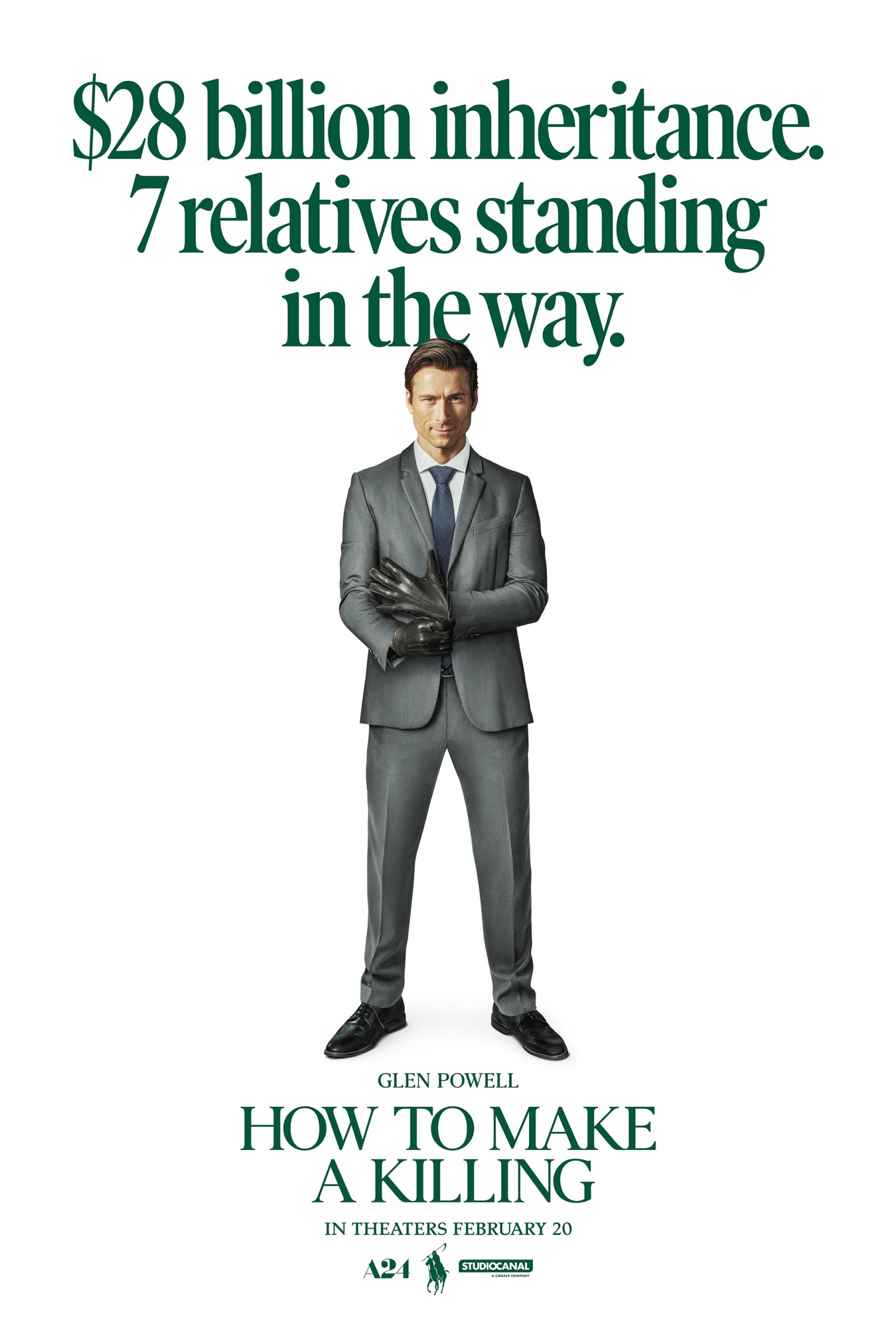


Glenn Powell enters How to Make a Killing with a presence that glows with ambition, charm, and a quiet storm of calculation. John Patton Ford guides this American remake of Kind Hearts and Coronets with a vision that favors gravity over mischief, turning a classic tale of inheritance into a study of hunger, faith, and the strange architecture of American wealth. The film moves with a steady, lyrical rhythm, each scene shaped by the tension between destiny and desire.

The story begins with Becket Redfellow’s birth into a world that rejects him before he can take his first breath. His mother raises him in blue‑collar struggle while the Redfellow dynasty thrives behind gates, marble, and generational privilege. Powell gives Becket a restless pulse, a man who believes the universe carved a place for him in the family estate. His journey toward that legacy carries a glow of fierce determination, each step charged with the thrill of possibility.

Ford retains the original’s structure of an heir eliminating obstacles, yet he reshapes the path with a distinctly American spirit. The Redfellow clan embodies a culture built on self‑mythology, ambition, and the belief that wealth confirms virtue. Each relative stands in Becket’s way, yet each one reveals a different facet of the family’s power. The film gains a sense of breadth and emotional texture through this expanded world, turning the inheritance into a symbol of national aspiration.

The decision to cast separate actors for each heir creates a gallery of vivid personalities. Bill Camp’s Warren Redfellow radiates authority sharpened by suspicion. Zach Woods brings a tremor of anxious privilege to Noah. Topher Grace’s Pastor Steven J. Redfellow carries a serene mask that hides a storm of self‑regard. Ed Harris, towering at the top of the family tree, gives Whitelaw Redfellow a gaze that holds centuries of entitlement. This ensemble approach enriches the film with variety and emotional nuance, each performance adding a new color to the tapestry.

At the same time, the shift from a single performer to many alters the story’s energy. Alec Guinness once created a dynasty that felt carved from one block of aristocratic stone. Ford’s version spreads that force across multiple bodies, creating a more naturalistic world. The film gains realism and depth, yet it trades away the uncanny cohesion that once made the family feel like a single, towering institution. Still, the performances carry such vitality that the story glows with fresh electricity.

Margaret Qualley’s Julia Steinway brings warmth and memory into Becket’s life, grounding him in the world he came from. Jessica Henwick’s Ruth offers a different gravity, a partner who senses the storm gathering inside him. Their presence deepens the emotional stakes, giving Becket’s choices a human cost that lingers in every scene. Through them, the film becomes a study of the heart’s shifting loyalties, the way ambition reshapes affection until the two become indistinguishable.

Ford sharpens the satire with a blade honed on American class structure. The Redfellow clan embodies a culture where wealth bends justice, where influence shields the amoral, where legacy becomes a fortress. The film succeeds in revealing how privilege shapes every interaction, every expectation, every breath. The satire glows brightest in the quiet spaces, where entitlement reveals itself through gesture, tone, and the ease with which the powerful move through the world.

The film’s darker tone shifts the story away from the original’s airy comedy. Ford embraces shadows, giving each death a solemn, almost ritualistic weight. Humor emerges through character rather than farce, through the absurdity of entitlement rather than the mechanics of the plot. This creates a richer emotional palette, turning the story into a meditation on ambition’s spiritual cost. The film gains a sense of bruised beauty, a glow that lingers long after the credits roll.

One of Ford’s boldest choices is the confessional frame. Pastor Steven J. Redfellow becomes the vessel for Becket’s story, receiving each revelation with serene, unsettling grace. This structure transforms the film into a meditation on faith and capitalism, a study of how spiritual authority bends under the weight of wealth. The confessional becomes a stage where morality shifts, where forgiveness becomes a currency, where justice reshapes itself to serve the powerful. Through this device, the film gains a haunting spiritual resonance.

The ending brings these themes to their fullest expression. Becket’s ascent feels triumphant and hollow at once, a victory carved from shadows. The structure circles back to the confessional, revealing how truth becomes a tool in the hands of those who understand power’s secret language. The final moments shimmer with ambiguity, a reminder that ambition reshapes the soul until the soul becomes indistinguishable from the hunger that drives it. How to Make a Killing stands as a bold American reimagining, filled with rich performances and a tone that glows with poetic darkness.

Letter Grade: B+.


Leave a Reply