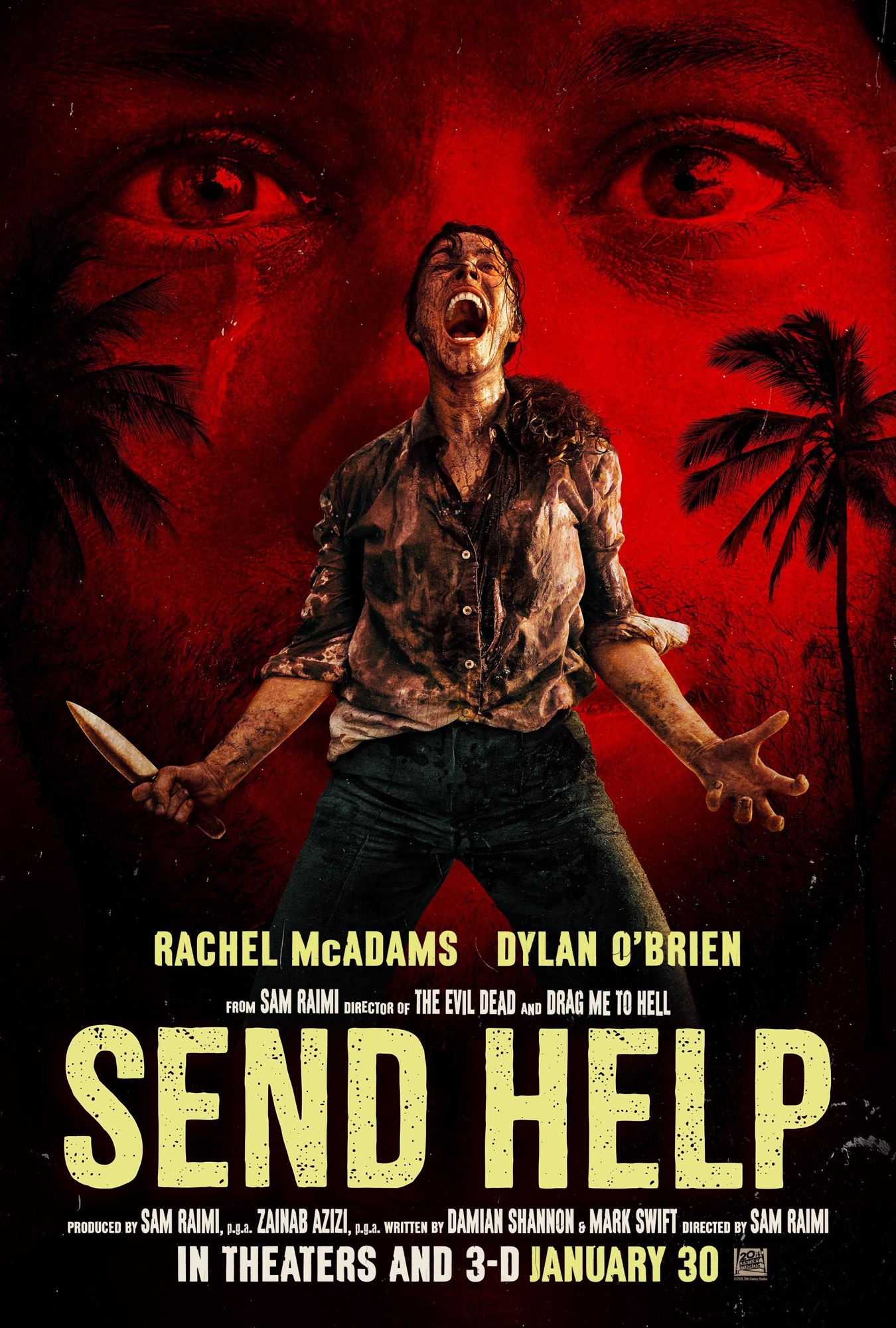


Sam Raimi’s Send Help arrives, like a coconut hurled by a mischievous deity: round, absurd, and surprisingly graceful in its arc. Rachel McAdams, playing Linda Liddle with a blend of slapstick precision and lyrical menace, anchors a film that dances between horror, parody, and a sunburned battle of the sexes. The tone wobbles with intention, as if Raimi enjoys watching his characters slip on the banana peels of their own stereotypes. The result is a mixed-to-positive delight, a tropical cocktail of satire and survivalism served with a wink.

The film begins in the stark fluorescent environment of corporate life, where Linda’s gentle nature is often dismissed, especially by Bradley Preston, portrayed with confident charm by Dylan O’Brien. Raimi emphasizes these caricatures: Bradley represents the assertive alpha male who feels entitled, while Linda is the overlooked strategist whose quiet brilliance is masked by awkwardness and a survivalist hobby that her coworkers see as just a quirk. Despite the plot flipping their roles, these characters remain true to their core, creating a comedic tension that adds depth and rhythm to the story.

After the plane crashes—following Donovan’s reckless attempt to choke Linda amid the turbulence—the film transitions into Raimi’s characteristic horror-comedy style. The island becomes a backdrop where gender stereotypes are pushed to their limits. Linda’s initial meekness gives way as she takes charge—building shelter, gathering food, and leaving Bradley alone in the sun for two days to teach a lesson in humility. Meanwhile, Bradley clings to his sense of dominance, even as he lies helpless in the sand, barking commands with the bravado of a man who still believes he controls everything in the boardroom.

Raimi treats these reversals with comedic lyricism. Linda’s transformation into a confident, capable survivor is a parody of every makeover montage ever filmed, except that the glow-up comes from octopus venom, fruit wine, and the satisfaction of watching Bradley fail at basic tasks. Bradley’s attempts to reclaim dominance—spiking dinner with poisonous berries, building a raft that dissolves instantly—play like sketches from a gendered vaudeville show.

The film gently navigates the complexities of romantic comedy amidst chaos. Linda and Bradley share heartfelt, drunken confessions, tender glances, and a deep mutual understanding that they are the only two people who truly comprehend the absurdity of their situation. Their chemistry radiates warmth, even as they engage in increasingly inventive and tumultuous ways. Raimi portrays their dynamic like a twisted courtship, where affection and violence intertwine in a chaotic yet strangely affectionate dance.

The final showdown between Linda and Bradley is Raimi at his most gleeful. Eyes are gouged, golf clubs swing, and the luxurious beach house becomes a battleground for the last remnants of their gendered identities. Bradley’s desperate declaration of love feels like a parody of every rom-com confession, delivered just before Linda beats him to death with a nine iron. It is both satire and justice, a punchline delivered with tropical brutality.

The epilogue highlights the film’s underlying message with warmth. Linda, now a confident and stylish business leader, moves gracefully through a celebrity golf tournament, embodying someone who has transformed her own story. Her memoir touches many, her parrot remains her loyal companion, and her rise in the corporate world underscores the extraordinary efforts women often need to succeed in a male-dominated industry. Raimi presents her victory as both inspiring and tinged with humor, offering a gentle farewell to the audience.

McAdams delivers a heartfelt performance that intertwines tenderness, raw emotion, and impeccable timing. O’Brien complements her with a comedic confidence that makes Bradley’s struggles feel both understandable and unexpectedly touching. The supporting cast—Xavier Samuel’s hapless Donovan, Chris Pang’s loyal Chase, Dennis Haysbert’s dignified Franklin—create a vivid world where each character seems like a satirical sketch infused with genuine depth and humanity.

Send Help warmly explores themes of gender, power, and the absurdity of corporate ambition through a horror-comedy lens. It lovingly embraces, reimagines, and playfully challenges stereotypes, resulting in a film that is a tropical fever dream infused with a feminist punchline. Raimi’s gentle touch keeps the tone light and uplifting, while McAdams’s spirited performance adds a sense of joy and playfulness. Although the movie may stumble at times, it does so with undeniable style and a sense of heartfelt intent.

LETTER GRADE: B+.


Leave a Reply