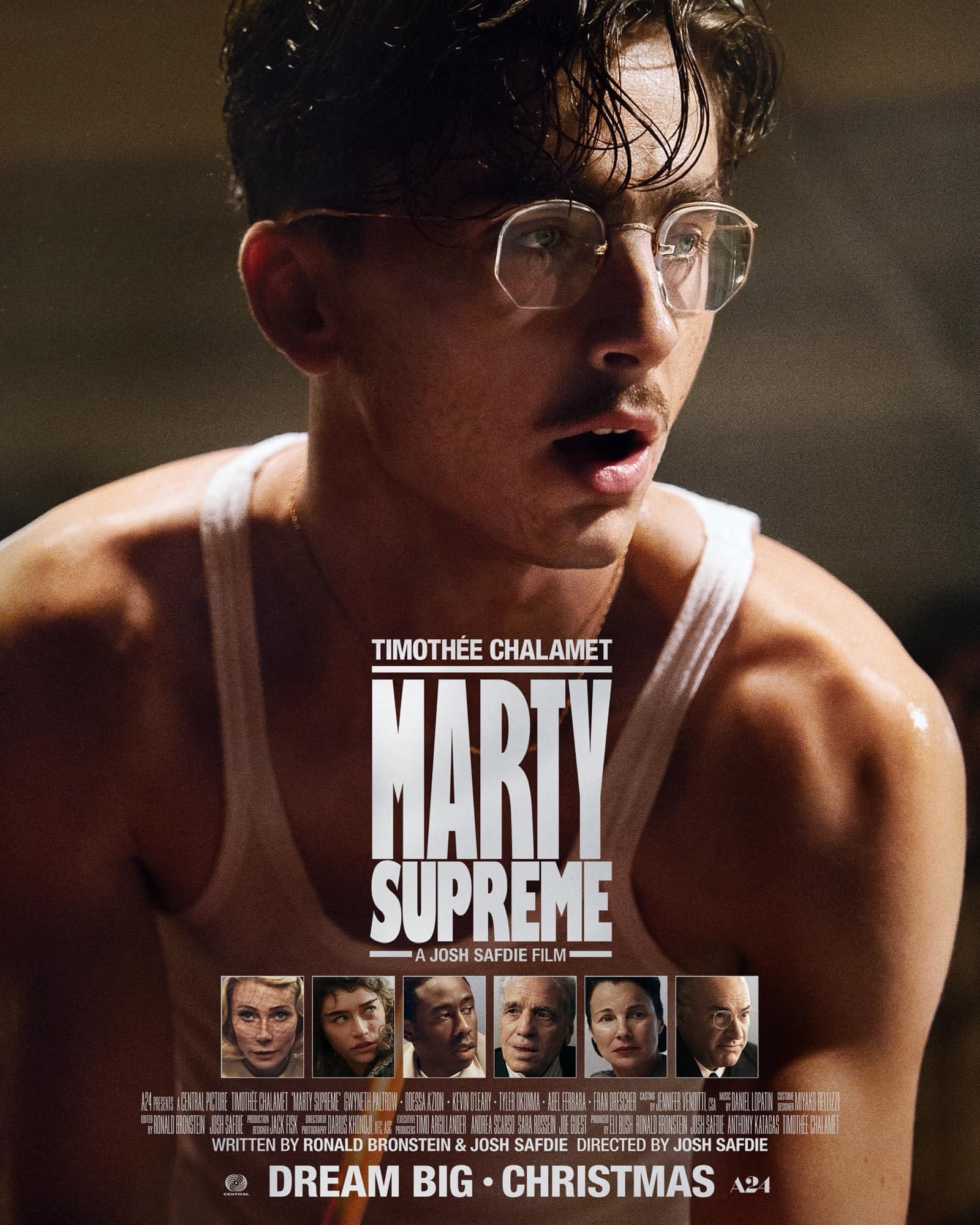


Josh Safdie’s Marty Supreme arrives with the energy of a champion who refuses to leave the table, embodying relentless determination and charismatic presence. Timothée Chalamet meets the moment with a nuanced performance that glows with ambition, charm, and a touch of comic bravado, capturing the complex psyche of his character. The film transforms Marty Mauser’s 1952 quest for table‑tennis greatness into a buoyant and detailed exploration of a man who fully believes in his own shine while navigating a continuously shifting world that challenges his identity and resolve. Safdie treats the sport with genuine affection and elevates it with a sense of spectacle, turning each match—whether in bustling London gymnasiums, crowded Tokyo sports centers, or Harlem Globetrotters exhibitions—into a vibrant stage for Marty’s evolving understanding of power, fame, and self‑invention, highlighting the cultural and personal stakes involved.

Chalamet portrays Marty as a whirlwind of confidence, desire, and improvisational brilliance. His transformation from a humble shoe salesman in Manhattan to an international table tennis sensation based in Tokyo unfolds with a lively, comedic rhythm that maintains a breezy tone even as the stakes escalate. His interactions with Bela Kletzki, a seasoned Hungarian coach played by Géza Röhrig, the eccentric sponge-racket wizard Koto Endo, portrayed by Koto Kawaguchi, and the cunning businessman Milton Rockwell, played by Kevin O’Leary, inject the story with vibrant energy. Each character challenges Marty to confront the true demands of greatness and understand its personal costs.

Gwyneth Paltrow brings a glamorous spark as Kay Stone, a charismatic and confident woman whose entanglement with Marty adds both heat and humor to the story. Odessa A’zion’s Rachel Mizler provides emotional grounding, especially as her complex connection with Marty becomes increasingly strained and layered. Tyler Okonma’s Wally adds warmth and sly wit, offering subtle comic relief. Abel Ferrara’s Ezra Mishkin injects the story with a wild, unpredictable energy that keeps Marty’s odyssey thrilling, with moments of chaos and unexpected twists.

Safdie’s direction vividly captures the chaos inherent in unchecked ambition. The scene where the bathtub suddenly collapses exemplifies the unpredictable nature of his storytelling, while the bustling hustle of the bowling alley and the frantic search for Moses the dog highlight the characters’ desperation and energy. The escapade in Central Park introduces a layer of urban adventure, leading up to the intense Tokyo showdown that culminates the film’s emotional arc. These episodes collectively serve as a legend Marty is intricately crafting for himself in real time. Throughout, the film delves into how a man wielding supreme self-confidence skillfully navigates a world filled with insecurity, revealing subtle shifts in power—whether through the paddle, the flow of money, or the spotlight that illuminates one’s influence.

The Tokyo rematch concludes with a triumphant victory, as Marty fully embraces both his athletic talent and the weight of his responsibilities as a champion. His heartfelt return to New York, where he reunites with his newborn son in a tender moment, adds a powerful emotional layer to the story, making the final scene feel genuinely earned and profoundly satisfying.

Marty Supreme is a lively, stylish, and unexpectedly tender portrait of a man relentlessly pursuing greatness with unwavering determination. It celebrates the sport’s dynamic energy, the spectacle’s captivating grandeur, and the quirky, joyful chaos born from pure ambition.

Letter Grade: A


Leave a Reply