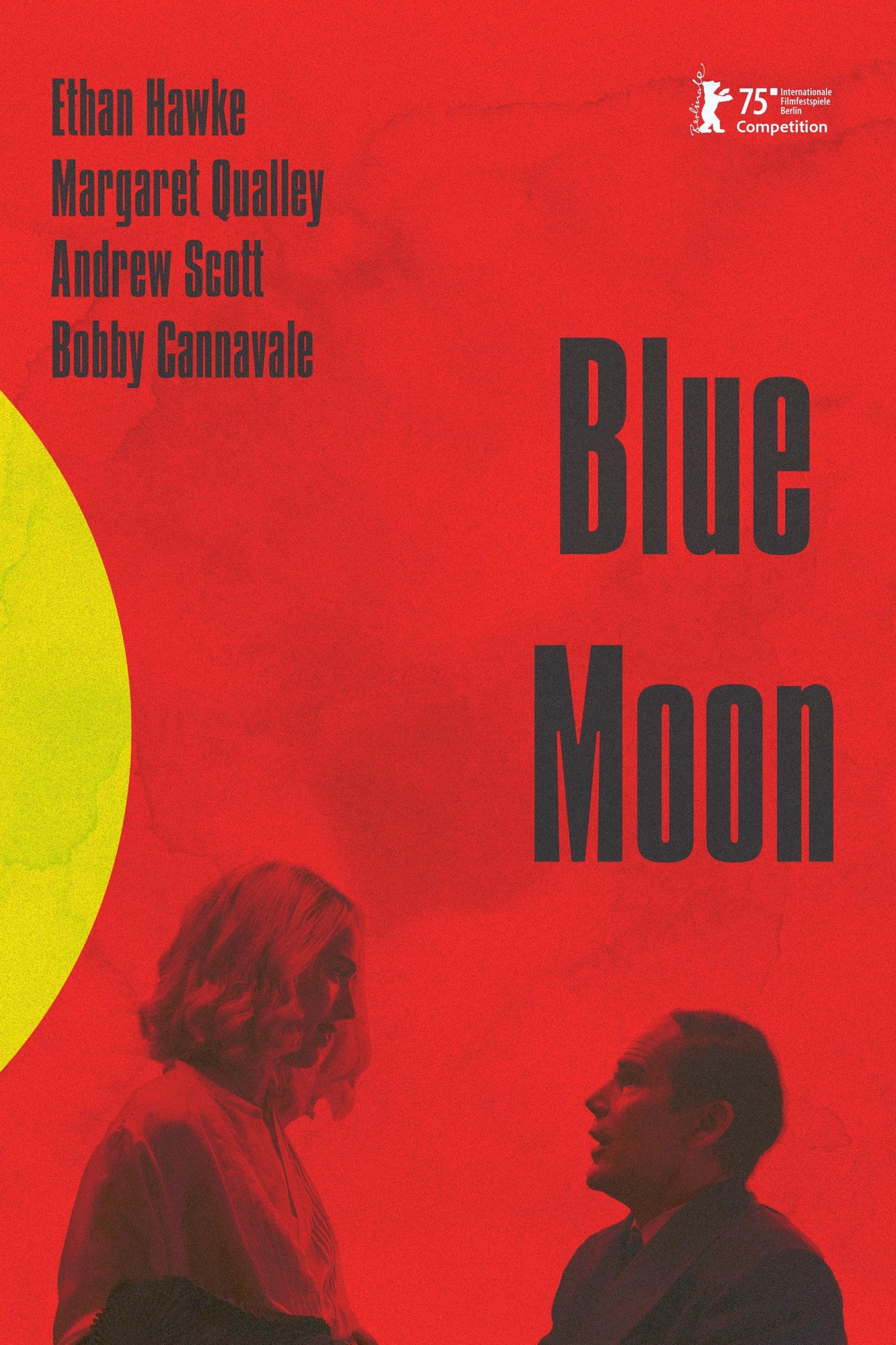


Ethan Hawke’s portrayal of Lorenz Hart in Richard Linklater’s Blue Moon is a confessional unraveling. The film, set almost entirely on the night of Oklahoma!’s triumphant debut, finds Hart slipping away from the celebration and into the bar at Sardi’s, where he drinks, mourns, and remembers. What unfolds is a one-act confession of jealousy, longing, and musical ashes.

Linklater, ever the chronicler of time’s quiet devastations, constructs the film as a single night’s descent. There is just Ethan Hawke—wounded, brilliant, and bitter—speaking into the void. His Hart is a man who once wrote the grammar of yearning, now unable to bear its echo. The film’s title, Blue Moon, is a reference to the famous song, and the condition of Hart’s soul: rare, luminous, and vanishing. The song itself is remembered, invoked, and finally mourned.

The film’s strength is in its refusal to resolve. Hart’s bisexuality is neither dramatized nor denied—it flickers in anecdotes, in glances, in the ache of what cannot be named. His alcoholism is a rhythm, a ritual, a slow drowning. His rivalry with Richard Rodgers (played with elegant restraint by Andrew Scott) is heartbreak. Their scenes together are filled with the ennui of two men speaking past each other in different keys.

Margaret Qualley’s Elizabeth Weiland offers momentary tenderness. She is a mirror—reflecting Hart’s hunger for connection, and his inability to receive it. Bobby Cannavale, as the bartender Eddie, anchors the film with compassion, listening without judgment as Hart spirals out of control. The supporting cast—Simon Delaney as Hammerstein, Cillian Sullivan as a young Steohen Sondheim, Patrick Kennedy as E.B. White—appear like ghosts in Hart’s monologue, reminders of a world moving on without him.

The film lets Hart speak. The dialogue, co-written by Robert Kaplow, has the cadence of a Broadway libretto—witty, bruised, and yearning. Hawke’s performance is among his finest: theatrical without excess, lyrical without sentiment. He plays Hart as unfinished.

The single-location conceit, while admirable, can feel static. The emotional arc flattens in places, and the pacing occasionally drifts. Qualley’s character, while evocative, lacks depth. And while the film gestures toward Hart’s queerness, it never fully inhabits it. The longing is there, but the risk is not.

Still, Blue Moon lingers. It is a portrait of an artist undone by the success he could not share, a meditation on collaboration, intimacy, lyricism, confession, and the cruelty of being replaced. It mourns Hart. And in doing so, it honors the songs he left behind.

B+.


Leave a Reply