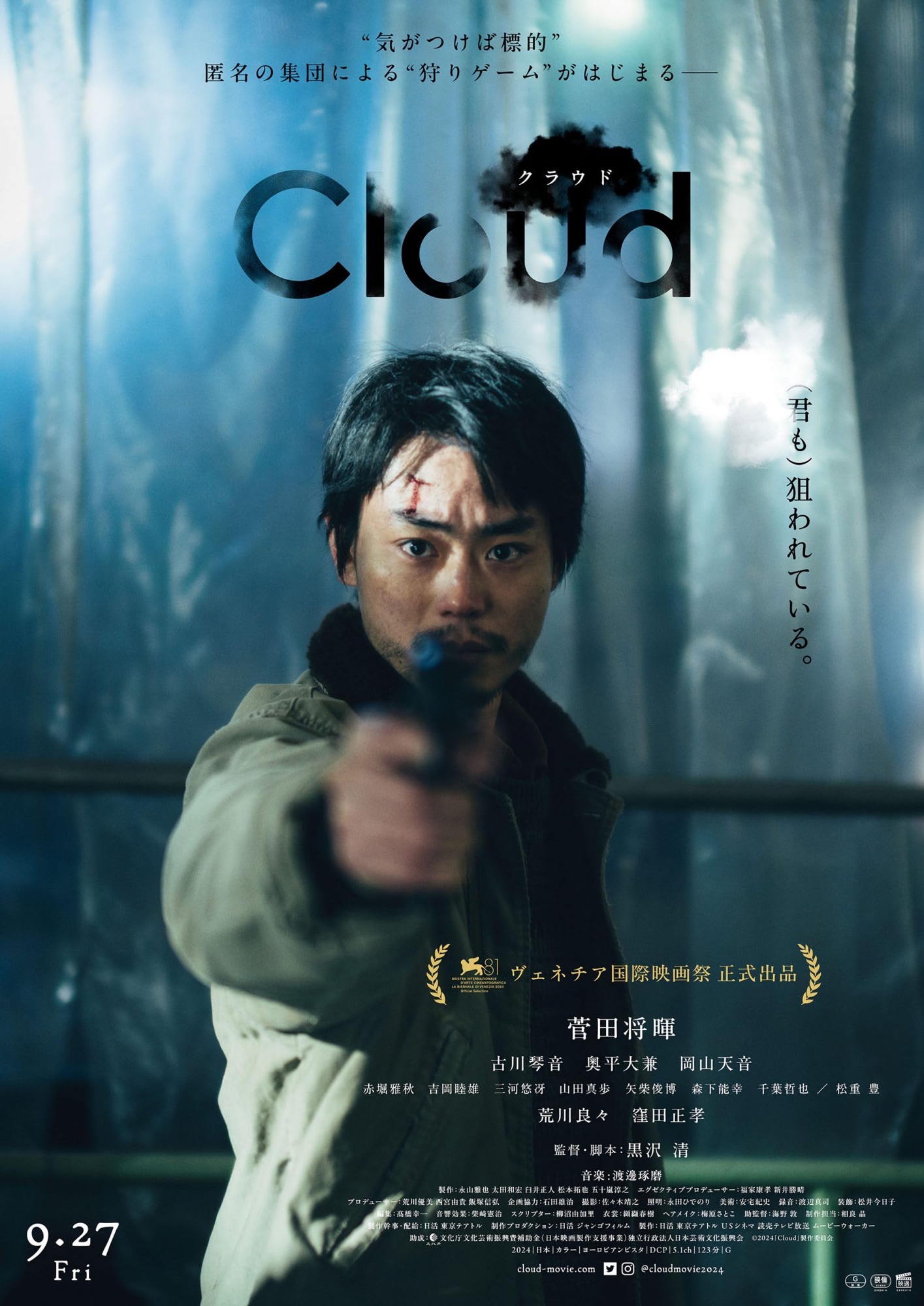


Kiyoshi Kurosawa’s Cloud is not a thriller in the traditional sense. It accumulates in rituals of subtraction. The movie begins with theft and ends with vows of annihilation. In the middle, Cloud traces the outlines of a man who trades intimacy for inventory, love for logistics.

Masaki Suda plays the protagonist, Yoshi. His story begins beneath fluorescent lights, in the spaces where factory work and digital dreams intersect. Suda occupies the role with a feral, mute intensity. His face is etched with the record of all the good and bad exchanges— all the betrayals, too

The online market is the backdrop for the film’s moral breakdown. Yoshii’s refusal to seek promotion for profit is the first sword cut. His girlfriend, Akiko (Kotone Furukawa), moves in — then she moves out. Her existence is little more than a business ledger line item. The assistant, Sano (Daiken Okudaira), is employed, then jilted, then reborn as a savioryoge. Everyone deals. Relationships are contracts that produce a negative yield.

Kurosawa’s critique of capitalism is procedural. Here, the yakuza, represented by Yutaka Matsushige, are Yoshii’s amoral reflection. Their methods — blackmail, spying, vengeance — are extensions of Yoshii’s own logic. The open forum responsible for Yoshii’s eventual undoing is a digital syndicate —a mob that is crowd-sourced. The movie’s violence is the downstream product of unbridled commerce. It is unforgiving—a bank dispensing the currency of grudges and automated retribution.

Cloud, as the title indicates, is both the medium and the menace. It is a place where Yoshii keeps his earnings, his keys, and his weaknesses. It is where his enemies conspire, where Akiko betrays him dolefully, and where Sano’s redemption is tracked. The cloud is the infrastructure, the hidden scaffold of all cruelty.

Cloud is another of Kurosawa’s meditations on isolation and repercussion. As with Cure and Tokyo Sonata, it’s a disintegration narrative. But while those movies wallow in their mental rot, Cloud is procedural. It is about systems — economic, digital, interpersonal — and how they crumple under the crushing weight of ambition. Yoshii’s parting shot — “So this is how you’re going to hell” — isn’t judgment. It is recognition.

The film’s real currency is loneliness. All the characters are bankrupt and disconnected from one another. Akiko’s betrayal is a reaction to his neglect. Sano’s brute force is transactional. Even the mobsters, the factory boss, the internet cafe drifter — are lost in longing and loss.

Cloud is one of those necessary films that offer no resolutions, just structure. It conjures a universe in which profit is ritual, betrayal procedure, and hell the business plan.

Grade: B+. Streaming on The Criterion Channel.


Leave a Reply