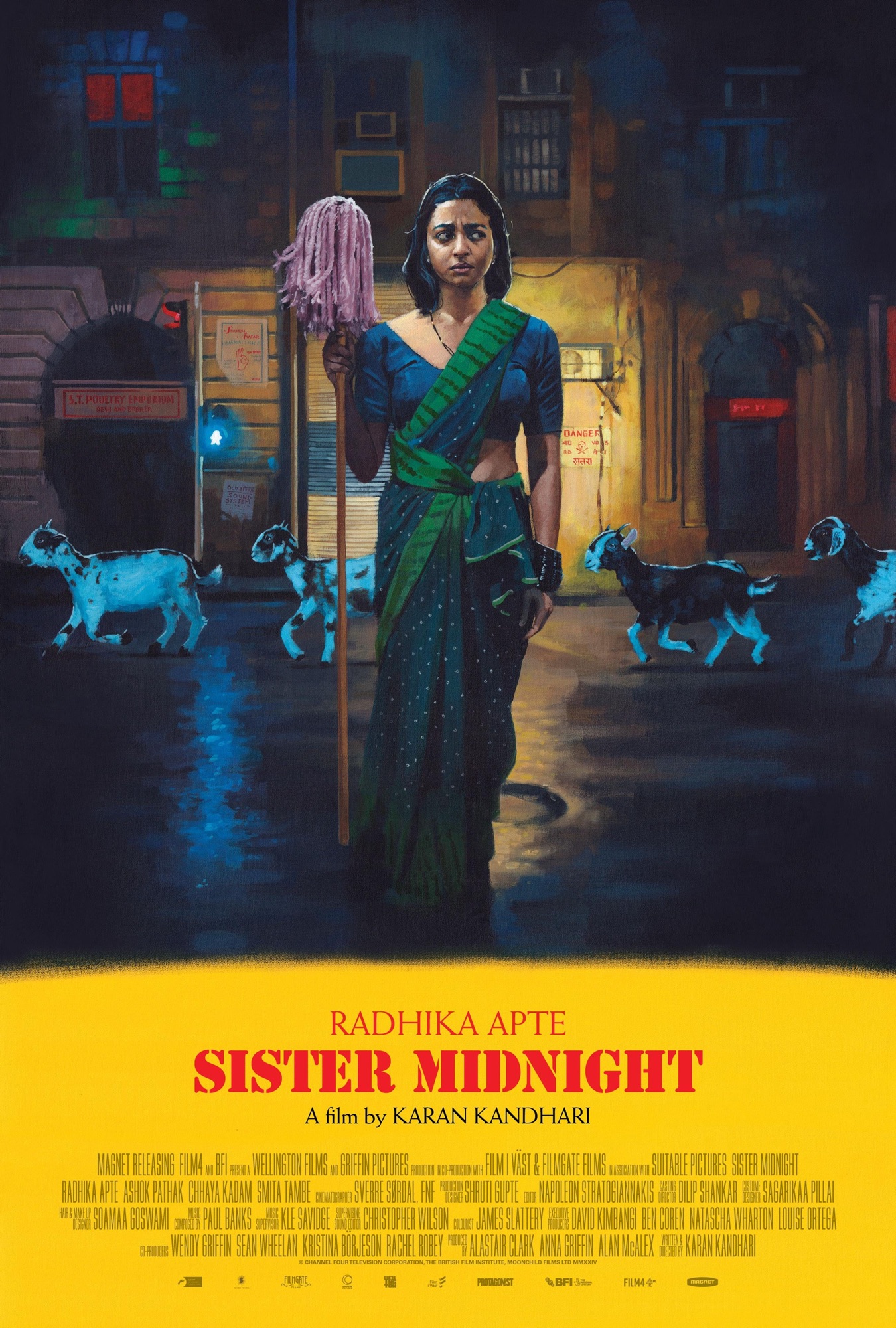


Sister Midnight is a film that doesn’t walk—it stumbles, crawls, and occasionally levitates through the corridors of domestic life, horror, and social satire. Directed by Karan Kandhari with a kind of gleeful disregard for narrative neatness, it’s a movie that wants to be everything and nothing at once. It’s a vampire film without fangs, a marriage drama without resolution, a comedy without punchlines, and a horror without genre. It’s also a film that dares to ask: what happens when a woman refuses to be digestible?

Radhika Apte plays Uma with a kind of feral precision that makes you question whether she’s acting or simply shedding layers. Her performance is erratic, brilliant, and sometimes bordering on anarchic. She doesn’t just inhabit the role—she infects it. Uma is a woman who has already failed at marriage once and now finds herself in another one that feels more like a social experiment than a relationship. Her husband, Gopal, portrayed by Ashok Pathak, is neither a villain nor a victim. He’s just there, like a piece of furniture that occasionally speaks.

The film’s horror elements are not jump scares or bloodbaths. They’re slow, creeping violations of normalcy. Uma eats birds. She vomits vegetables. She climbs trees. She stores animal heads under the bed. These are not metaphors. They are actions. And they are funny. And they are terrifying. And they are lonely. Kandhari doesn’t explain them. He doesn’t even try. He lets them sit there, daring us to make sense of it. This refusal to anchor the film in conventional logic is both its strength and its weakness. It keeps the movie alive, twitching, unpredictable. But it also makes it exhausting.

The title Sister Midnight is not a reference—it’s a mood. It’s the version of Uma that emerges when the world stops watching. It’s the creature she becomes when she’s no longer trying to be a wife, a woman, or a citizen. Midnight is not just a time—it’s a state of being. The film doesn’t show us a transformation; it reveals a transformation. Uma was always Sister Midnight. We didn’t notice.

There are moments when the film feels like it’s about to collapse under its own weight. The pacing is erratic—the tone shifts without warning. The supporting characters drift in and out— ghosts. But then it surprises you. A scene lands—a line stings. A gesture lingers. It’s hit and miss, but the hits are strange and unforgettable.

Chhaya Kadam as Sheetal brings a grounded energy to the chaos. Her scenes with Uma are among the few that feel like they belong to a world we recognize. Smita Tambe and Subhash Chandra add texture, but the film doesn’t care much for subplots. It’s too busy unraveling its protagonist.

Sister Midnight is not a film that wants to be liked. It wants to be felt. It wants to be misunderstood. It wants to be talked about in hushed tones and loud arguments. It’s a film that makes you laugh and then asks why you’re laughing. It’s a film that makes you uncomfortable and then refuses to comfort you. It’s a film that turns loneliness into a performance, and performance into protest.

Grade: B+. Steaming on Hulu.


Leave a Reply