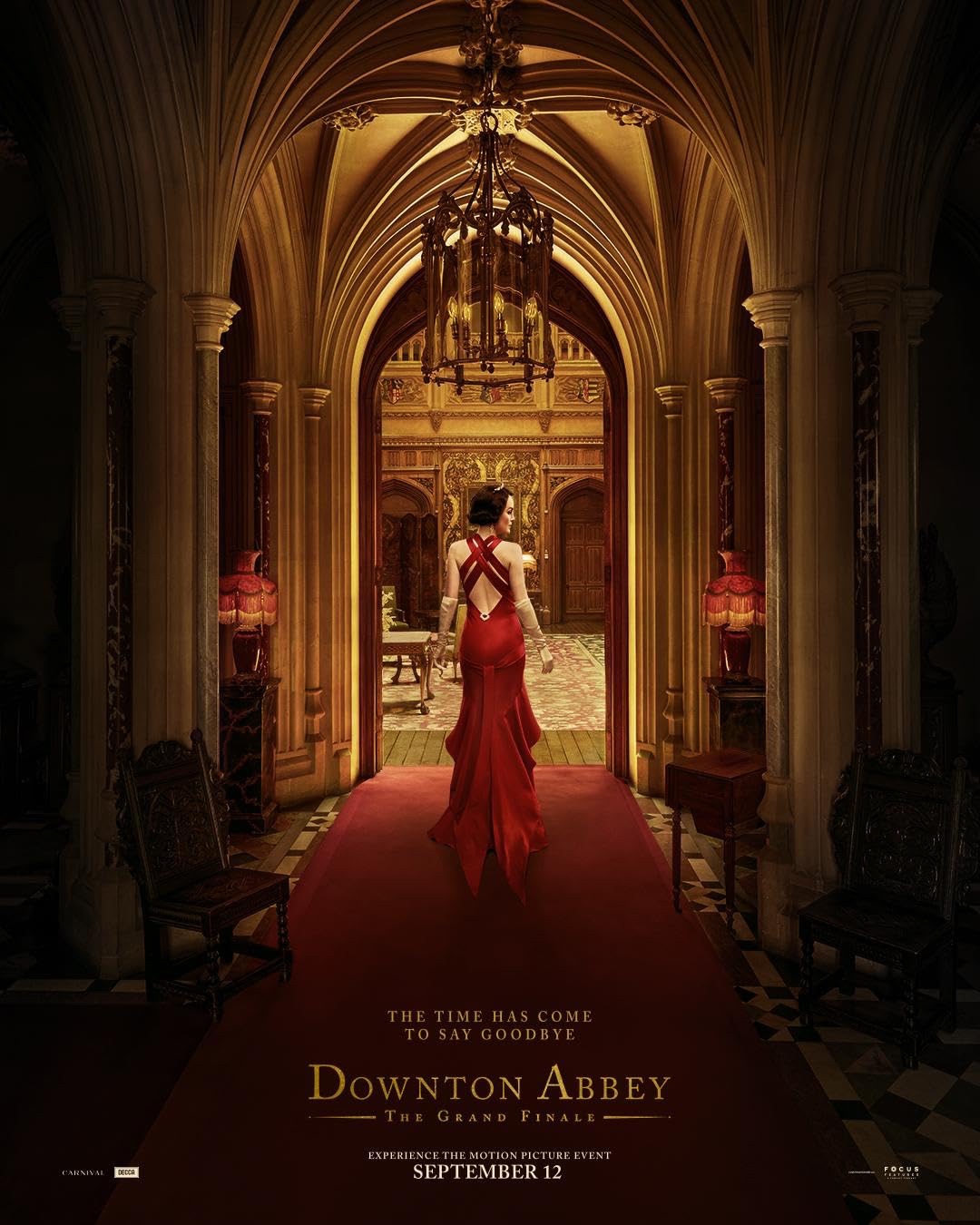


There is a hush to the final chapter of Downton Abbey, a quiet folding of linen, a last walk through corridors that have held the weight of generations. Simon Curtis directs with a reverence that borders on ceremony, allowing the cast—led by Hugh Bonneville’s Robert Crawley—to inhabit their roles with the grace of people who know they are saying farewell. The film does not seek reinvention. It seeks closure.

Set in 1930, the story opens with the Crawleys attending a London play, a gesture that places them near Guy Dexter and Noël Coward, and to Thomas Barrow, whose life has taken a scandalous and tender turn. The film’s title, “Downton Abbey: The Grand Finale,” announces its intent not with grandeur but with finality. It is not a crescendo but a curtain call. The narrative threads—Mary’s divorce, Harold Levinson’s financial disgrace, Gus Sambrook’s deception—are woven with care, though not always precise. The film hits its marks, but not all of them land with equal force.

Michelle Dockery’s Mary remains the film’s emotional axis, her fall from grace and subsequent rise as Downton’s steward echoing the series’ extended meditation on duty and inheritance. Her affair with Gus Sambrook, played with oily charm by Alessandro Nivola, is a narrative and emotional misstep. It feels inserted for tension, not born of character. Yet her final confrontation with Gus, terse and unsentimental, restores her dignity and the film’s tone.

The film’s effectiveness as a series finale lies in its willingness to let go. Robert and Cora’s decision to move to the Dower house and entrust the estate to Mary is not dramatic—it is inevitable. Their walk through the grounds, the servants’ quiet affirmations, Mary’s flashbacks—these are elegies, not plot points. The mid-credits scene, showing couples in quiet joy, is less epilogue than benediction.

The film is less incisive than its early seasons as a study of English class structure. The county fair subplot, with Lady Isobel Merton challenging Sir Hector Moreland, gestures toward progress but resolves too neatly. Daisy and Charlie Carson’s committee contributions are charming, but the class tensions are softened, not interrogated. The film prefers harmony to critique.

Visually, the film is a spectacle of restraint. The Ascot scenes, the dinner with Guy and Coward, and the fair are all rendered with polish but never excess. The BBC’s legacy of period drama is honored here. American public broadcasting’s affection for the series is acknowledged in the presence of Paul Giamatti’s Harold Levinson, whose arc is both comic and tragic. His reconciliation with Cora is one of the film’s few moments of emotional surprise.

The cast performs with the ease of familiarity. Bonneville’s Robert is wounded but resolute. Elizabeth McGovern’s Cora is quietly fierce. In his brief return, Laura Carmichael’s Edith is given more agency than usual, and Kevin Doyle’s Molesley offers one of the film’s most touching notes—his forgotten presence, his remembered words.

The film is hit and miss. Julian Fellowe’s storyline strains credibility, and the neighbors’ sudden reversal of opinion feels rushed. Yet the film’s heart remains intact. It trusts its audience to feel the weight of time and the ache of departure. It does not explain its title—it lives it. “The Grand Finale” is not about spectacle. It is about the end of something beloved.

Grade: B+


Leave a Reply